- Category
- Small Towns and Public Buildings
- Type
- Wooden built fabric of small towns
- Context
- Wooden small-town architecture, wooden built fabric, shops, taverns, inns, rectories, trading houses, square
- Source status
- well attested
Wooden small-town built fabric, Small-town wooden houses, Residential-commercial houses
Wooden Small-Town Architecture: types and elements
Residential-commercial house: A building combining living space with a shop or another commercial function.
Tavern or inn: A small-town building joining road, market, and lodging functions.
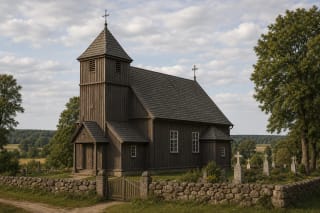
Rectory: A larger wooden parish-community building, often standing out by volume.
What is wooden small-town architecture?
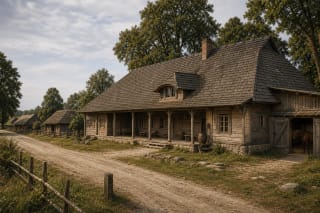
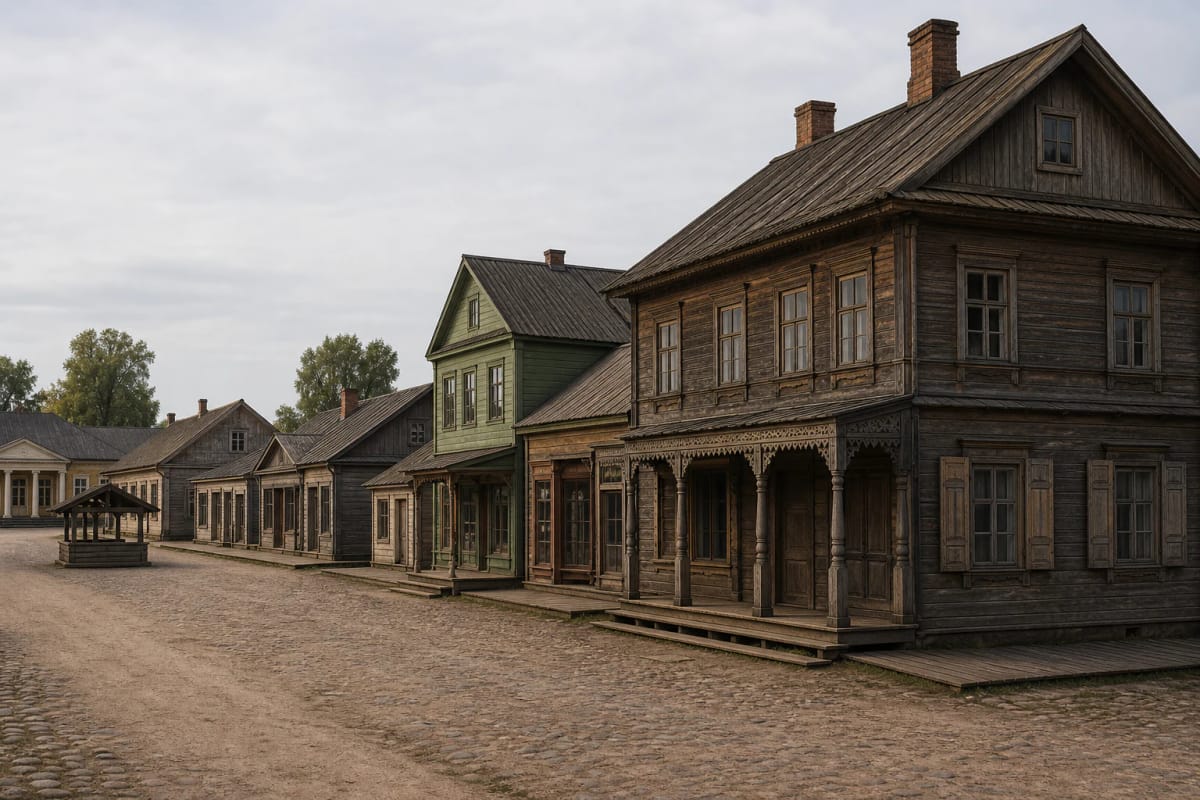
Wooden small-town architecture is the wooden built fabric of Lithuania's provincial towns and small towns: dwellings, shops, taverns, inns, rectories, auxiliary buildings, and facades around squares.
It differs from a rural farmstead because buildings face the street, square, market, and trade. Yet the materials, carpentry, and some forms are often close to rural architecture. According to VLE, the Lithuanian term for small town, miestelis, was first mentioned in 1387, when Alytus, Birštonas, Nemunaitis, and Punia were so named; many small towns also had a significant Jewish community, and places where Jews were allowed to settle permanently were called shtetls.
Functions
A wooden small-town house often had several uses: one part was lived in, another held a shop, craft workshop, or inn.
Taverns, karčemos, and lodging houses served travellers, markets, and local residents. Such buildings were important to the town's economy.
Architectural traits
Small-town wooden buildings were often simple, functional, and conservative, with a street facade, entrance porch, shop door, or larger windows. Some stood out by larger volume and richer details.
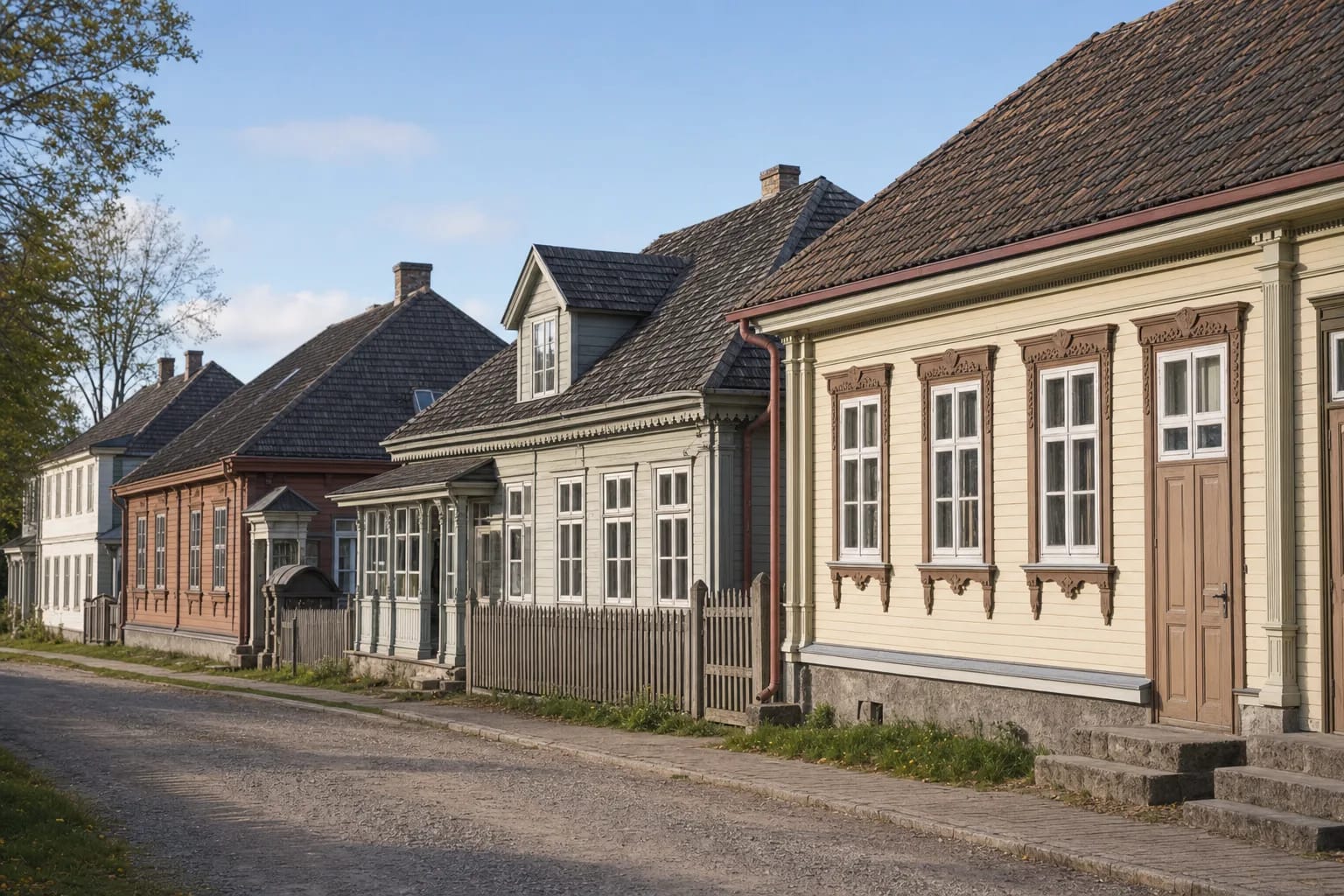
Wooden small-town architecture is sensitive to scale. Even a modest new volume or unsuitable windows can change the view of an entire street.
Heritage condition
Much wooden small-town fabric was lost through fires, wars, modernisation, and repairs. Surviving fragments often tell of old market, road, and parish life.
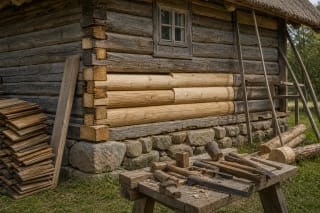
Preservation should keep facade rhythm, roof forms, window divisions, cladding, doors, and the relationship with the street.