- Category
- Roofs and Structures
- Type
- Types of traditional roof forms
- Context
- Gable roof, hipped roof, half-hipped roof, čiukurinis roof, valma, pusvalmė, čiukuras
- Source status
- well attested
Roof forms, Hipped roof, Half-gable roof, Čiukuras
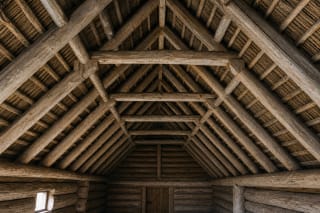
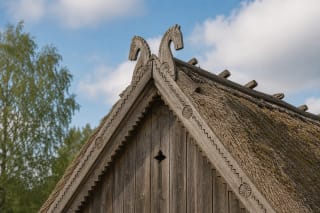
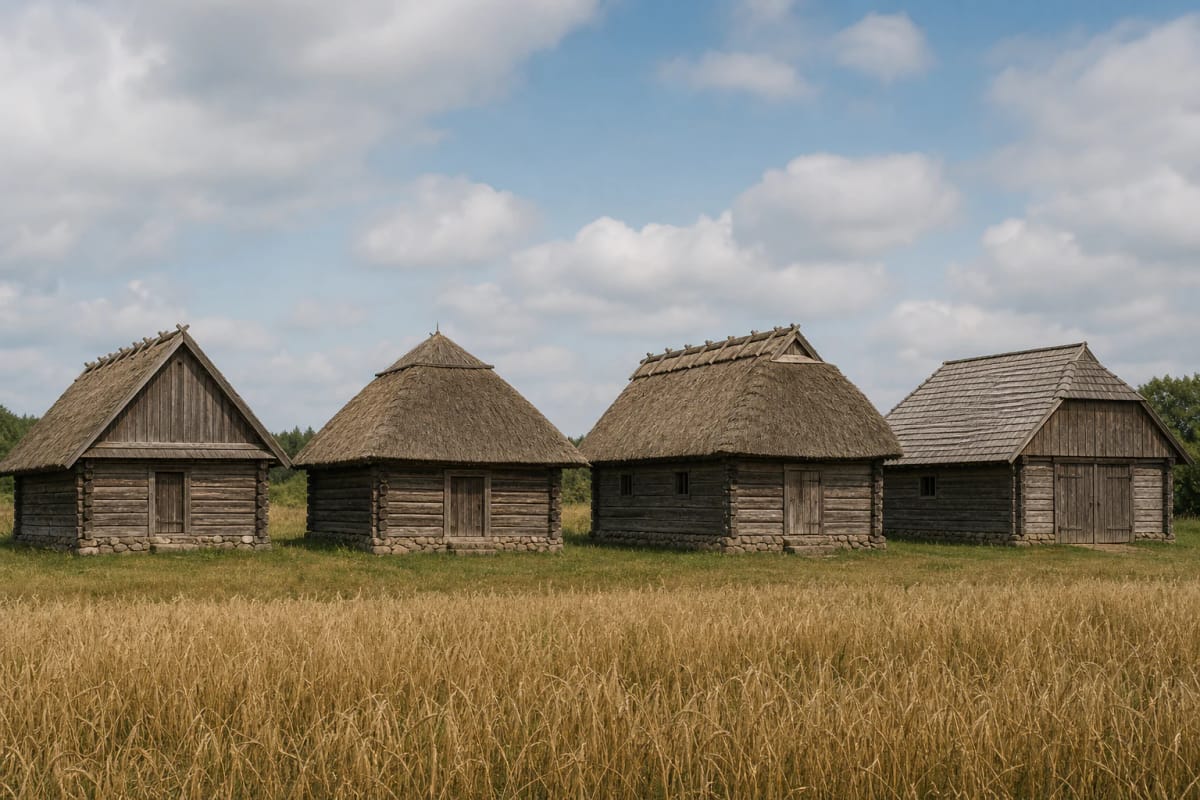
Gable, Hipped, Half-Hipped, and Čiukurinis Roofs: types and elements
Gable roof: A roof with two main slopes and clear end gables.
Hipped or valminis roof: A roof with four slopes, where the ends are also covered by roof planes.
Half-hipped roof: An intermediate type with short hips at the roof ends.
Čiukurinis roof: A roof with a čiukuras: an opening or raised part for smoke and ventilation.
Why does roof form matter?
The roof is the most visible part of a traditional building. Its form determines the silhouette, water runoff, size of the eaves, and regional recognition.
Gable, hipped, half-hipped, and čiukurinis roofs are not only aesthetic variants. Each has a structural and climatic logic.
Main types
A gable roof has two slopes and end gables. A hipped or valminis roof has four slopes. A half-hipped roof combines both principles, while a čiukurinis roof has a smoke or ventilation opening. According to VLE, a pitched roof has a slope greater than 12.3%; the inclined planes are called slopes, their intersection is a ridge edge on a projecting roof or a valley on a recessed one, and the upper horizontal edge is the ridge.
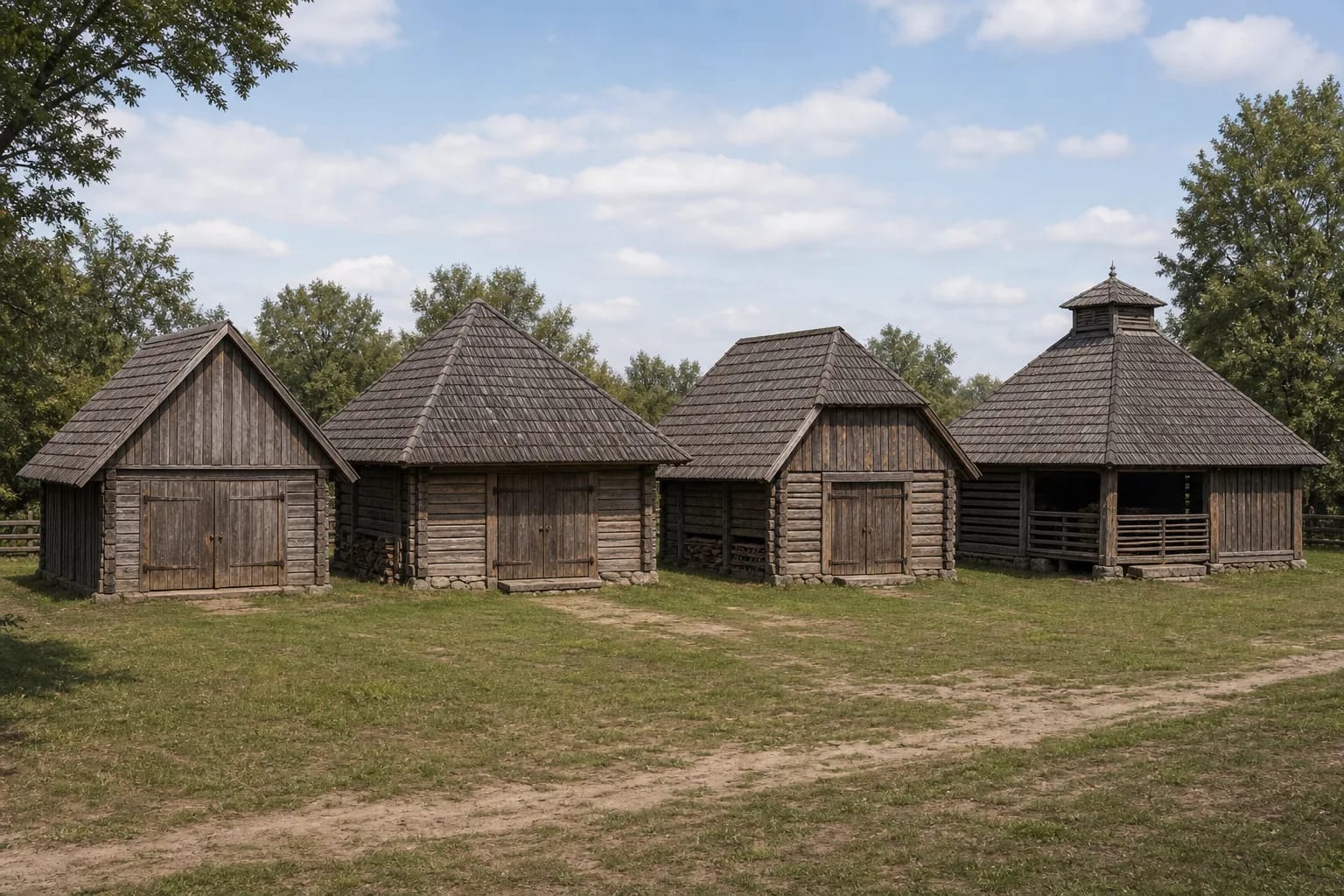
In the nineteenth century, gable roofs spread more widely in some regions, while older buildings often had hipped, half-hipped, and čiukurinis solutions.
Regional features
The post-supported kluonai of Eastern Aukštaitija often have high hipped or half-hipped roofs. In the lagoon area of Lithuania Minor, broken čiukurinis reed roofs stand out.
In Suvalkija and Aukštaitija, gable roofs later became more frequent, especially on living houses and more orderly isolated farmsteads.
Restoration note
Changing roof form changes the entire character of the building. Restoration therefore cannot mean only changing the covering: the angle of slopes, hips, smoke vents, eaves, and ridge proportions must also be protected.
Roof form is often a more reliable regional sign than facade decoration added later.