- Category
- Small Towns and Public Buildings
- Type
- Roadside, trade, and lodging buildings
- Context
- smuklė, karčema, inn, lodging house, roadside inn, road, market, stables, carriage shed
- Source status
- well attested
Smuklė, Karčema, Inn, Roadside lodging house
Smuklės and Karčemos: Inns and Taverns: types and elements
Simple smuklė: An inn for food, drink, and short rest.
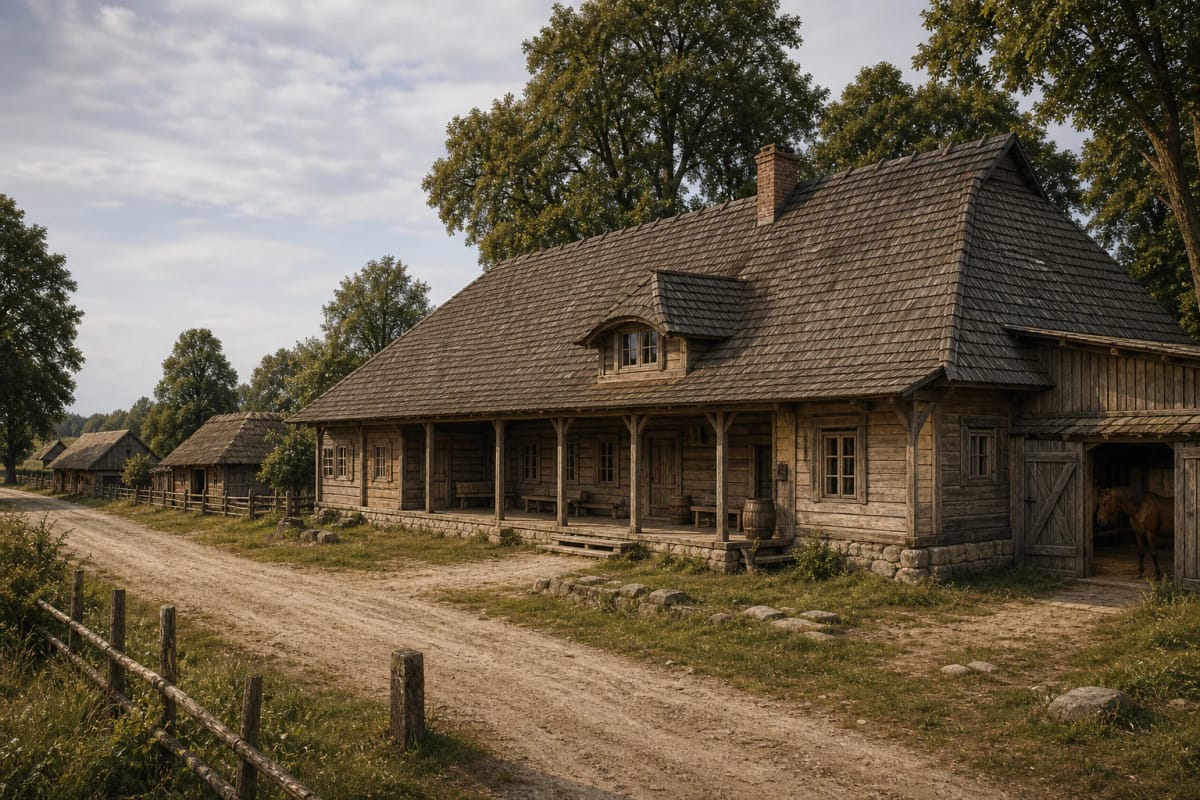
Roadside lodging house: A larger complex with guest rooms, stables, and carriage spaces.
Courtyard karčema: A building or group of buildings forming a closed or semi-closed yard.
What was a smuklė or karčema?
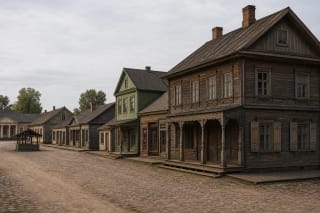
A smuklė or karčema was an inn building where travelers could eat, drink, spend the night, feed horses, or stable them. It served roads, markets, small towns, and village communities.
This was a traditional public building, not a private homestead. Its architecture had to handle a greater flow of people and carts.
History
In Lithuania, inns are known from the late Middle Ages. They spread especially beside important roads, crossroads, market squares, and village edges. According to VLE, smuklės are known in Lithuania from the late 14th century; in 1389 Jogaila ordered local officials to allow parish priests to build one inn each, and an inn had a distinguishing sign such as a hanging pine branch or raised marker. Until the 18th century separate beer, mead, and vodka inns operated; in 1554 Panevėžys had 51 beer inns, 3 mead inns, and 10 vodka inns.
In the 19th and 20th centuries their role diminished because of railways, hotels, alcohol monopolies, and changing travel. According to VLE, from the early 17th century inn leaseholders were most often Jews, and smuklės finally disappeared in the first half of the 20th century.
Form
Simpler inns were places to stop, while larger roadside lodging houses had guest rooms, stables, carriage spaces, and a yard. Plans could be elongated, L-shaped, cross-shaped, or arranged around a closed yard.
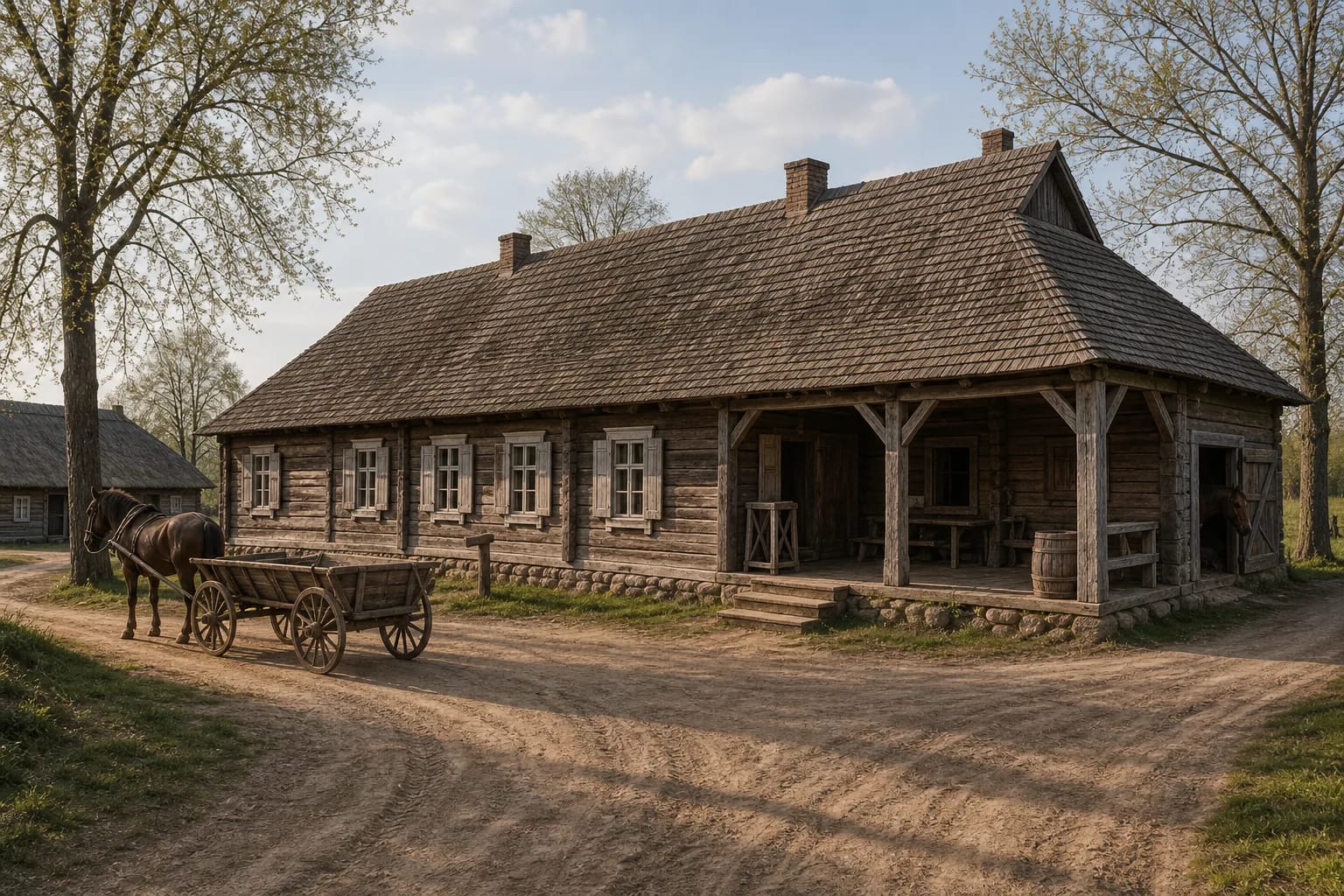
Large half-hipped or hipped roofs often dominated the building volume.
Heritage meaning
Inns tell the culture of roads and small towns: where people stopped, exchanged news, ate, and bargained.
When protecting an inn, it is important to preserve not only the walls but also the entrance, yard, stables, and relationship to the road.