- Category
- Work and Craft Buildings
- Type
- Production building for sawing timber
- Context
- Sawmill, water saw, sawmill mill, frame saw, logs, boards, manor, watermill
- Source status
- well attested
Water saw, Sawmill mill, Frame saw
Lentpjūvė, the Sawmill: types and elements
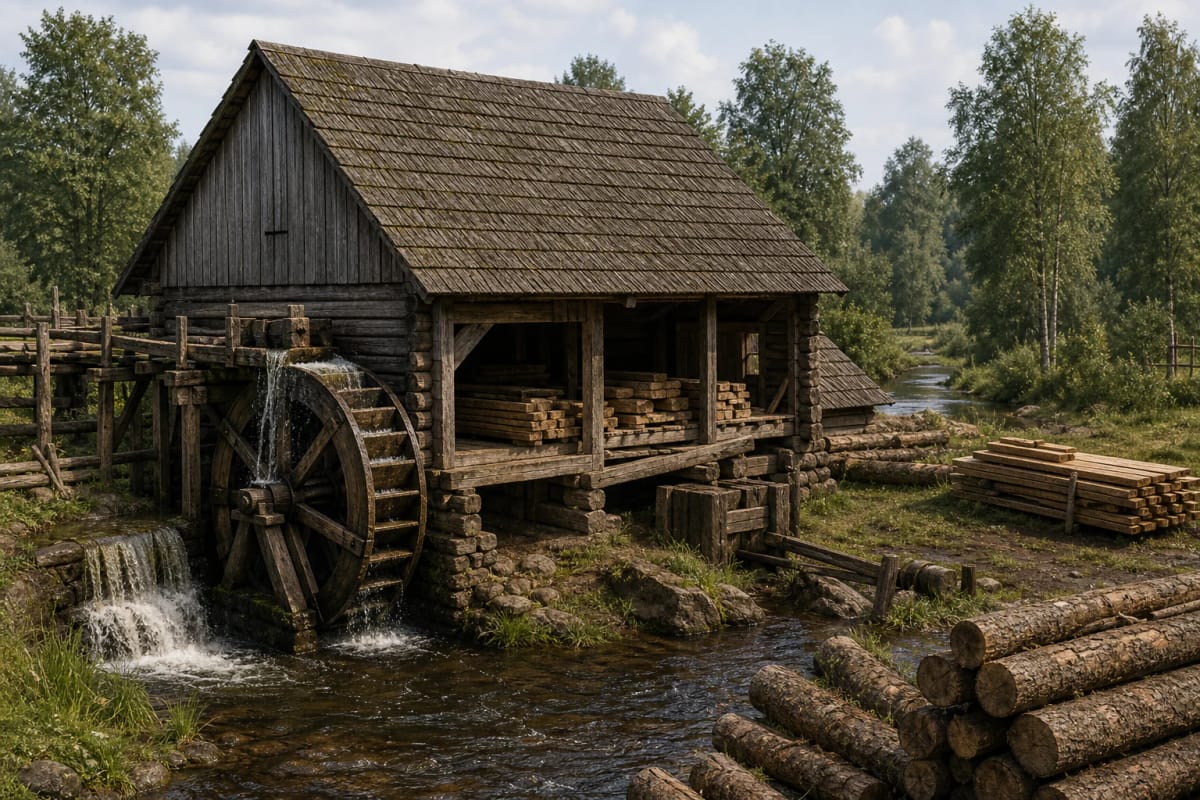
Water-powered sawmill: A sawmill operating beside a watermill or water-powered drive.
Wind-powered sawmill: A rarer form in which wind power drove the sawing.
Steam sawmill: A nineteenth-century form of modernising timber industry.
What is a lentpjūvė?
A lentpjūvė is a building or installation for sawing logs into boards, beams, sleepers, or other timber blanks. It belongs to the group of traditional production structures.
In the world of wooden architecture, the sawmill matters because it changes how material is prepared: from hand-hewing toward mechanised sawing.
History in Lithuania
Sawmills are known in Lithuania from the late medieval and early modern periods. At first they were connected with manors, watermills, and larger timber economies.
Older sources could call them water saws or sawmill mills. In the nineteenth century steam sawmills spread, encouraging larger timber production and export.
Technology and building
The form of a sawmill depended on its power source: water, wind, steam, or later engines. The building needed room for feeding logs, the sawing mechanism, stacking boards, and safe movement. According to VLE, sawmills are usually set near forest massifs, waterways, or railways, and logs are cut by continuous or cant-sawing methods with special sawing machines known as frame saws.
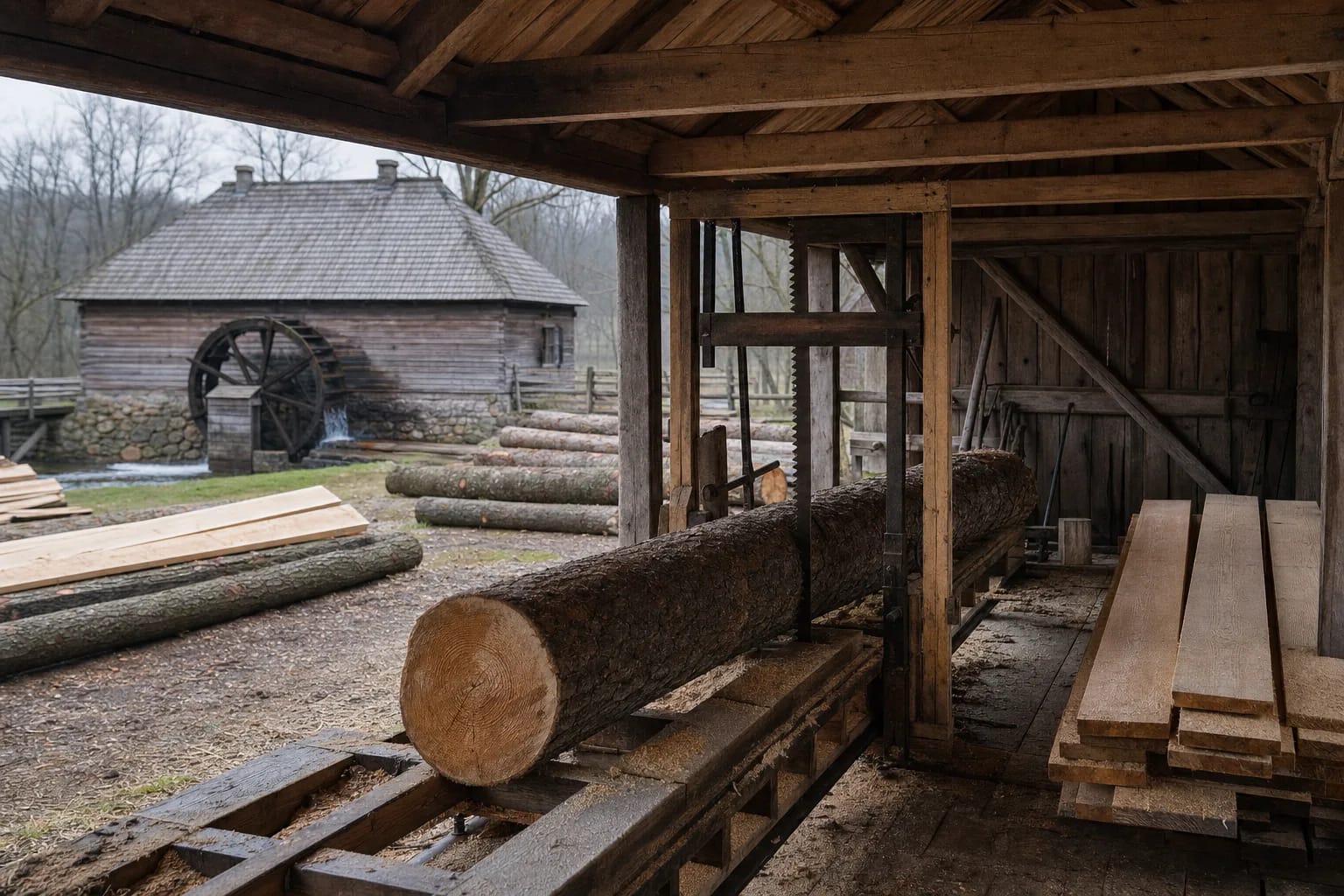
Water-powered sawmills often worked beside mills, so they belonged to a broader technical infrastructure: dam, channel, wheel, water level, and road.
Connection with traditional construction
As sawn boards became more common in building, wall cladding, floors, ceilings, roof details, window trims, and farm buildings changed. The sawmill contributed to this shift in timber processing.
For that reason a sawmill is not only industrial history. It is part of the material history of wooden architecture.