- Category
- Details of the Dwelling House
- Type
- Facade decoration and protection elements
- Context
- Shutters, window trims, antlangės, palangės, openwork carving, painted patterns, facade, wooden ornament
- Source status
- well attested
Antlangės, Antlangiai, Palangės, Polangiai, Window ornaments
Shutters and Window Trims: types and elements
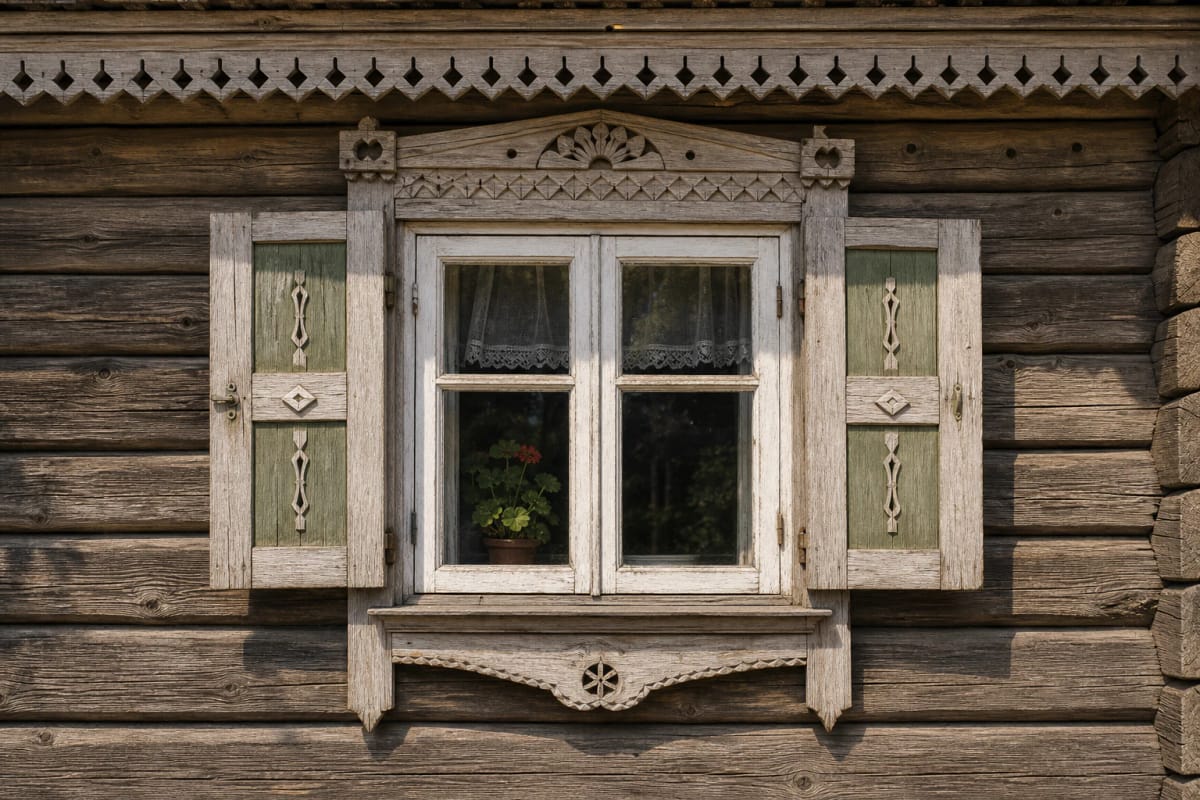
Shutters: Hinged wooden panels that protected the window and decorated the facade.
Window trims: Wooden details around the window, covering joints and forming a decorative frame.
Antlangės and palangės: Upper and lower parts of window decoration, often finished with openwork carving or paint.
What are shutters and trims?
Langinės are hinged wooden shutters beside windows, while window trims are framing details around the window opening. In a traditional house they had both practical and aesthetic functions.
Trims covered joints, protected wood from moisture, and gave the window a clear frame. Shutters protected against sun, wind, cold, and unwanted glances, while also creating the colour rhythm of the facade. According to VLE, the oldest shutters in Lithuania were made of straw, while plank shutters spread only from the early nineteenth century, first in towns and manors and later in larger village houses; in the early twentieth century framed-panel shutters painted white, bluish, or brown became popular.
Regional traits
On pirkios, the upper and lower trims were often decorated with flat openwork carving, and shutters could be painted in two colours or with plant motifs. This is especially important in eastern and southern Lithuanian wooden architecture.
On stubos, shutter, trim, cornice, and wind-board decoration became more abundant in the late nineteenth and early twentieth centuries. In Žemaitija the decoration is often more restrained, but window framing remains important.
The window as the centre of the facade
Windows determine the face of a house. Their size, division, rhythm, trim width, colours, and shutter form can change the whole character of a building.
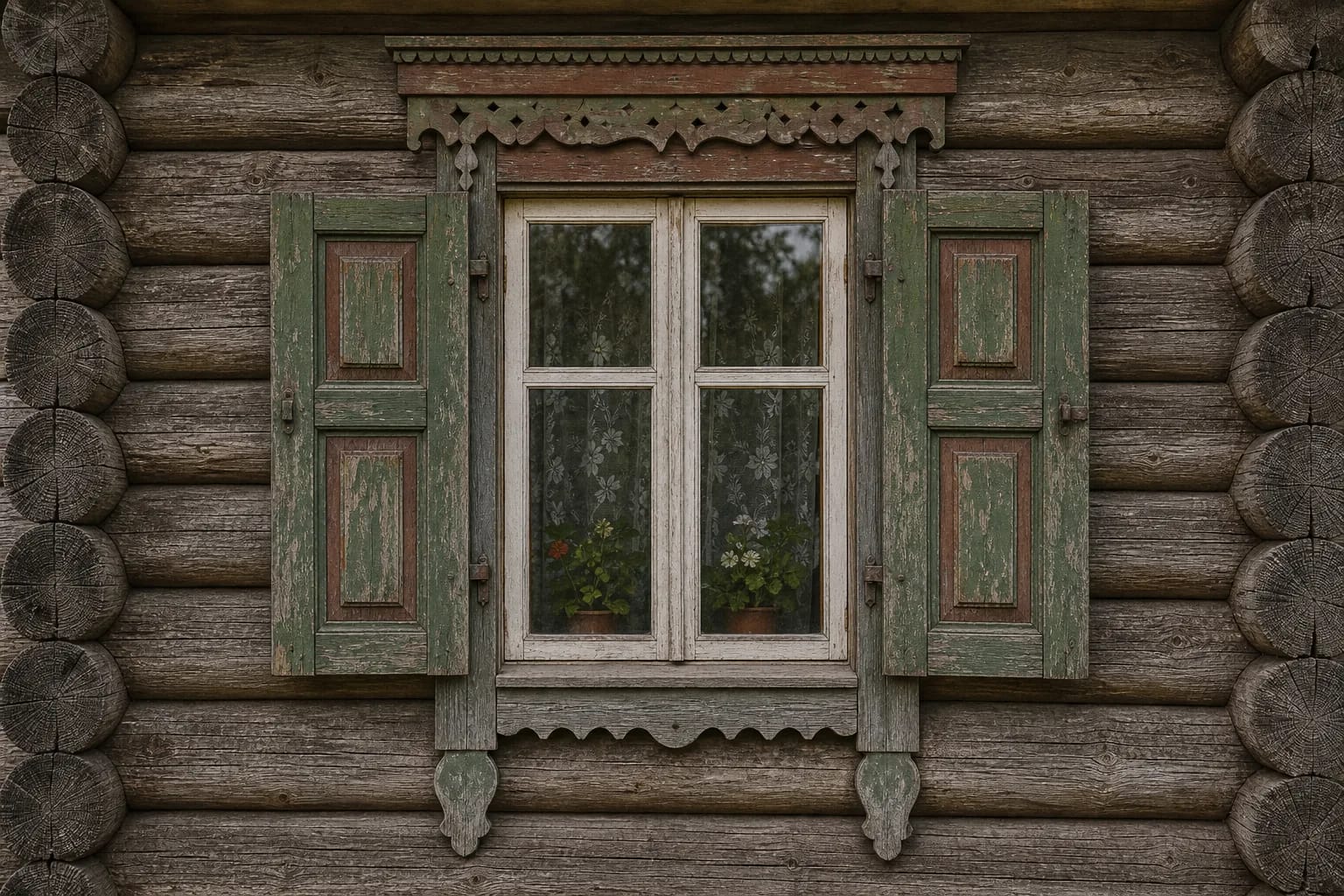
In traditional architecture a window is not just an opening for light. It mediates between interior and yard, so it receives more attention than many other parts of the wall.
Decoration and symbolism
Window decoration can include plant, geometric, solar, or tooth-like motifs. Not every ornament should be explained as an ancient symbol, but it does show the taste of the craftsperson, regional fashion, and the owner's wish for a beautiful house.
Openwork carving made it possible to create light, lace-like wooden decoration. It is especially effective on upper trims, wind boards, and porch details, where light emphasises the cut pattern.
Care and restoration
Old windows, trims, and shutters are often lost during quick repairs. Replacing them with plastic windows or standard trims can remove a building's regional face even when the log walls remain.
When working on wooden heritage, it is worth documenting old window divisions, hinges, paint layers, trim profiles, and board proportions. These details help restore the character of a specific house, not an abstract idea of tradition.