- Category
- Roofs and Ornament
- Type
- Wooden facade and roof-edge details
- Context
- windboards, cornices, openwork carving, overhangs, eaves, gables, wooden ornament, Dzūkija, Aukštaitija
- Source status
- well attested
Windboard, Cornice, Openwork carving, Pierced ornament
Windboards, Cornices, and Openwork Carving: types and elements
Windboard: A board protecting the side edge of the roof from wind and rain.
Cornice: A roof or wall projection that protects the wall and forms a shadow line.
Openwork-carved detail: A wooden ornament cut through to create a pierced pattern.
What are windboards, cornices, and openwork carving?
Windboards protect roof edges, cornices form the eave edge and protect walls, and openwork carving is a woodworking method that creates pierced ornaments.
Together these details make a wooden house recognizable. They join practical protection with the visible hand of the craftsman. According to VLE, the word karnizas, cornice, comes from German Karnies and ultimately from Greek korōnis, meaning completion; in classical architecture a cornice is the upper projecting part of an entablature, often decorated with dentils and relief ornament.
Weather protection
Wide overhangs, cornices, and windboards protect log walls from rain, snow, and wind. Without them the wood becomes wet and decays more quickly.
For that reason a decorative detail often has a very practical cause.
Ornamental motifs
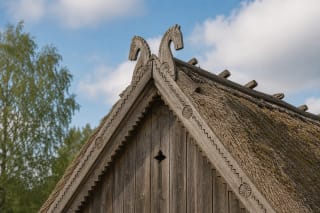
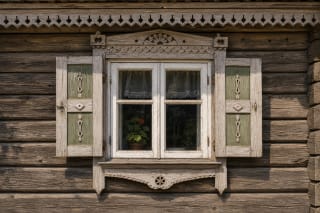
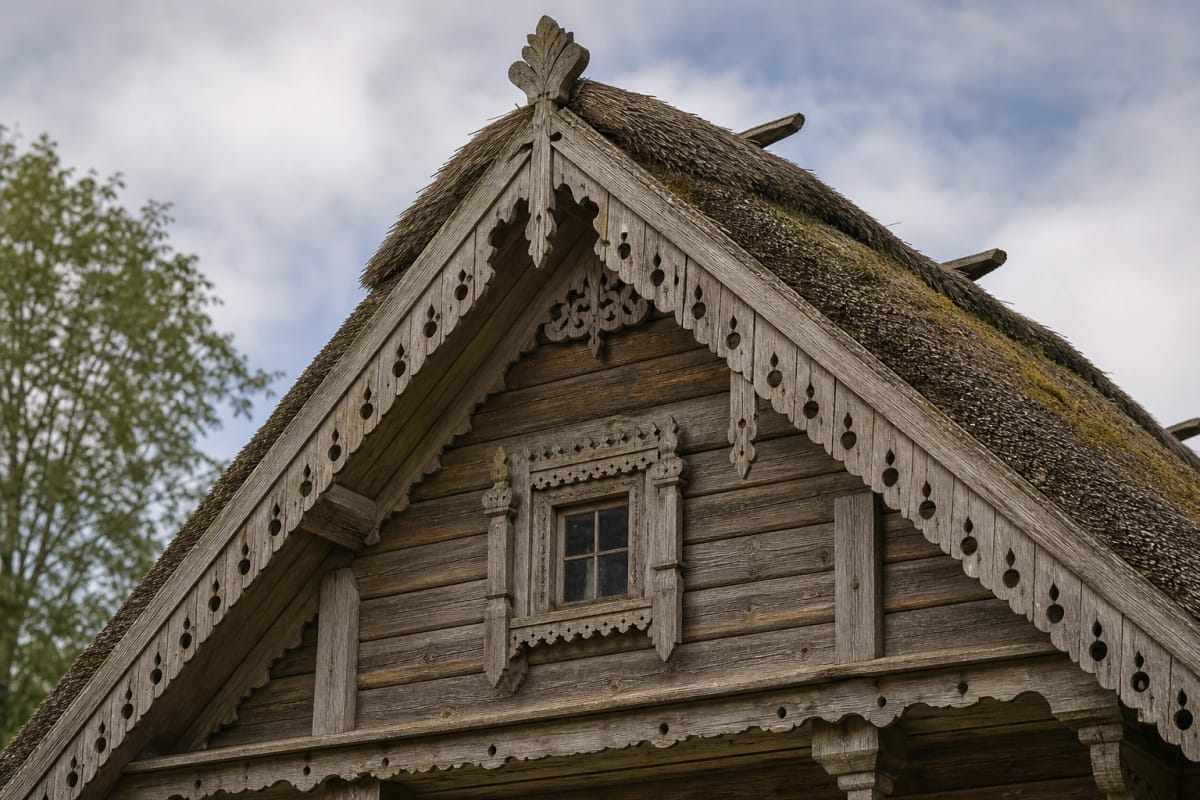
In Dzūkija and Aukštaitija, windboards, gable edges, small roofs, and other details were cut with dentils, arcs, small circles, plant silhouettes, or geometric forms.
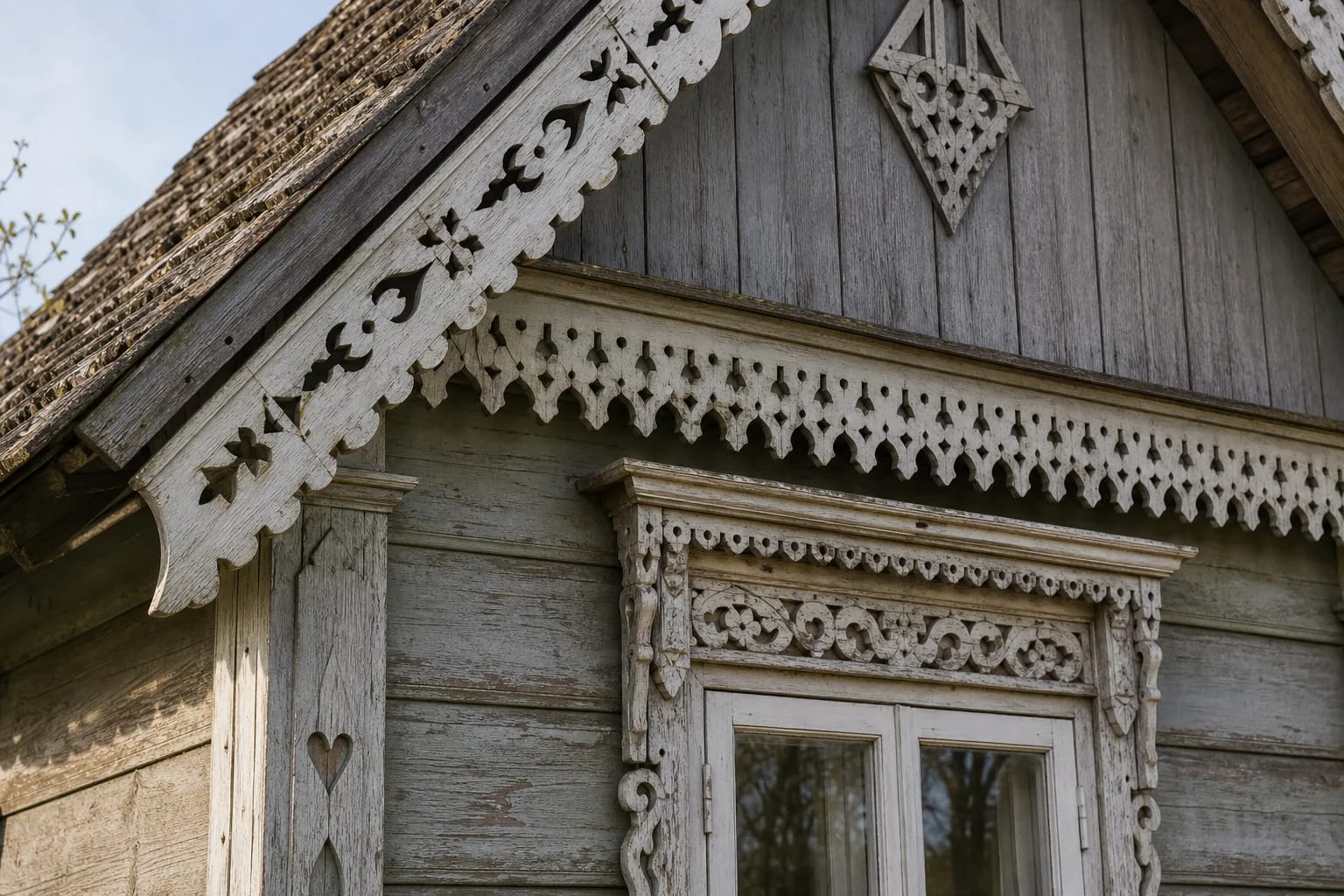
Openwork carving gives wood a sense of lightness. It is especially visible on roof ends, porches, and windows.
Restoration mistakes
A common mistake is replacing old windboards and cornices with standard boards without profile. The building remains technically covered, but loses its face.
Before replacement, the width, profile, pattern, joints, and paint layers of old details should be measured.