- Category
- Farm Buildings
- Type
- Storehouse for grain, clothing, and valuables
- Context
- Klėtis, svirnas, prieklėtis, grain bins, grain, dowry, farmstead storage, wooden storehouse
- Source status
- well attested
Klėtis, Svirnas, Prieklėtis, Grain klėtis
Klėtis / Svirnas: types and elements
One-room klėtis: A simpler building for storing grain, flour, or objects.
Multi-kamara svirnas: A larger building with several rooms, typical of wealthier farms or manors.
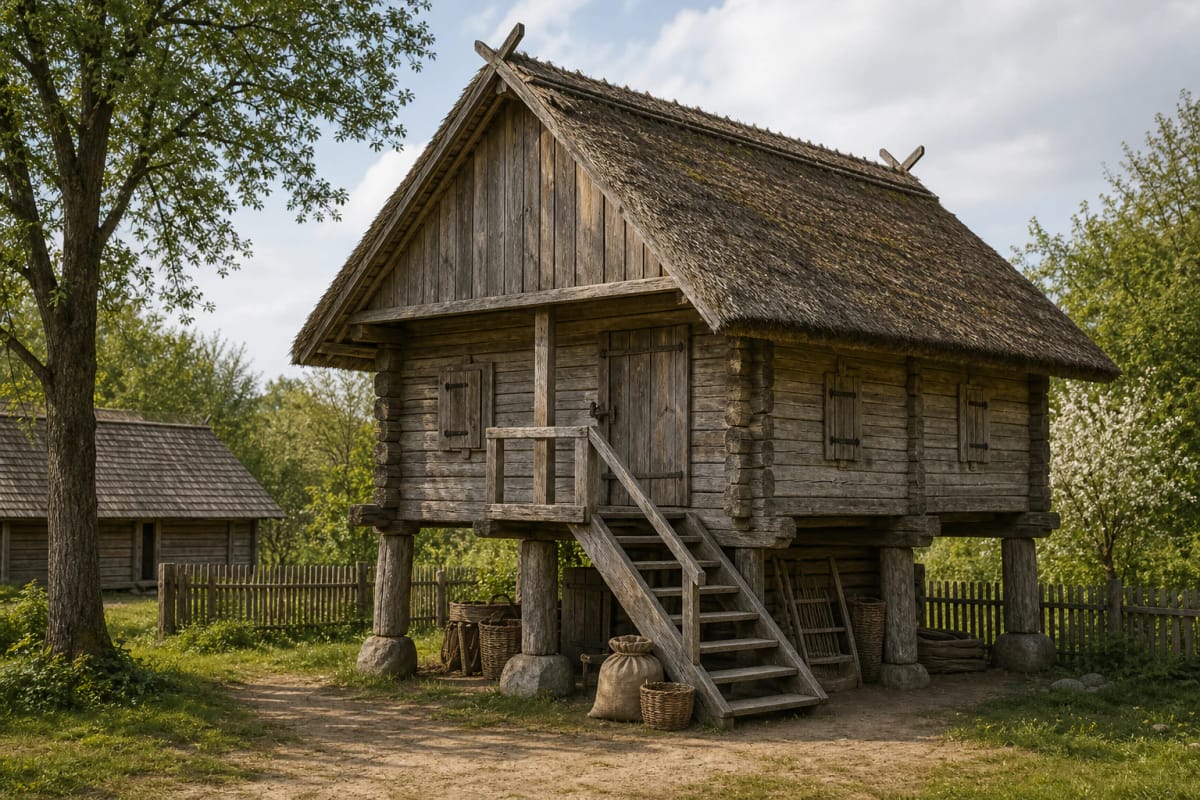
Klėtis with prieklėtis: A type with a roofed front gallery or posts, often more decorative than other farm buildings.
What is a klėtis or svirnas?
A klėtis is the storehouse of a traditional farmstead. Grain, flour, clothing, dowry goods, tools, and more valuable household objects were kept there. Svirnas is often used as a close term and in some contexts is more associated with a larger or wealthier farm storehouse.
This building was no less important than the living house. If the pirkia or troba showed the family's everyday life, the klėtis showed its accumulated wealth, food security, and the result of a year's work.
Form and construction
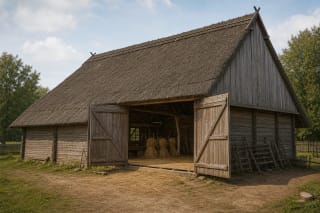
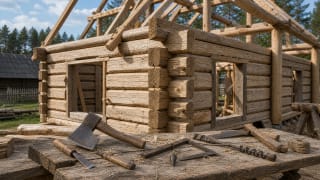
Klėtys were usually log-built and raised on stones, blocks, or corner supports so stored grain would be protected from moisture. The roof could be gabled, hipped, or half-hipped, covered with straw, split shingles, shingles, or another covering. According to VLE, svirnai are mentioned in Lithuanian sources already in the twelfth century; their foundations were high, up to 1 m, so the building would ventilate well, the priesvirnis was often decorated with relief carving, and manor svirnai were masonry, sometimes with stone-masonry cellars.
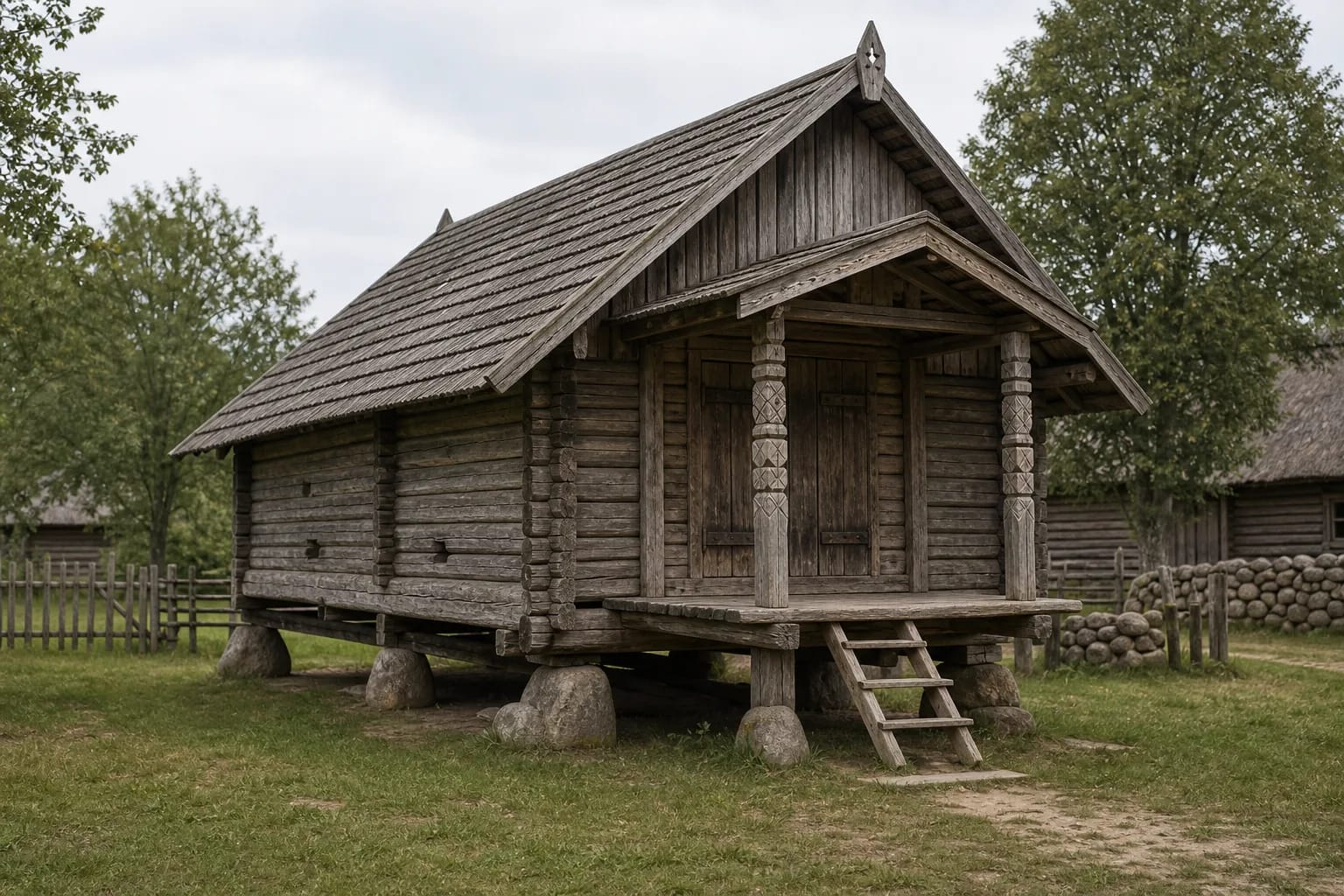
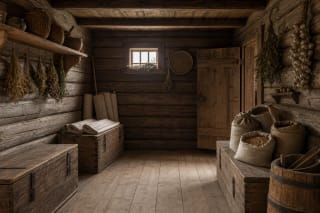
Inside were grain bins. In more decorative klėtys, the prieklėtis with posts, door trim, low threshold, carving, and orderly facade composition were important.
Regional types
The svirnai of Aukštaitija, Žemaitija, and Suvalkija differed in size, proportions, and number of rooms. In Žemaitija larger farms could have multi-room svirnai, while in other regions the klėtis sometimes remained more compact.
The klėtis was often one of the most decorative farm buildings. This makes sense: food and dowry goods were kept there, so more attention was given to it than to an ordinary shelter.
Life and symbolic value
In some places people slept in klėtys in summer, especially young people or guests. The cooler, drier, separate space suited seasonal use.
The klėtis is also connected with dowry, clothing, textiles, and family well-being. It was a practical building, but also a deeply cultural one.