- Category
- Farm Buildings
- Type
- Building or room for drying grain, flax, and hemp
- Context
- Jauja, rėja, duoba, flax, hemp, drying racks, aukštinis, kurtinys, aznyčia, Žemaitija
- Source status
- well attested
Jauja, Rėja, Reja, Duoba
Jauja / Rėja: types and elements
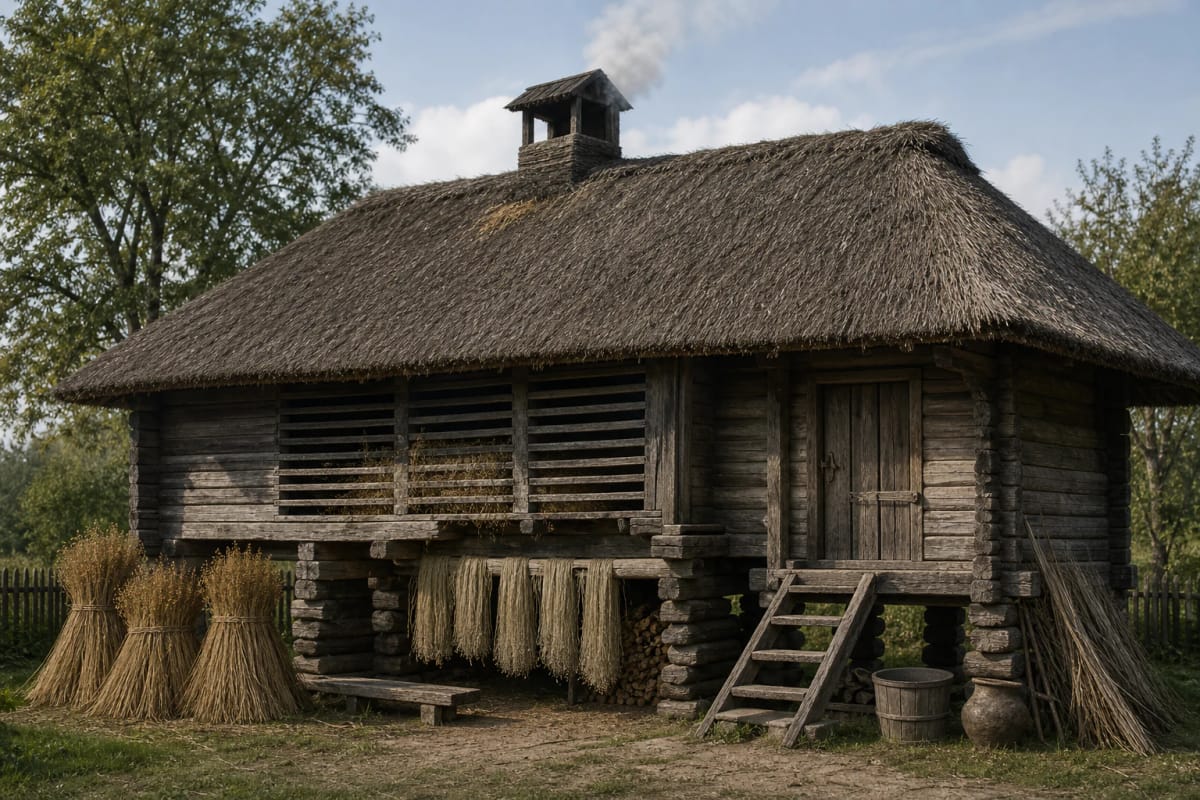
Separate jauja: A small tight building with a stove for drying the harvest.
Kluonas jauja: A jauja room installed in or beside a kluonas.
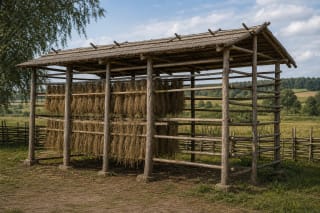
Flax jauja: A later function in which the jauja was used to dry flax or hemp.
What is a jauja?
A jauja or rėja is a building or room for drying the harvest. At first it was especially connected with grain, and from the eighteenth century also with drying flax and hemp.
It is a technological farmstead building. Its value lies not in exterior decoration but in the ability to control heat, smoke, tightness, and the drying process.
History
Jaujos are mentioned in sixteenth-century sources and are also connected with the farm order of the Valakas Reform period. They mattered where a damp harvest had to be prepared for threshing or further processing. According to VLE, the first information about the jauja survives in sixteenth-century historical sources of Lithuania Minor, including A. Guagnini and C. Hennenberger, and the building is also mentioned in the 1557 regulations of the Valakas Reform.
In Žemaitija the jauja survived longer as a separate building or as a room of the kluonas. Later, as newer technologies spread, its practical importance declined.
Stove and interior equipment
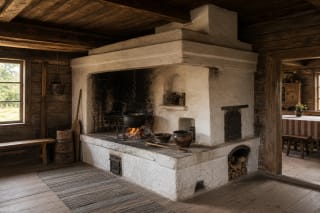
The jauja had a massive stone-and-clay stove. The room was often small, tight, without large windows, and equipped with drying racks on which grain, flax, or hemp was dried.
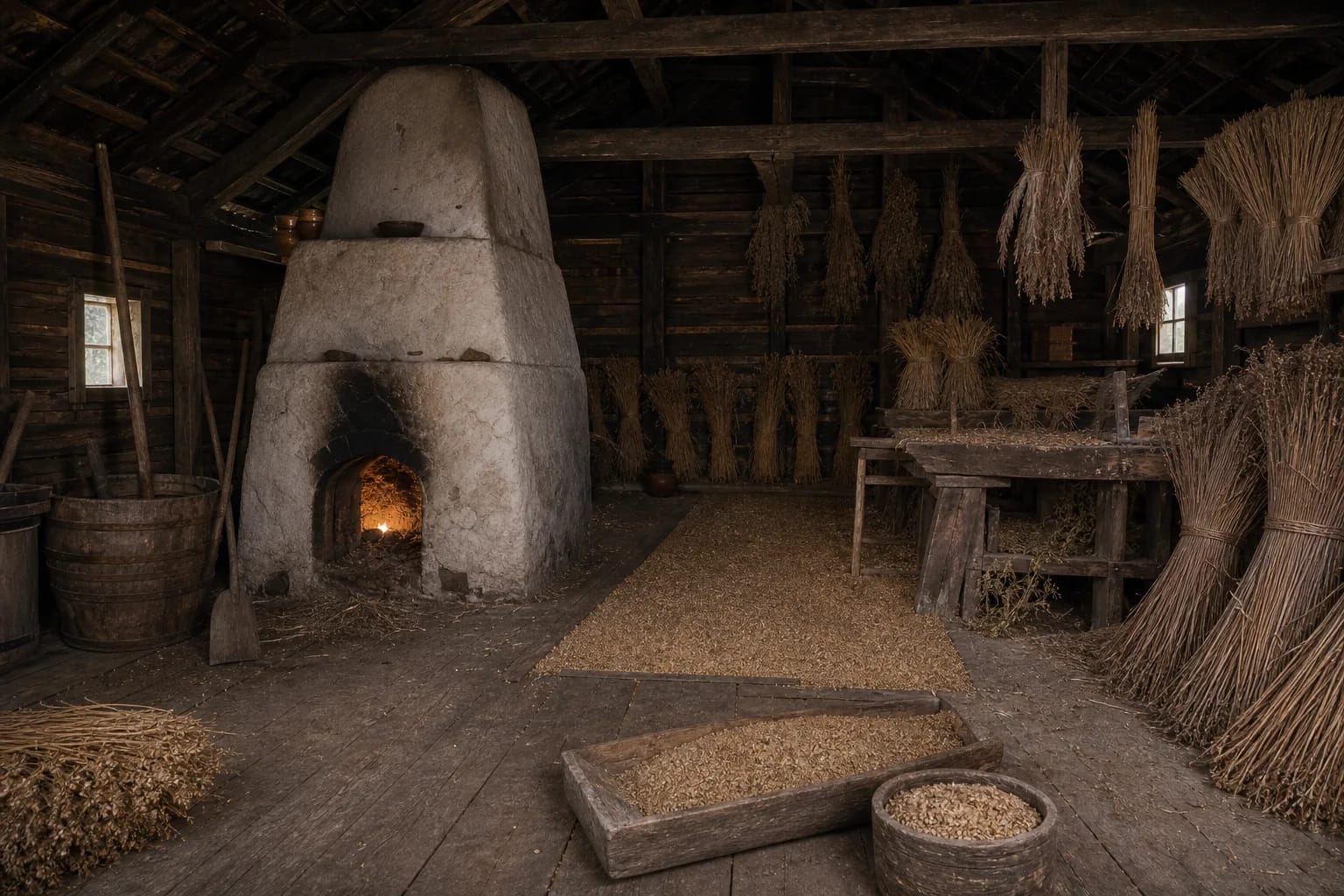
Important terms include aukštinis, ardai, kurtinys, and aznyčia. They show that the jauja had its own technological vocabulary, which cannot be reduced to the general word stove.
Relation to the kluonas
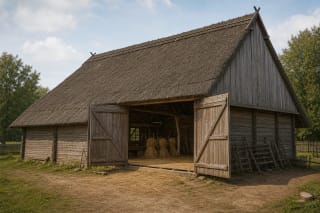
The jauja often worked together with the kluonas. In some places it was a separate building; elsewhere it was part of the kluonas. Dried harvest could be threshed more easily, so these buildings belonged to the same grain-farming cycle.
In Žemaitian kluonai, the jauja is one of the more distinctive regional features because it shows the combination of local farming and construction.