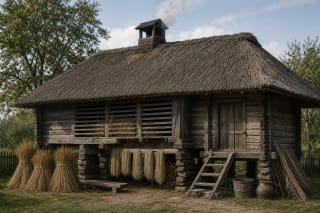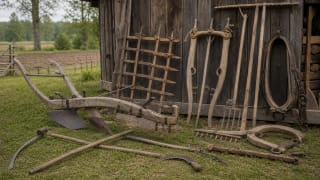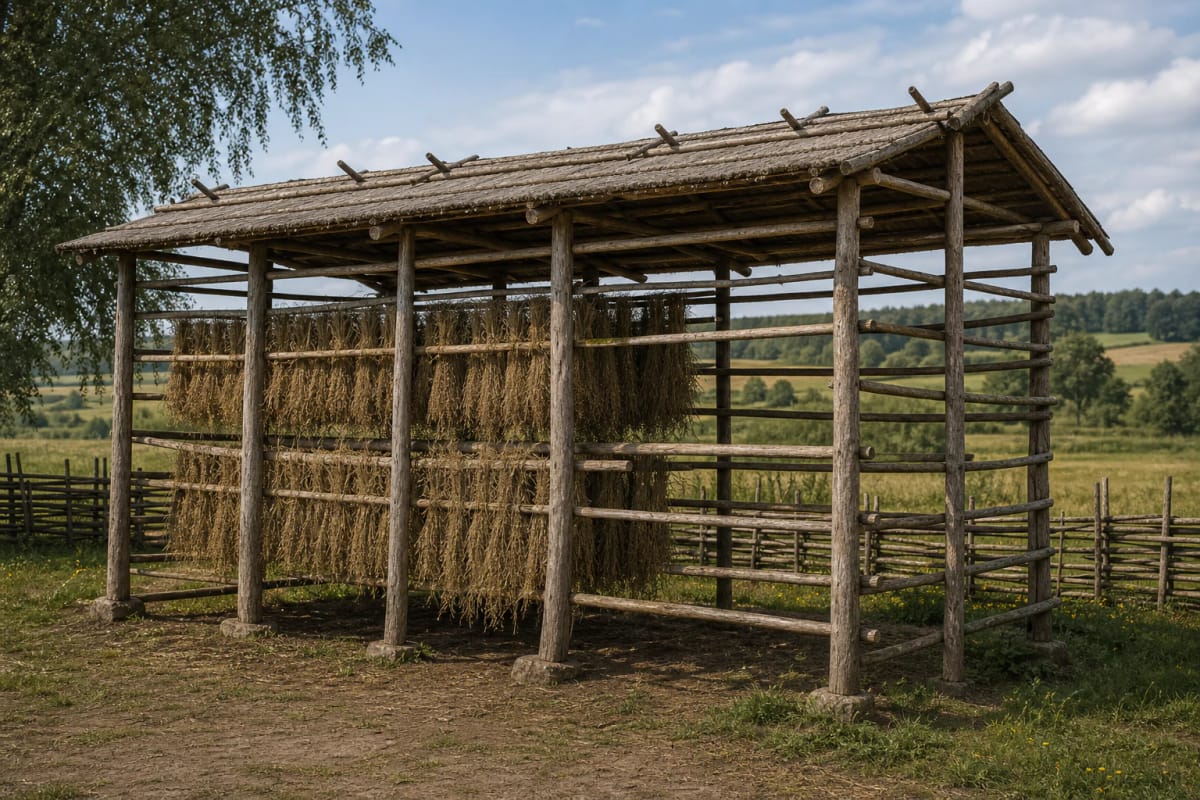
- Category
- Farm Buildings
- Type
- Flax-farming and drying building
- Context
- žardinė, žardas, flax, flax-head drying, Žemaitija, homestead farm zone, flax growing
- Source status
- regional tradition
Flax žardinė, Žardas, Flax-working building
Žardinė Flax-Drying Building: types and elements
Flax žardinė: A building or structure for drying flax heads and raw materials connected with flax farming.
Žardas: A frame or pole drying structure close to the function of the žardinė.
What is a žardinė?
A žardinė is an auxiliary homestead building or structure associated with flax farming. It is most often mentioned as a place for drying flax heads or other raw materials of flax work.
Unlike a daržinė, which stores hay and fodder, the žardinė is more specialized. It belongs to the flax-processing cycle and is best understood together with the jauja, žardai, and flax-working tools.
Regional context
The žardinė is especially visible in descriptions of Žemaitija traditional architecture. In the farm zone of western Lithuanian homesteads, flax processing had its own buildings, drying places, and terms.
It was not always a large or ornate building. For that reason the žardinė easily disappears from general images of the homestead, but it is important for understanding how small farm technologies shaped architecture.
Form and function
A žardinė had to be dry, ventilated, and convenient for work. Its structure could be lighter than log buildings because the main purpose was holding and drying, not heating or living.
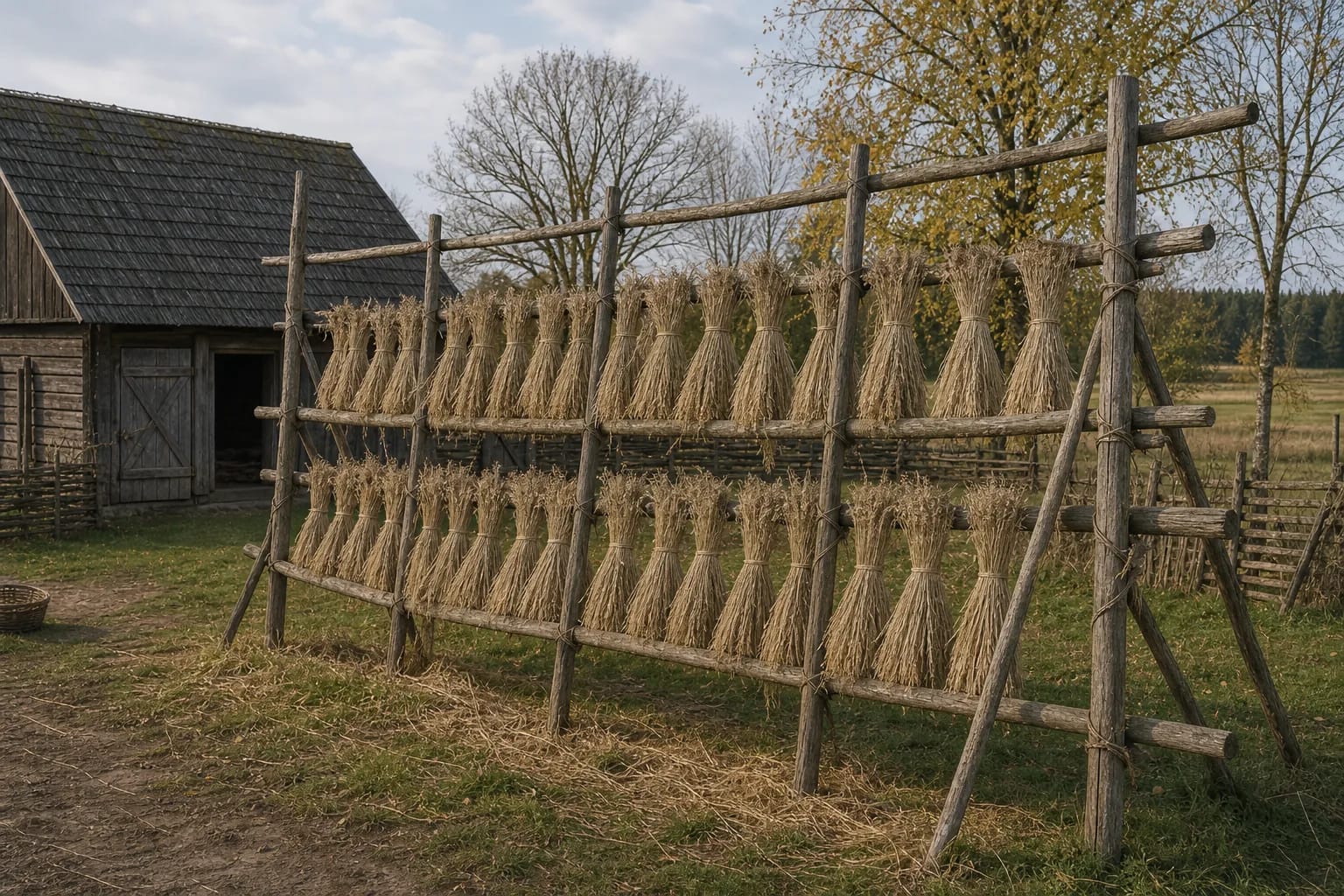
Žardai and similar pole structures allowed plant material to be spread so it could dry evenly. This architecture is highly functional and seasonal. According to VLE, žardai are mentioned in Lithuanian manor inventories already in the 16th-17th centuries; the most archaic ones were rows of small spruces stuck into the ground every 25-30 cm, while more developed ones had 3-4 m high posts with up to 13 rows of horizontal poles; in Eastern Lithuania such žardai were used until the early 20th century.
Why the žardinė deserves separate attention
The žardinė helps avoid overusing the broad term farm building. A traditional homestead consisted of specialized work places, and each had its own building logic.
This page also connects architecture with flax growing, one of the most important fields of Lithuanian rural economy and textile culture.