- Category
- Identification Guides
- Type
- Practical guide to reading traditional architecture
- Context
- Lithuanian folk architecture, traditional farmstead, wooden construction, roofs, regions, structures, proportions
- Source status
- synthetic guide from authoritative sources
Recognizing folk architecture, Features of a traditional farmstead, Signs of ethno-architecture
How to Recognize a Traditional Lithuanian Building: types and elements
Materials: Wood, fieldstone, clay, straw, reed, skiedros, or malksnos.
Construction: Log construction, post or frame systems, rafter or post-supported roofs.
Farmstead ensemble: Living house, klėtis, kluonas, tvartas, well, fences, orchard, and flower garden.
First principle: look at the whole
A traditional building is not recognized from one roof horse head or one shutter. One must see materials, construction, roof, proportion, windows, doors, the building's place in the farmstead, and region.
Sometimes a later added detail may look folk-like, while the building itself has lost its traditional structure. The whole set of features is therefore most important.
Materials and construction
The most common signs are log walls, stone foundations, clay or straw infill, wooden roof construction, and roofing of straw, reed, skiedros, malksnos, or gontai.
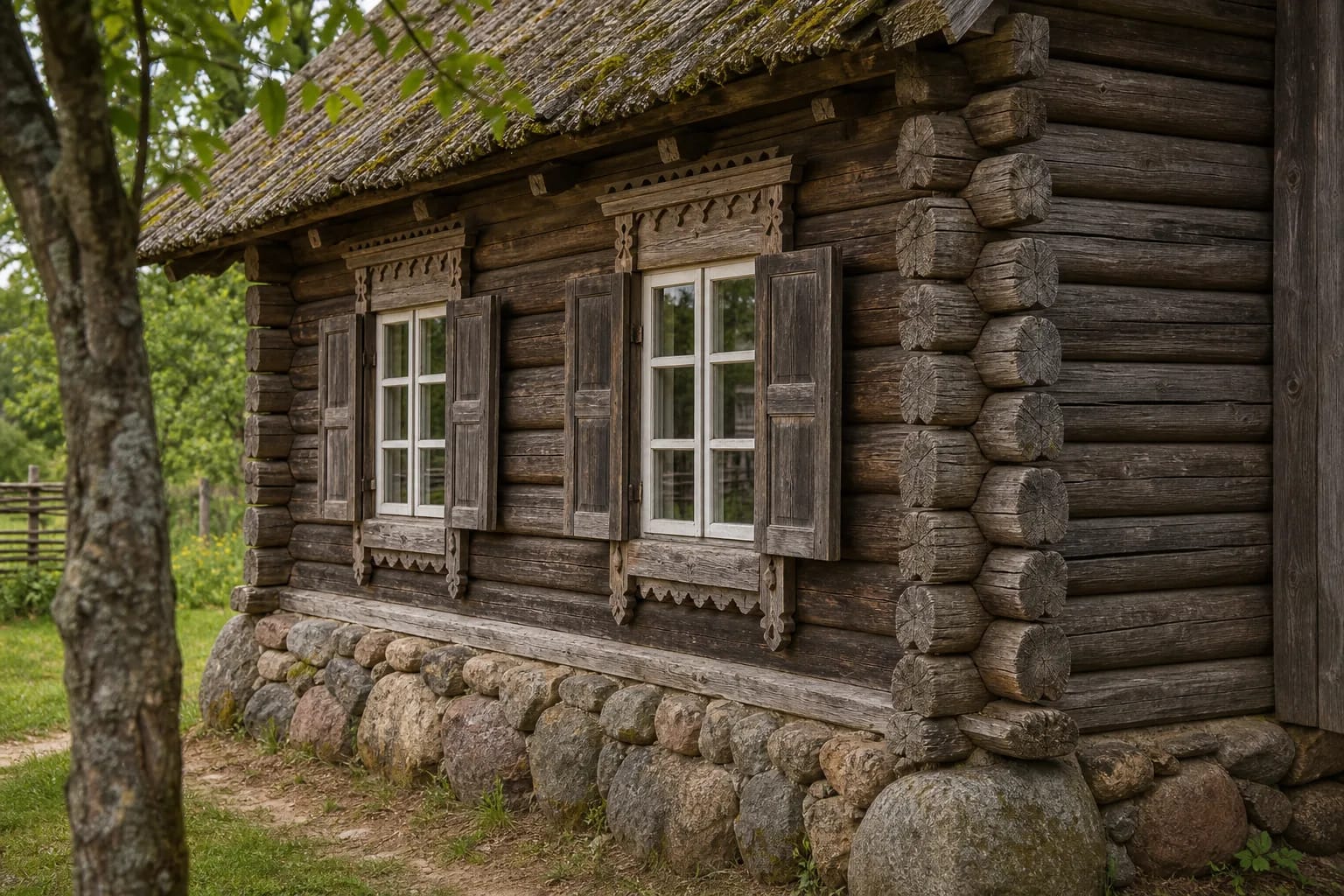
Log construction, corner notches, rafters, pėdžios, battens, and the lower foundation crown tell more than paint color alone.
Roof and proportion
A high, clearly shaped roof, broad eaves, and suitable pitch are very important. The roof protects the wood and forms the entire silhouette of the building.
A traditional building often has restrained proportions: no oversized windows, random annexes, or flat roofs.
Regional signs
Pirkia is more associated with Dzūkija and Eastern Aukštaitija, troba with Žemaitija, and stuba with Suvalkija and Lithuania Minor. Klėtys, kluonai, jaujos, roofs, and decoration also have regional features.
For recognition, it is important to know the local name. The single word house hides many differences. According to VLE, Lithuanian folk architecture belongs to the Northeastern and Central European area: Western Lithuanian building is close to Central European traditions, while Eastern Lithuanian building is close to Northeastern European traditions; this architecture is also found beyond today's Lithuania, in Lithuania Minor, Western Belarus, and Northern Poland.
Farmstead context
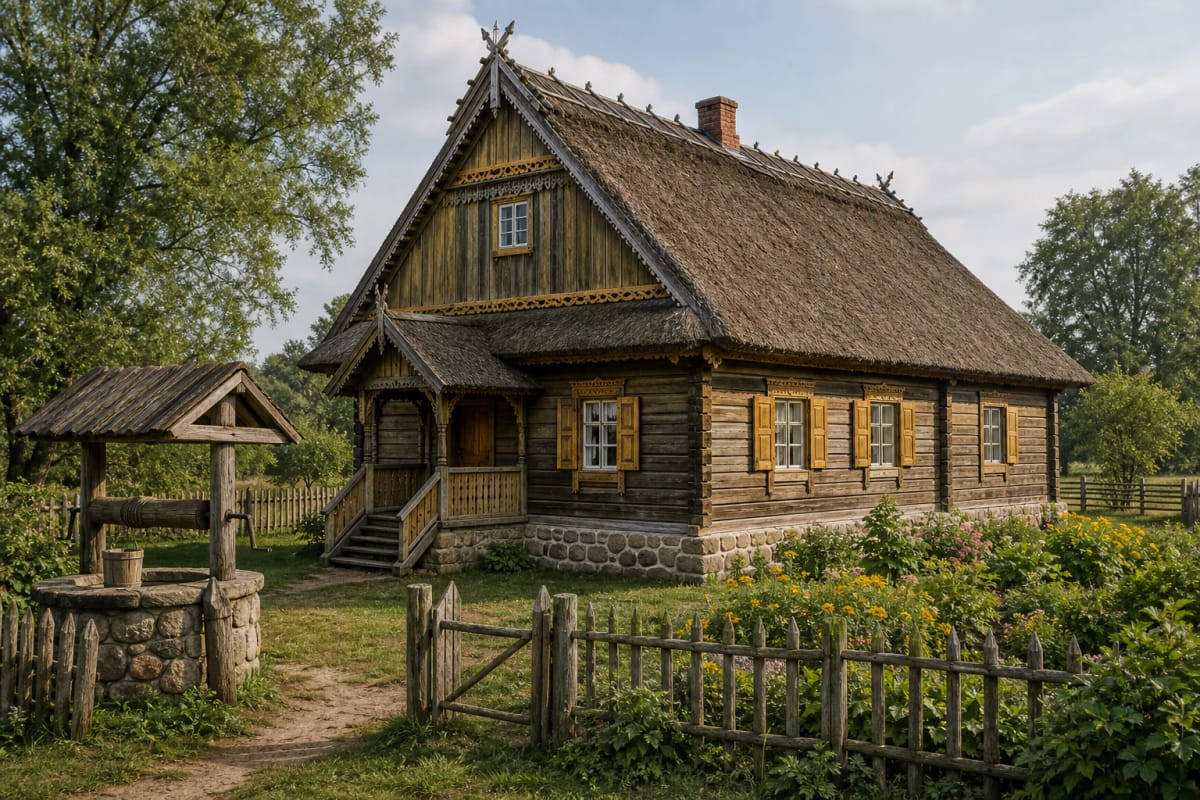
A traditional building is best understood in a farmstead. The living house, klėtis, tvartas, kluonas, sauna, well, orchard, fences, and gates form an ensemble.
If a building has been moved, surrounded by random annexes, or stripped of its setting, it must be read more cautiously.