- Category
- Building Methods and Structures
- Type
- Post and frame wall system
- Context
- post construction, frame construction, pėdžios, šulai, brushwood, boards, clay infill, barns, threshing barns
- Source status
- well attested
Post construction, Frame construction, Šulinė construction, Half-timbering
Post and Frame Construction: types and elements
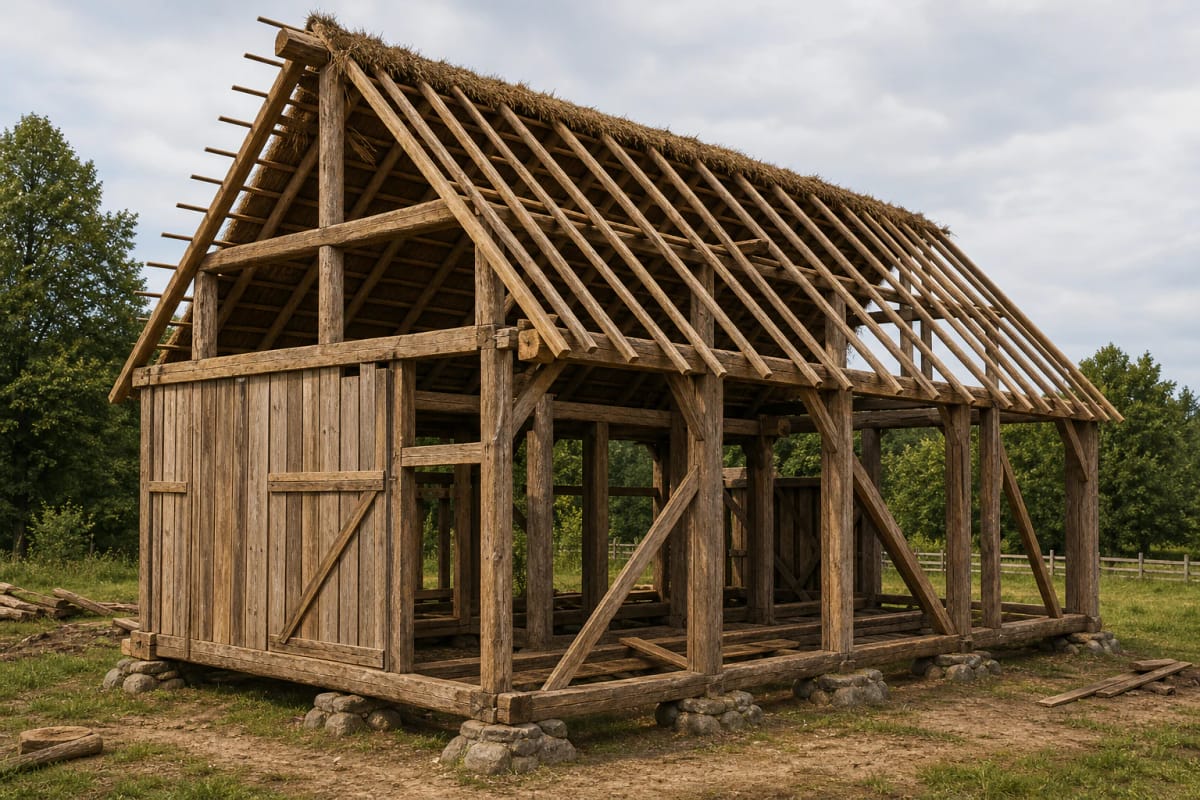
Post structure: A load-bearing system of posts set into the ground or onto a foundation.
Frame wall: A wooden frame whose spaces are filled with boards, clay, bricks, or other materials.
Pėdinis threshing barn: A threshing barn where roof loads are carried by pėdžios, allowing lighter walls.
What is post and frame construction?
Post construction relies on load-bearing posts or šulai, while frame construction relies on a wooden frame. These techniques make lighter walls possible, use less log timber, and conveniently create large-volume farm buildings.
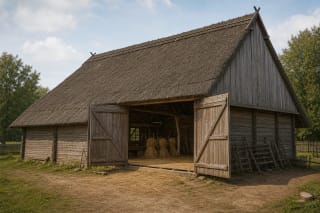
They are especially important for threshing barns, hay barns, sheds, and some cattle buildings.
Posts, šulai, and pėdžios
In a post structure, vertical elements take the loads. They may carry walls, the roof, or the whole building frame. In pėdinė construction, pėdžios are especially important for threshing-barn roofs.
The spaces between posts could be covered with boards, woven with brushwood, or closed with other materials. According to VLE, post foundations for wooden rural buildings were made from scorched and tarred squared timbers dug into the ground to a depth of up to 1.4 m, with a flat stone placed under the post to increase the bearing area.
Frame and infill
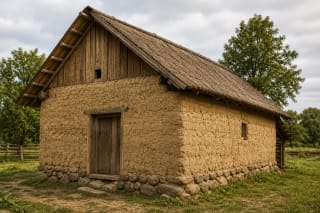
A frame wall separates the load-bearing structure from the wall infill. Wood, clay, bricks, straw, or mixed materials were used as infill.
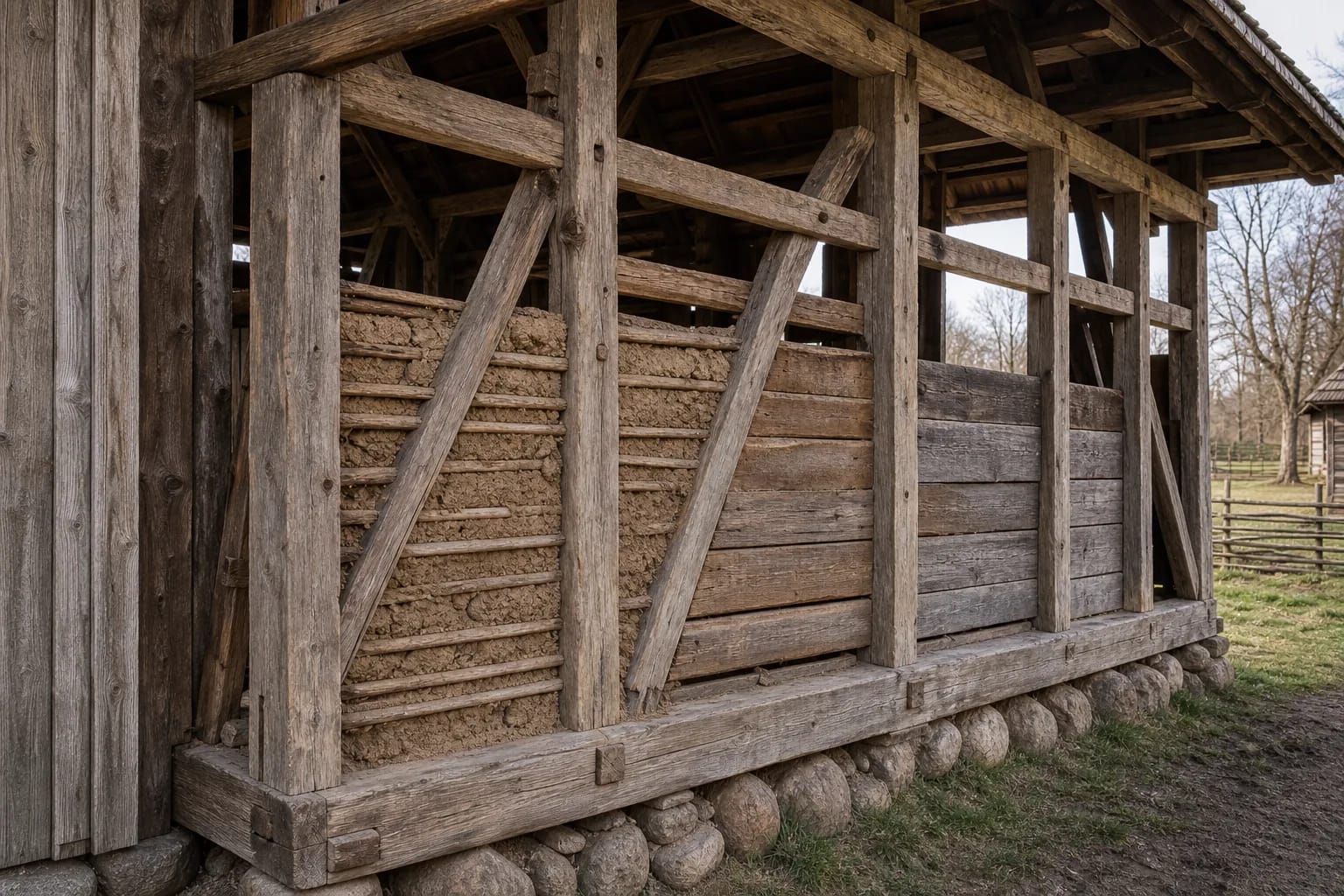
In the interwar period and later, board-clad frame hay barns became a practical way to build large, ventilated farm buildings.
Difference from log construction
In a rentinys, the wall itself is a load-bearing log system. In post or frame construction, posts and the frame carry loads, while the walls can be lighter.
For that reason these techniques have a different appearance and different restoration problems.