- Category
- Homestead Setting
- Type
- Water-supply and yard element
- Context
- well, rentinys lining, sweep, windlass, cover, small roof, water, street village, homestead yard
- Source status
- well attested
Dug well, Shaft well, Well with a sweep, Well with a windlass
Homestead Wells: types and elements
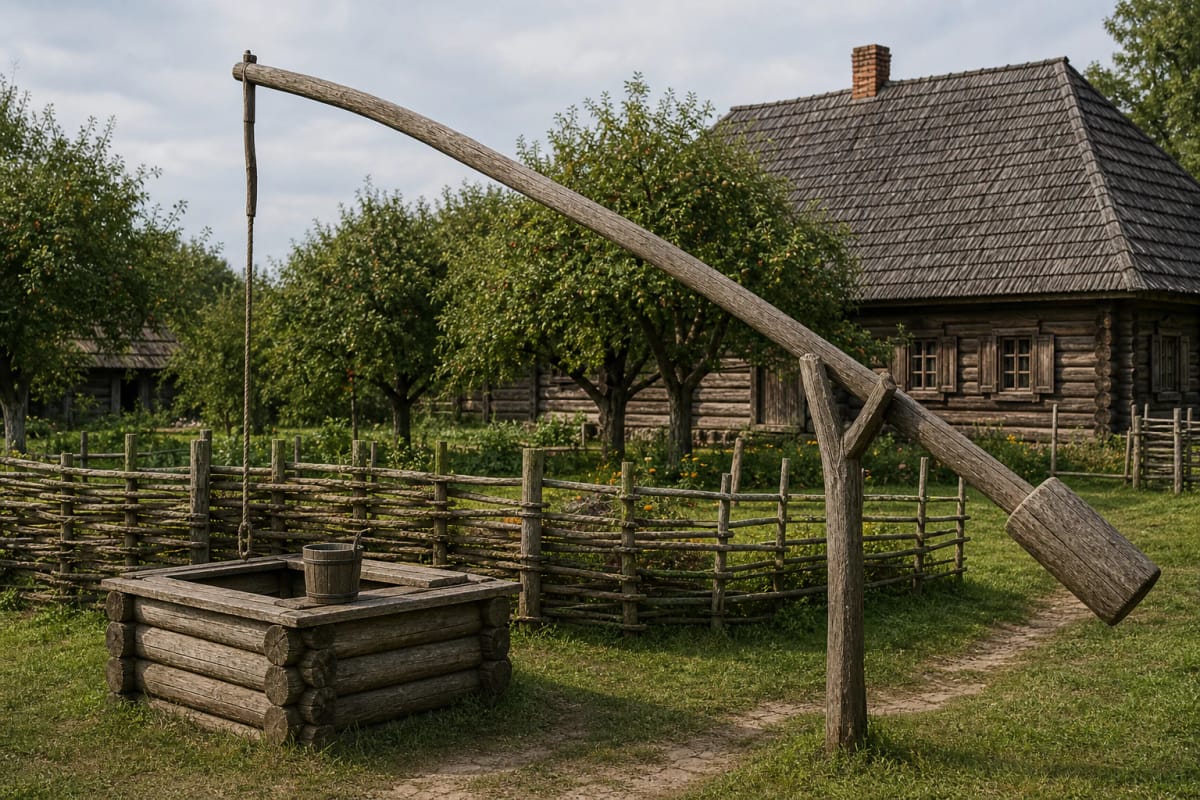
Well with a sweep: An older type in which a bucket is lifted with a long wooden sweep.
Well with a windlass: A later type in which a bucket is lifted by turning a windlass.
Shared village well: A well standing by the street or in a common place in a street village, serving several homesteads.
What is a homestead well?
A well is a water source in a homestead or village. It supplied people, animals, kitchen work, washing, sauna use, and the garden.
The well was technical, but also a very visible yard element. Its location, small roof, sweep, or windlass shaped the homestead view.
Place in the yard
The well was often placed between the clean yard and farmyard so it would be convenient for both the house and the animals. In street villages it sometimes stood near the street and served several homesteads.
The location had to be safe from contamination but convenient for daily use.
Construction
The well's rentinys lining could be made of logs, boards, or stone masonry. A raised part above ground, a cover, or a small roof protected the water. According to VLE, a dug shaft well is 1-1.5 m in diameter and several meters deep; its walls are reinforced with a log rentinys or masonry and continued about 0.8 m above ground, while the exterior is packed with clay to a depth of 1.5-2 m so surface water does not contaminate it.
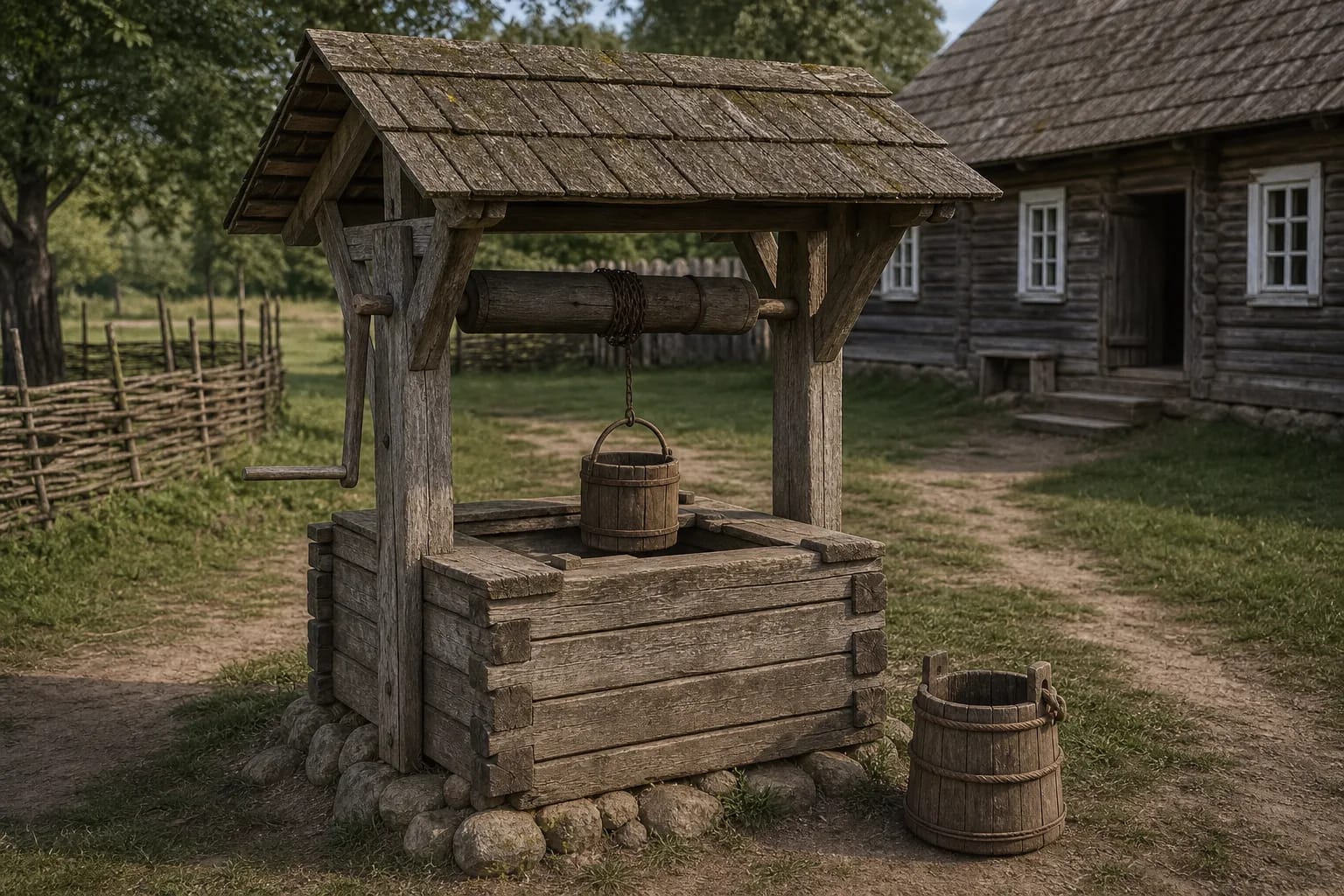
Older wells were often fitted with a sweep, while the windlass mechanism spread later.
Heritage value
An old well shows the daily infrastructure of a homestead. Even if it is no longer used, it helps explain the yard plan.
When restoring a homestead, it is important to preserve not only houses but also water places, because without them homestead life becomes harder to read.