- Category
- Villages and Settlements
- Type
- Separate homestead with a land plot
- Context
- vienkiemis, viensėdis, dispersed farmstead, land reform, Stolypin reform, interwar period, Sūduva, land reclamation
- Source status
- well attested
Vienkiemis, Viensėdis, Dispersed farmstead, Užusienis
Vienkiemis / Viensėdis: types and elements
Vienkiemis: A separate homestead connected to a village or small town but physically set apart from other homesteads.
Viensėdis: Often an older single-homestead settlement with a proper name and a more independent settlement identity.
Dispersed farmstead: A homestead type where buildings are placed more spaciously, directly beside the family's land.
What is a vienkiemis?
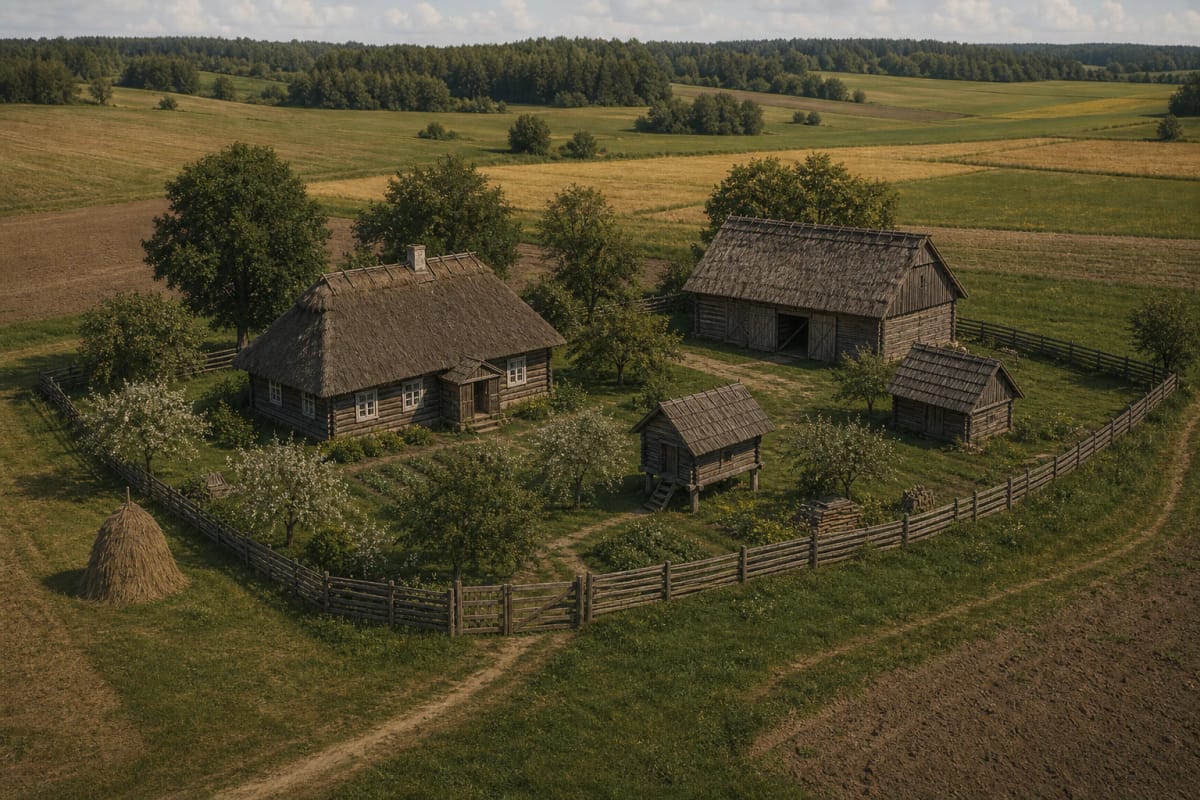
A vienkiemis is a separate homestead with a land plot, standing away from other village homesteads. It may belong to the wider village territory but is spatially independent.
Viensėdis is a close term, often meaning a one-homestead settlement with its own name and history. In everyday language the words are sometimes mixed, but in heritage descriptions the distinction matters.
History of reforms
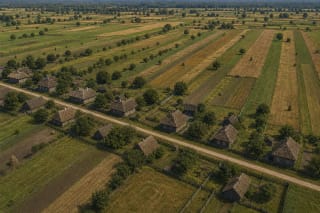
Vienkiemiai increased in the 19th century and especially during the Stolypin and interwar land reforms. Strip-field villages were divided and land was consolidated around separate homesteads.
In 1919-1939 Lithuania formed very many new vienkiemiai. In Sūduva, the dispersed farmstead became especially visible earlier because of the region's reform history. According to VLE, during the Stolypin reform of 1907-1914, 2,460 villages were divided in the Kaunas and Vilnius gubernias, and in 1919-1939 more than 159,000 new vienkiemiai were formed; in 1939 about 270,000 vienkiemiai housed about 80 percent of all peasants, while they were destroyed during the 1941-1945 war and especially from the 1960s through land reclamation.
Homestead architecture
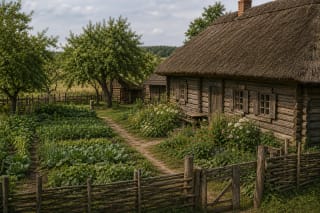
In a vienkiemis, buildings can be placed more spaciously than in a narrow street-village strip. The dwelling house, klėtis, cattle shed, threshing barn, orchard, vegetable garden, and yard form an independent farm island.
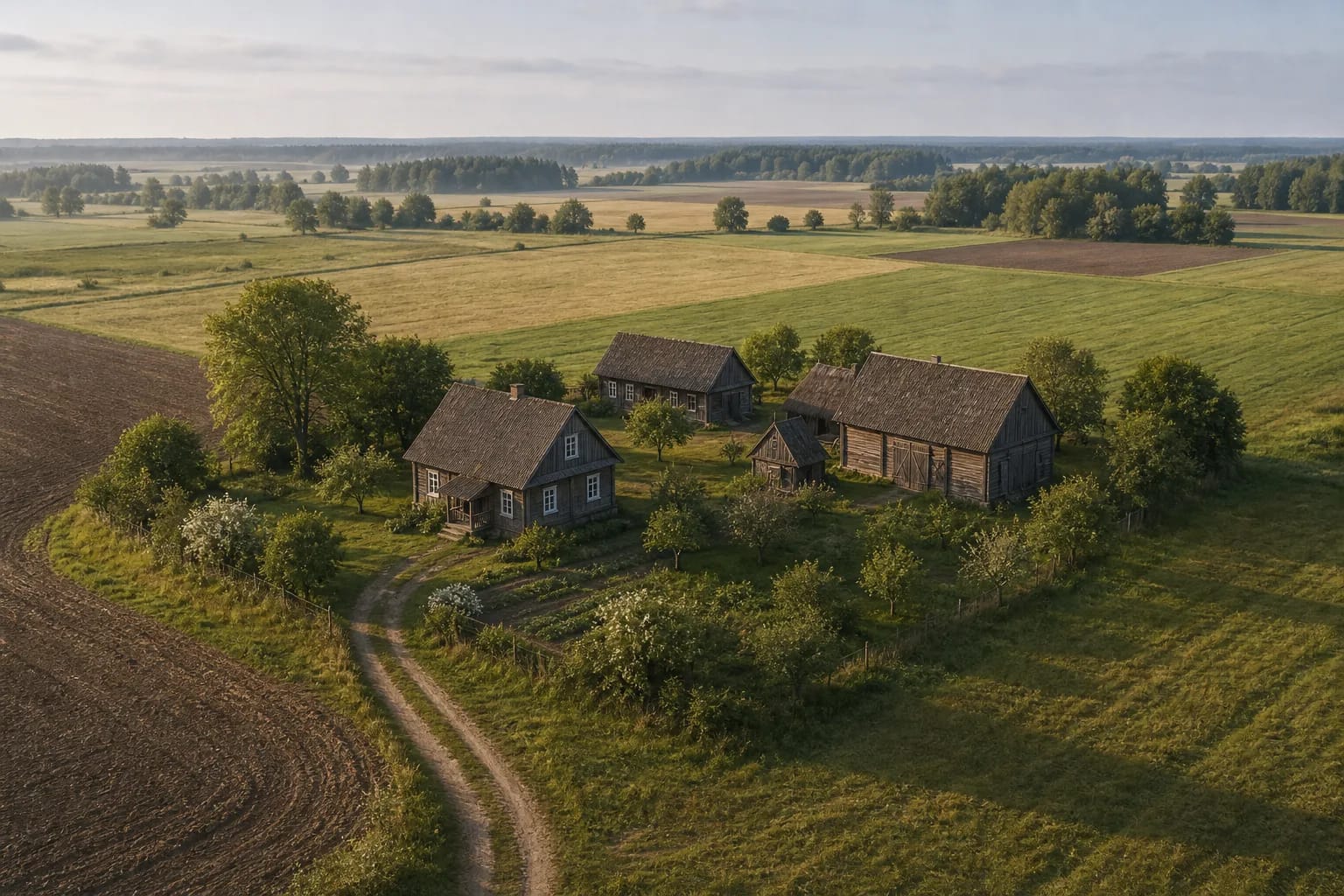
Plantings are very important here: a group of trees, orchard, or avenue is often visible from far away and marks the homestead's place in the fields.
Destruction and memory
Soviet collectivization and land reclamation destroyed many vienkiemiai. Removed homesteads changed not only architecture but also landscape, memory, and the connection between family and land.
For that reason the vienkiemis is a topic of both architecture and 20th-century social history.