- Category
- Work and Craft Buildings
- Type
- Building-material production sites
- Context
- Brickworks, lime kiln, brick kiln, lime-burning site, lime kiln furnace, manor, small town, building materials
- Source status
- well attested
Brick kiln, Lime-burning site, Lime kiln, Building-material production
Brickworks and Lime Kiln: types and elements
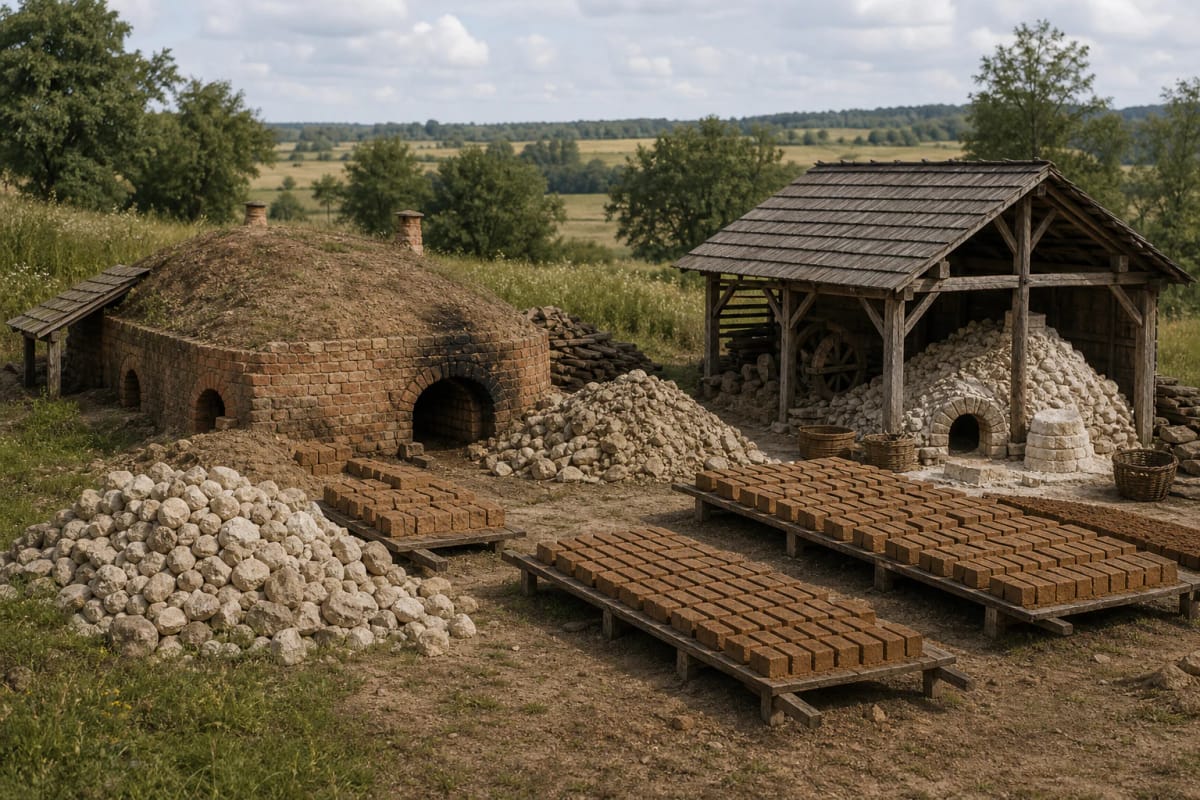
Brickworks: A place or building for forming, drying, and firing clay bricks.
Lime kiln: A lime-burning place connected with heating limestone or other raw material.
Firing kiln: The main technological element around which production was organised.
What are a plytinė and kalkinė?
A plytinė is a place where bricks were formed, dried, and fired. A kalkinė is a lime-burning place or building where lime was produced for masonry, plaster, and other building needs.
These objects belong not to the residential but to the production side of traditional architecture. They show where materials needed for wooden and masonry building came from.
Historical context
Brickworks in Lithuania are connected with early masonry building, manors, towns, and larger construction works. They were not an everyday building on a peasant farmstead, but their products affected building development. According to VLE, the first brickworks in Lithuania appeared around the thirteenth century, with more founded in the first half of the fourteenth century after brickmaking specialists were invited from western Europe; while Trakai Castle was being built, a brickworks operated on one island of Lake Galvė, and in the sixteenth century bricks were expensive: 2,000 bricks cost as much as a war horse.
In the nineteenth century, manor and small-town economies often had building-material production sites: brickworks, lime kilns, sawmills. They served local construction and repair.
Technology
At a brickworks, the main processes were clay preparation, brick forming, drying, and firing. At a lime kiln, the main element was the lime furnace and the heating of raw material.
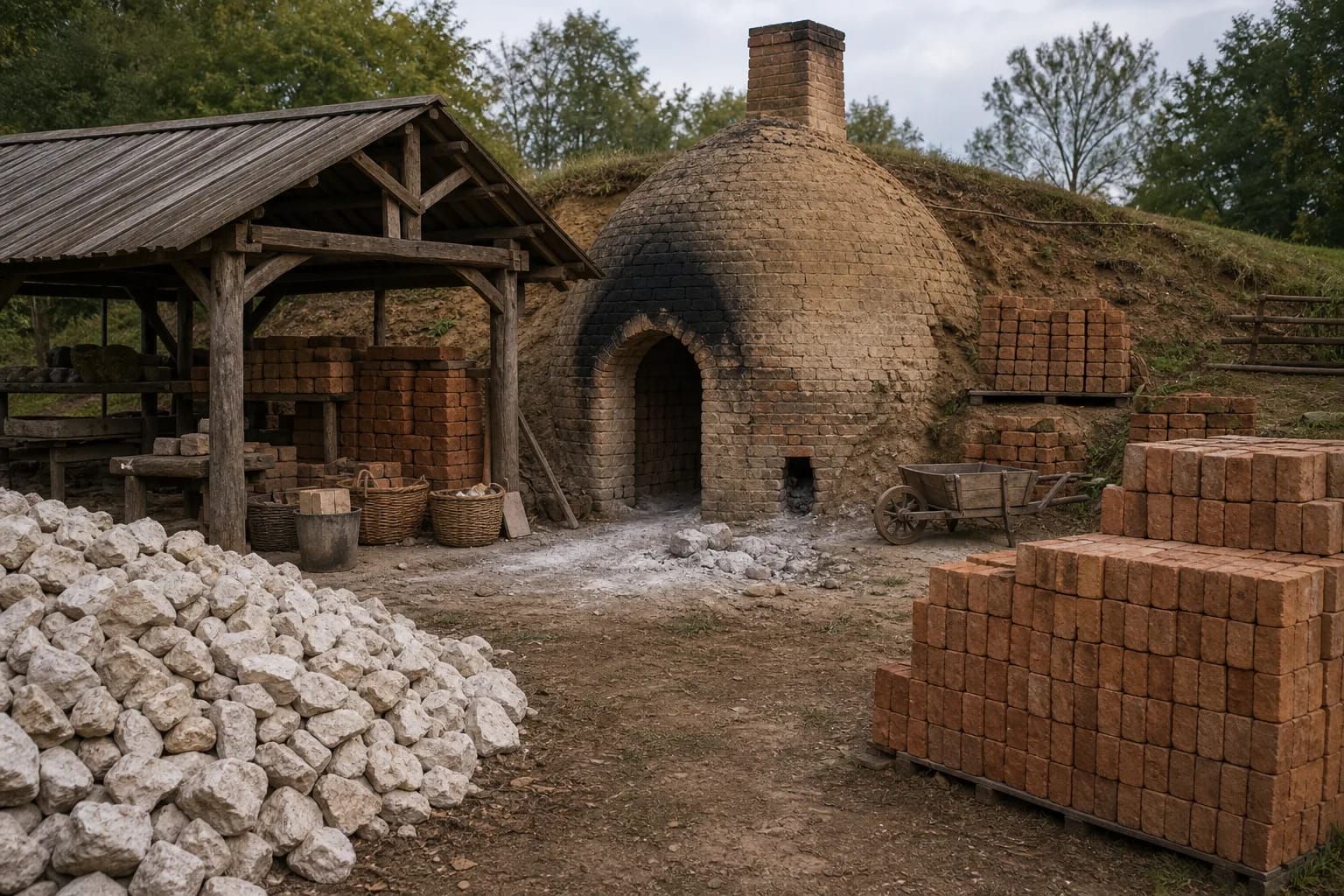
Such buildings could be simple because the kilns, shelters, fuel places, and raw-material yards mattered most. Their architectural value lies in the technology.
Connection with traditional architecture
Although Lithuanian folk architecture was dominated by wood, clay, bricks, and lime became increasingly important for stoves, chimneys, foundations, manor buildings, and small-town construction.
A brickworks and lime kiln therefore help place wooden architecture in a broader world of materials: even a log house needed a stove, chimney, foundation, or plaster.