- Category
- Manors and Broader Wooden Heritage
- Type
- Manor ensembles with wooden houses and farm buildings
- Context
- Wooden manor homestead, manor house, palivarkas, park, representative yard, working yard, wooden manor heritage
- Source status
- well attested
Lithuanian wooden manor homesteads, Wooden manor heritage, Manor homestead, Palivarkas
Wooden Manor Homesteads: types and elements
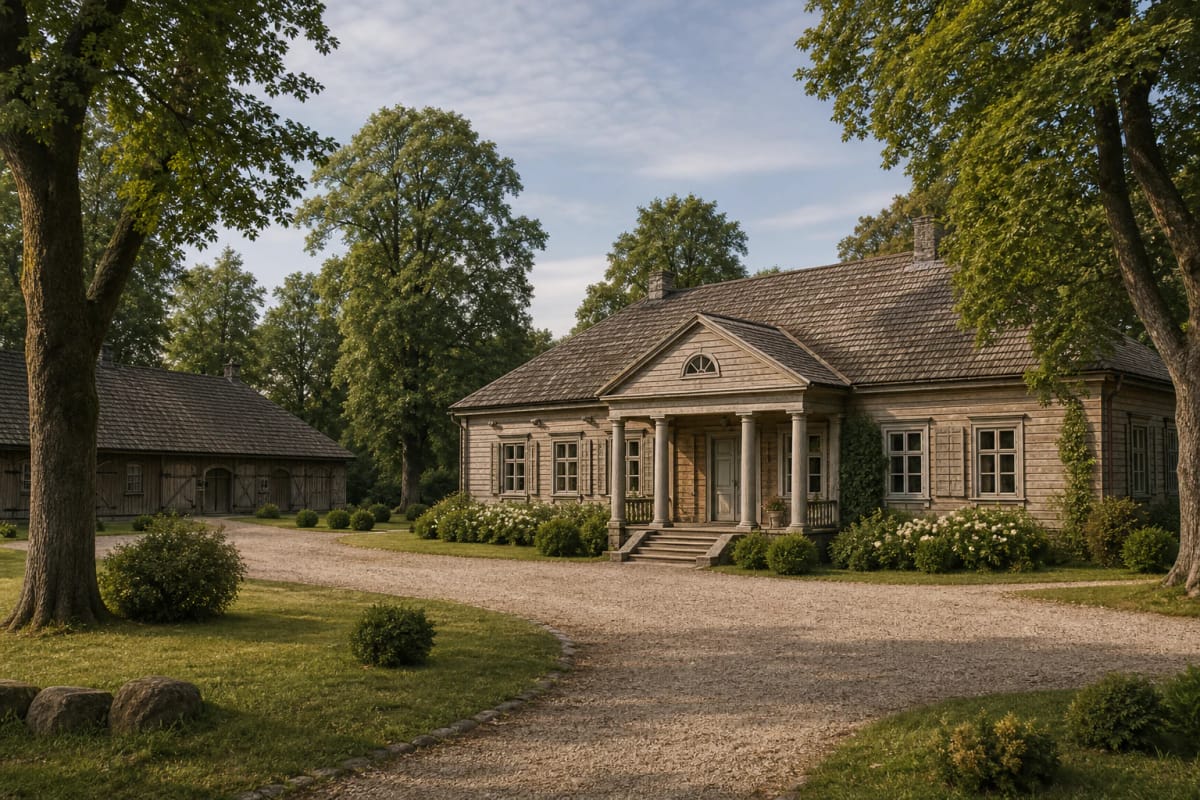
Wooden manor house: Often a one-storey, symmetrical building with a porch, high roof, and representative rooms.
Manor working yard: A group of buildings for the manor economy: granaries, cowsheds, stables, barns, workshops.
Park and representative zone: Greenery, paths, ponds, and approaches that shape the manor homestead's appearance.
What is a wooden manor homestead?
A wooden manor homestead is an ensemble in which a wooden manor house, park, representative yard, farm buildings, and landscape form one system. It is not just a single building, but a centre of social and economic life.
Manor architecture joins local wooden construction with professional European forms: symmetry, porches, parks, enfilades, and representative facades.
Historical context
Manor homesteads in Lithuania formed from the late medieval and early modern periods. Over time there were thousands of them, but wooden heritage is especially vulnerable. According to VLE, the dvaras in Lithuania began to form from the kiemas in the late fourteenth and first half of the fifteenth century, and fully formed in the second half of the fifteenth century. The 1557 Valakų reform regulations required manors to be established in all districts, and a large manor from the sixteenth to the first half of the nineteenth century consisted of the landowner's main homestead, several palivarkai with manor industries, and dependent peasant villages.
Many valuable fragments remain in western Lithuania and other regions, where wooden manor houses, parks, or working buildings still allow the manor structure to be read.
House and working part
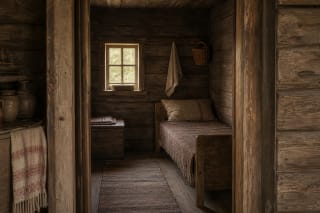
Wooden manor houses were often one-storey, rectangular, symmetrical, with a central porch, high roof, and sometimes a mezzanine. Inside there could be a virenė, enfilade rooms, tile stoves, and painted or plastered rooms.
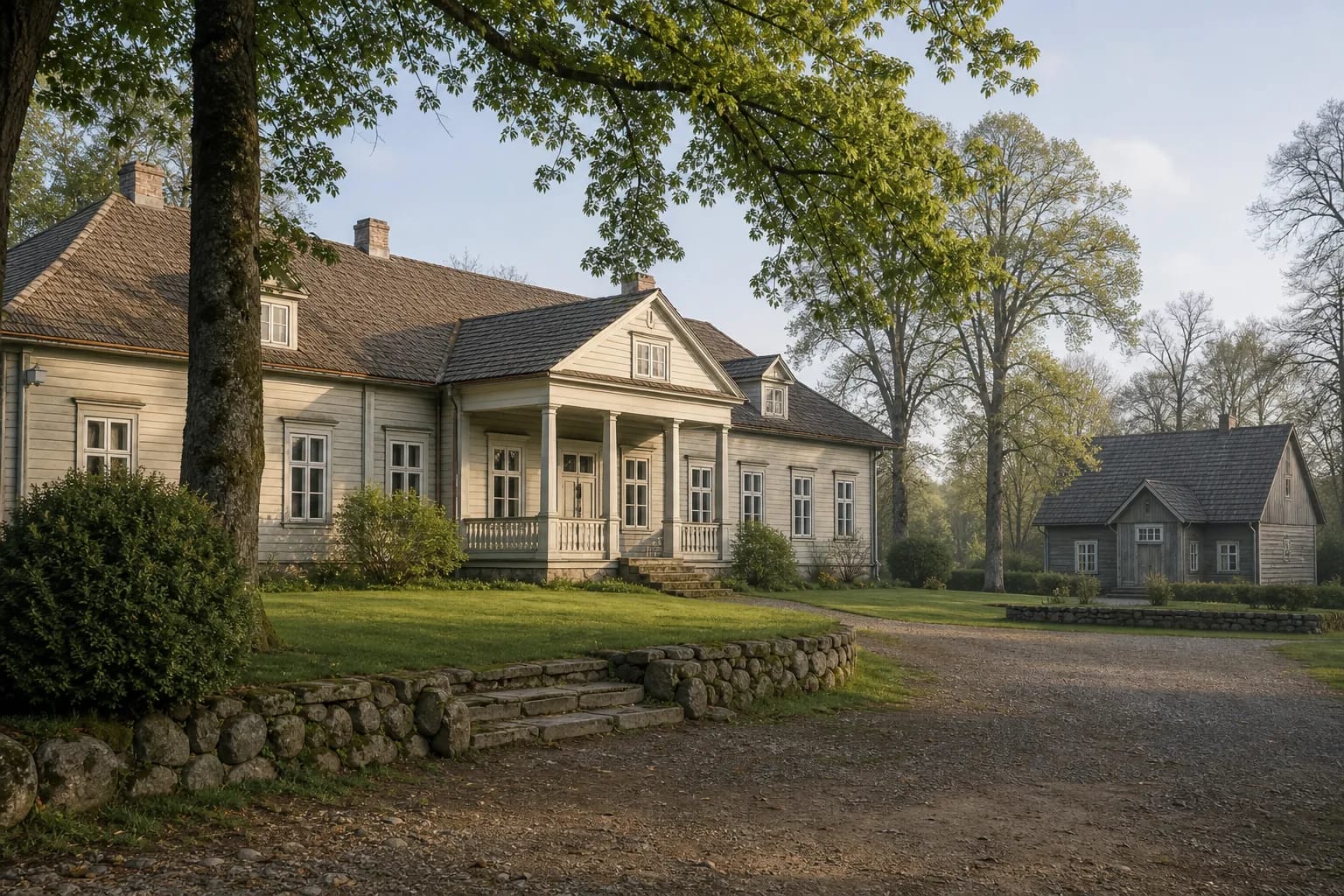
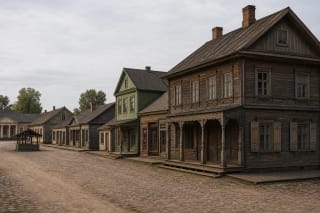
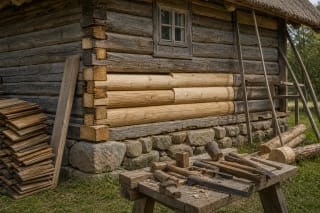
The working part was no less important: stables, granaries, barns, cowsheds, workshops, palivarkai, and production buildings supported the manor economy.
Heritage value
A wooden manor homestead is valuable as an ensemble. If the park, pond, working yard, or steward's building is lost, the manor house loses its context.
Research and restoration therefore need to see the whole structure: representation, work, greenery, road, and landscape.