- Category
- Work and Craft Buildings
- Type
- Production building for pressing oil
- Context
- Aliejinė, oil press house, flaxseed, hemp, poppy, rapeseed, press, rollers, Suvalkija
- Source status
- well attested
Oil press house, Flaxseed oil press, Oil workshop
Aliejinė: types and elements
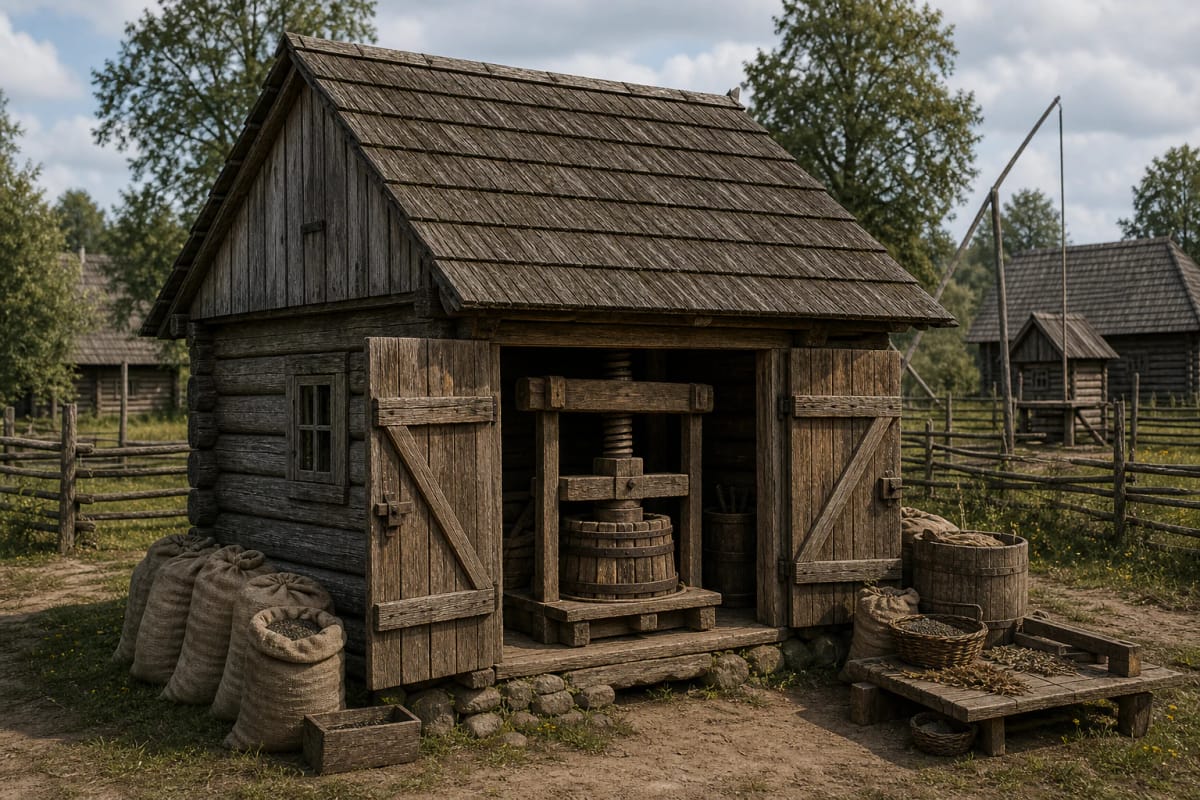
Log aliejinė: A wooden workshop with pressing equipment and space for preparing seeds.
Octagonal or polygonal aliejinė: A plan found in some places, connected with the arrangement of equipment and drive mechanism.
Aliejinė with horse drive: A workshop where pressing or grinding equipment could be turned by animal power.
What is an aliejinė?
An aliejinė is a building or workshop for pressing oil. Traditionally, oil was pressed from flaxseed, hemp, poppy, rapeseed, sunflower, or other seeds.
It is a production building because agricultural raw material was turned into a usable product inside it. Its architecture depended on the press, rollers, stones, drive mechanism, and stove.
Equipment and process
In an aliejinė, seeds were prepared, crushed or ground, heated, and pressed. The equipment could include stones, rollers, a horse or other drive mechanism, a stove, and a lever press.
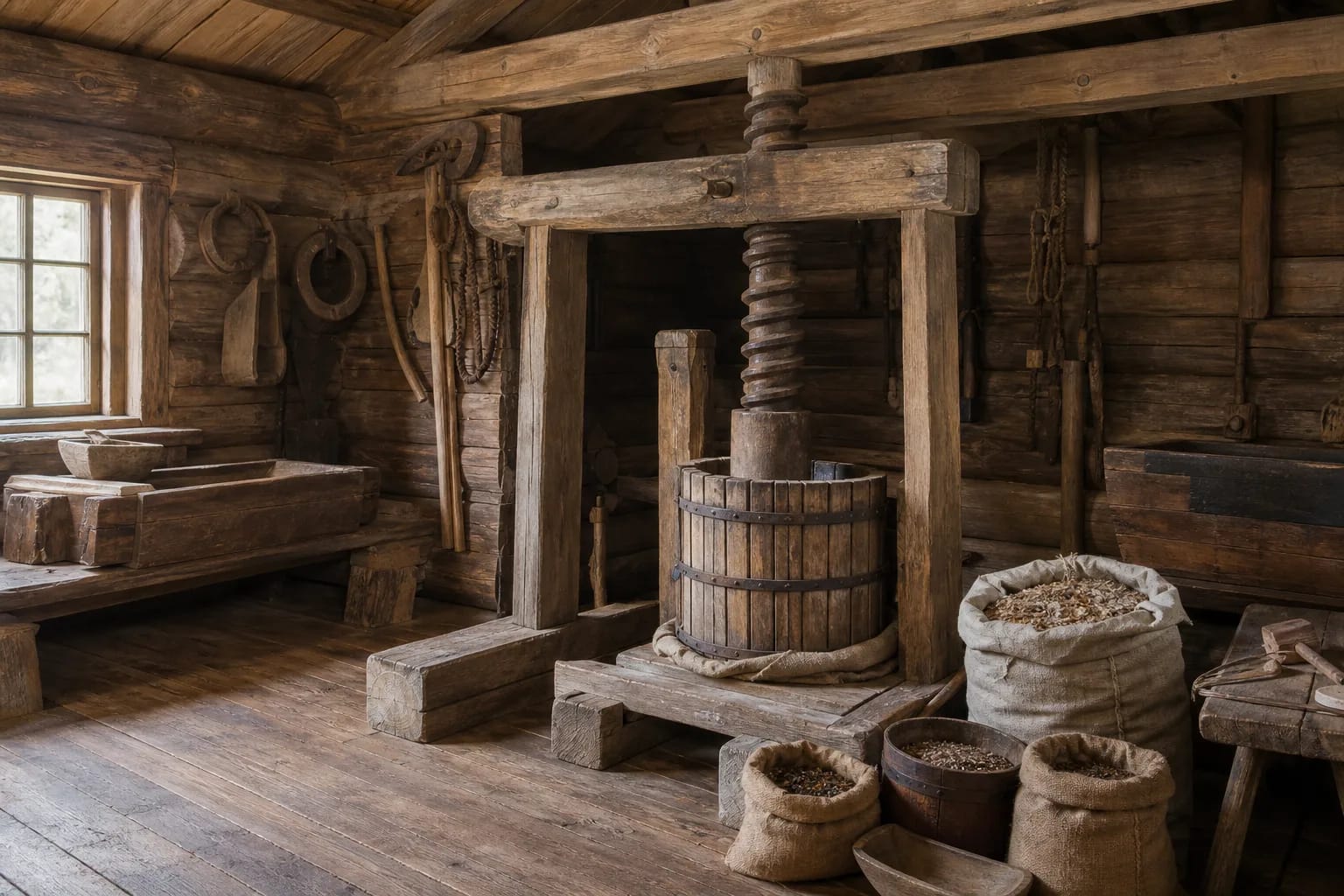
The building needed room for raw material, equipment, heat, and finished oil storage. It was therefore not just a room but a small technological system.
Historical distribution
Aliejinės survived longer in some larger farms and regions, especially in Suvalkija and around Jurbarkas or Prienai. Many were still operating in the early twentieth century, but industrial oil production gradually displaced local presses.
This topic matters because traditional architecture includes not only the house and the barn but also food-production technologies.
Architectural features
Aliejinės could be rectangular, polygonal, log-built, or board-built. Their form depended on equipment: whether space was needed for a horse drive or whether a compact hand or mechanical press was enough. According to VLE, aliejinės in Lithuania were built rectangular, hexagonal, or octagonal, with log or plank walls, while roof form depended on the building plan.
Heritage value lies not only in the walls but also in surviving equipment, floor traces, the place of the drive mechanism, and heating installations.