- Category
- Household and underworld beings
- Domain
- Household abundance, underworld, grain, wealth, the border between earth and water
- Source status
- well attested
kaukas, kaukutis
Who are kaukai in Lithuanian mythology?
Kaukai are Lithuanian mythical beings most often associated with household abundance, grain, livestock, and an underworld or threshold power that brings benefit to people. They are not gods in the classical sense: they belong to a smaller mythical layer closer to everyday farming life.
The Encyclopedia of Lithuania describes kaukai as Lithuanian mythical beings, while older explanations called them little gods of luck or household gods. This matters: kaukai stand between domestic life, the underworld, vėlės (souls of the dead), and household religiosity, so they should not be reduced to 'gnomes' or fairy-tale helpers.
Sources and reliability
Kaukai are among the better-attested names of Lithuanian mythical beings. Written sources, folklore, and mythological studies all speak about them. Norbertas Vėlius' research on mythical legends helps show kaukai as actors in the world of sakmės, or folk legends, not merely as late literary fantasy.
Accounts of kaukai differ. Some stress household prosperity; others connect them with earth, water, the dead, or hidden wealth. The surviving traditions do not give all kaukai the same appearance or role.
What do kaukai look like?
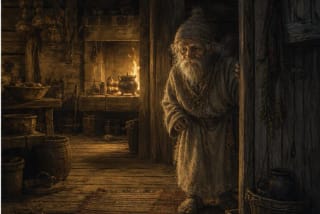
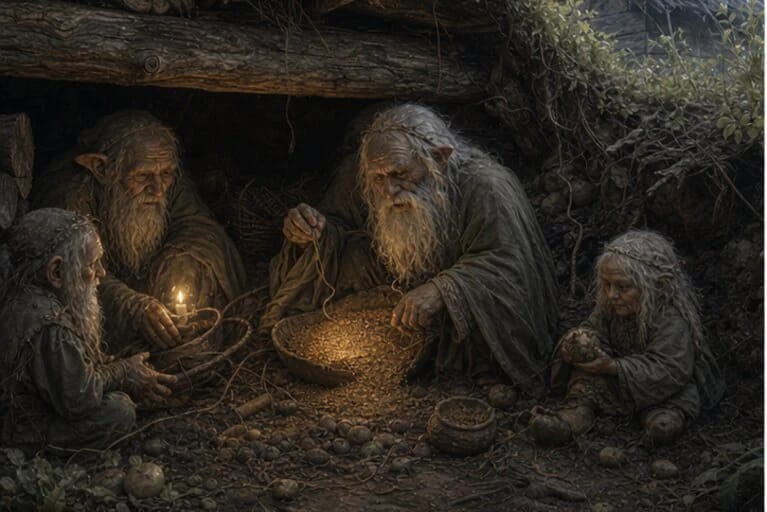
In folklore, kaukai are often imagined as small, mysterious beings that are close to humans but not fully human. Their form may be slight, low, and connected with the earth, underworld, or household environment.
The image of kaukai should be kept separate from later illustrative stereotypes. They are not simply cute house gnomes. Kaukai act as a mysterious force of abundance: they can help, but they also belong to a dangerous world that is not fully under human control.
Kaukai, abundance, and wealth
The most important theme of kaukai is skalsa, the ability to multiply, increase, or preserve household goods. Skalsa can mean the abundance of grain, food, livestock, or other farm wealth.
Because of this function, kaukai are sometimes confused with aitvaras. The difference is this: in folklore, aitvaras is often pictured as a fiery, flying wealth-bringing being, while kaukai belong more to the realm of earth, underworld, home, and abundance.
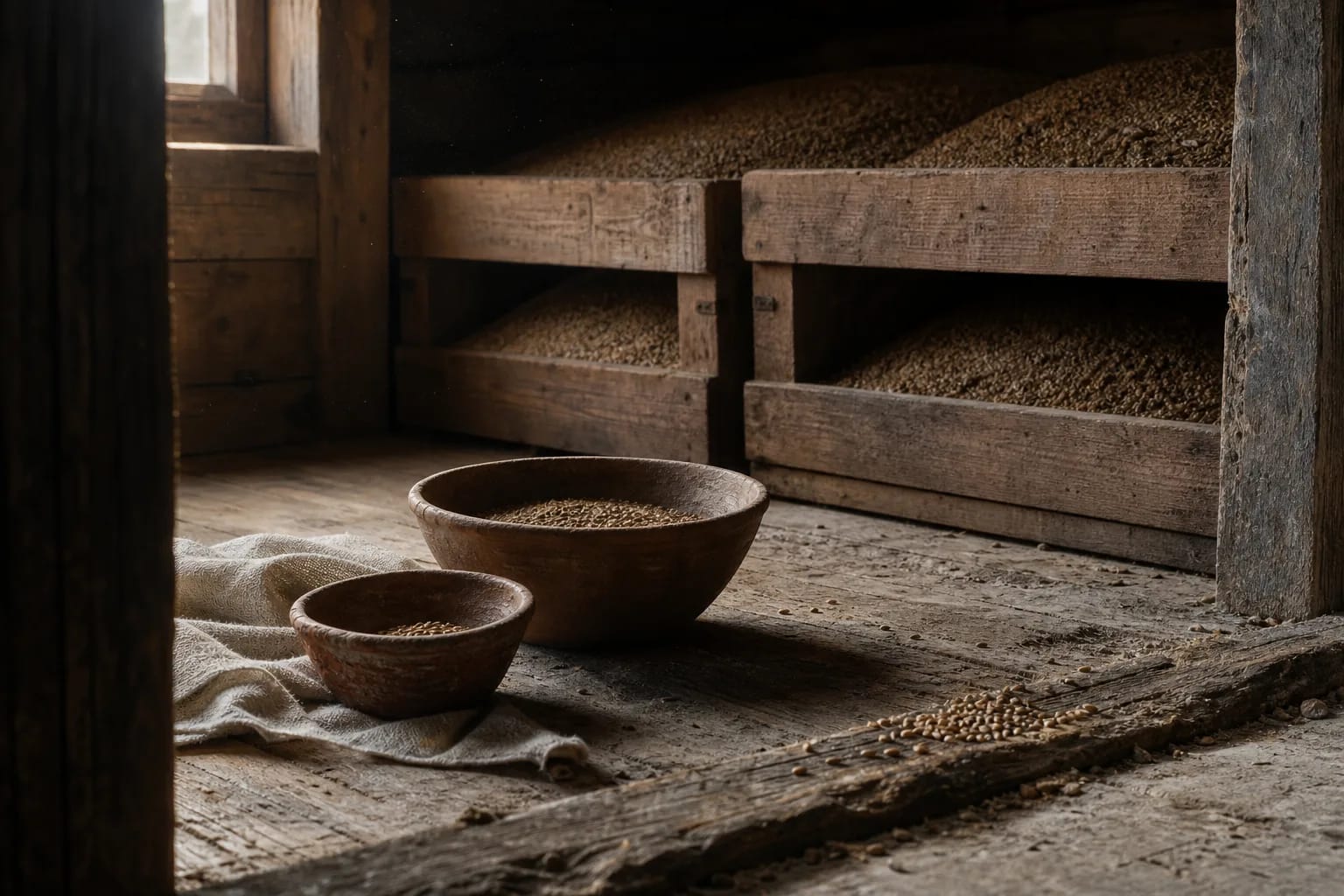
Kaukai had to be fed and respected: part of a meal, bread, or groats could be left for them in a granary corner or near the stove, and in return they guarded household abundance. Displeased or angered kaukai could take goods away or leave, so the relationship with them was reciprocal, like a relationship with quiet partners of the household.
Kaukai and vėlės
Researchers have emphasized the closeness of kaukai to the world of the dead, earth, and water. This does not mean that every kaukas is a vėlė, but it shows that the mythical field of kaukai is chthonic: connected with below, roots, dampness, hidden life, and underworld fertility.
That connection explains why kaukai seem both useful and not entirely safe. They are close to the home, but they do not come from the fully ordinary human world.
Symbols of kaukai today
Today kaukai are a useful key to the Lithuanian idea of skalsa. They help explain how older household life understood the abundance of food, hidden wealth, household luck, and the underground power of the earth mythologically.
The page on kaukai is worth reading together with vėlės, Žaltys (the grass snake), Barstukai, and house-spirit images: all of them show that Lithuanian mythology often begins not in the sky, but very close to the household threshold.