- Category
- Water beings
- Domain
- Water spirits, rivers, lakes, springs, local guardianship
- Source status
- folklore
vandenis, vandenė, water spirit
Who are Vandenis and Vandenė in Lithuanian mythology?
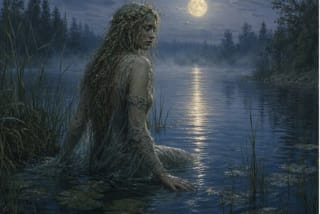
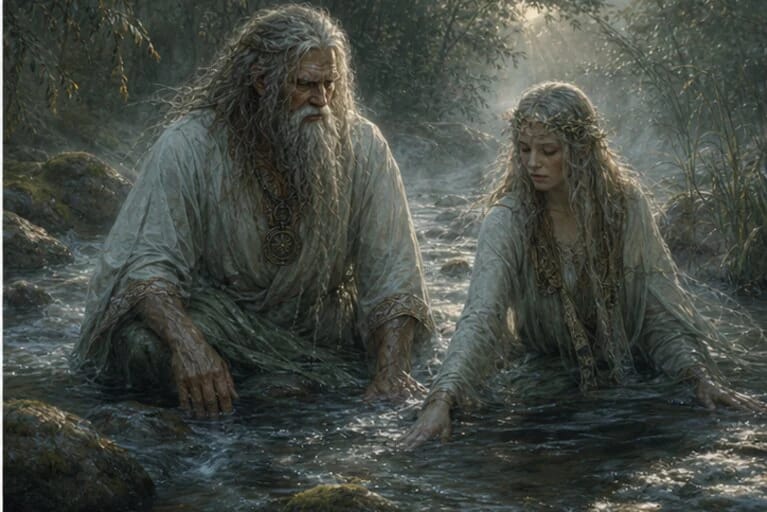
Vandenis and Vandenė are presented as a category of water spirits and local water beings. They are not one stable god or goddess, but names that help speak about the mythical inhabitants of rivers, lakes, springs, and depths.
In Lithuanian legends, water is often a boundary: people may seek healing, wash, or ask for fertility near it, but they may also perish in it. Vandenis and Vandenė embody this liminal water world.
Sources for Vandenis and Vandenė
This theme is more folkloric than clearly cultic. In different stories, water beings may be named in various ways, so Vandenis and Vandenė should be written as type names for water spirits, not as one pantheon member worshipped the same way everywhere.
Articles on Lithuanian mythology and legends in the Encyclopedia of Lithuania allow this page to rest on the wider context of the world of sakmės: mythical beings often act in specific places, near rivers, lakes, bogs, or springs.
Vandenis, springs, and the spirit of place
Water beings are often understood locally. One lake, river, or spring may have its own story, prohibition, danger, or healing power. A water spirit therefore acts not abstractly, but through a concrete place.
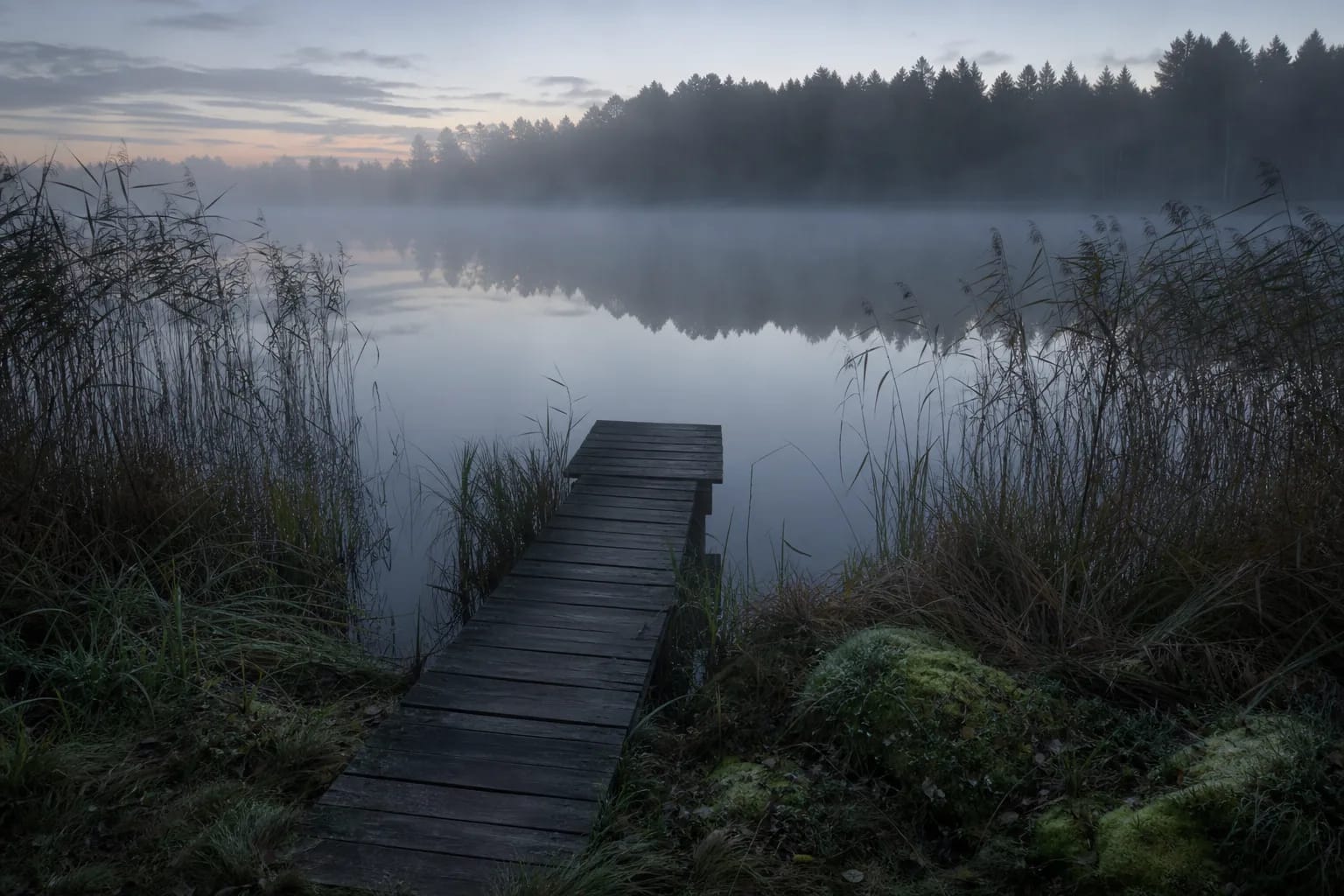
In this system, a spring can be a sign of life and health, while the depth is a symbol of a dangerous unknown world.
Vandenis and people
In legends, the human relationship with water beings often rests on respect for the boundary. Danger arises when a person comes too close, disrespects the place, acts greedily, or breaks a prohibition.
This logic helps explain many water stories: they preserve rules of behavior near dangerous places and at the same time give water sacredness. In legends, Vandenis is often pictured as a drowner: he drags an unwary swimmer into the depths, especially when someone bathes at noon or midnight or without making the sign of the cross. It was believed that he lived in the deepest pits, whirlpools, or under the wheel of a water mill, so those places were considered dangerous.
Vandenis, Undinė, and Žaltvykslė
Vandenis and Vandenė belong to a wider field of water spirits. Undinė is a more vivid female form of water being, while Žaltvykslė is a misleading light often close to wetlands, dampness, and dangerous paths.
Together these images form a field of water mythology: from local spirit and depth to seductive woman or misleading light.
Vandenis and Vandenė today
Today the image of Vandenis and Vandenė helps avoid collapsing all water beings into the figure of Undinė and shows that in Lithuanian legends the place itself matters: river, lake, spring, bog.
This approach makes it possible to understand not only a name, but the mythological logic of water: boundary, depth, respect for place, and danger for the careless person.