- Place
- Utena District Municipality
- Region
- Aukštaitija
- Type
- one of the largest ceramics museums in Lithuania
- Address
- Topolių g. 7, Leliūnai, Utena District
- Coordinates
- 55.47558, 25.39336
Valiušis Ceramics Museum, Leliūnai Ceramics Museum
A Ceramics Home in Leliūnai
The Vytautas Valiušis Ceramics Museum is located in Leliūnai, Utena District, in a renovated former school building. It is one of Lithuania's largest ceramics museums and brings together the history of Lithuanian pottery, from simple village pots to artistic ceramics.
The museum was founded in 2001 by folk artist and ceramicist Vytautas Valiušis, often nicknamed the king of Lithuanian potters. Today it operates as a division of the Utena Regional Museum, making it easy to include in a wider Aukštaitija museum route.
Collection and Ceramic Tradition
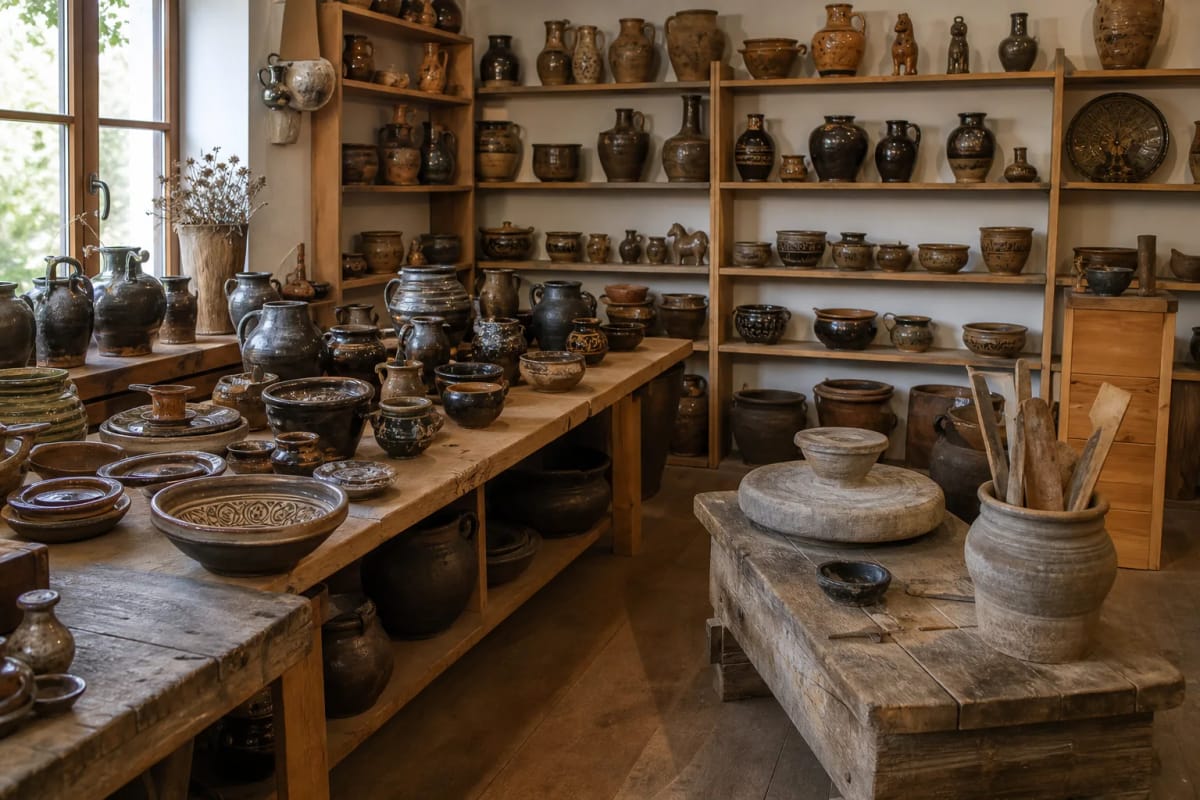
According to VLE, the museum funds hold more than three thousand exhibits reflecting the development of Lithuanian ceramics. The exhibition includes pots, jugs, bowls, vases, candlesticks, and clay whistles from different parts of Lithuania, as well as works by Valiušis himself.
Vytautas Valiušis is known for older technologies such as fermented-clay ceramics, black ceramics, wrapping with birch bark, and distinctive solutions such as iridescent decoration on black ceramics. The museum is therefore interesting not only as a collection, but also as the workshop world of a living craft master.
Education and the Craft
The museum actively offers educational programmes: visitors can watch clay being thrown, dried, decorated, and fired, and try working at the potter's wheel themselves. These programmes suit families and school groups and turn the visit into a practical experience.
Valiušis' work has received high recognition, including Lithuania's National and State Prizes for Culture and Arts. That confirms that the museum presents not only local craft history, but the work of a nationally important ceramics master.
How to Visit
The museum is in Leliūnai, near the main Utena-Vilnius road, so it is easy to reach en route. The exhibition alone usually takes about an hour; if you choose a pottery-wheel educational programme, allow 2-3 hours.
At the time of research, visits were listed for weekdays and Saturdays, and educational programmes were by prior arrangement. Because hours, ticket prices, and education prices can change, check the official museum page before travelling.