- Place
- Alytus, Alytus City Municipality
- Region
- Dzūkija
- Type
- Lithuania's highest pedestrian and bicycle bridge over the Nemunas
- Address
- Dainų Valley, Alytus (bridge over the Nemunas)
- Coordinates
- 54.39310, 24.08140
White Rose pedestrian and bicycle bridge, Baltosios rožės tiltas
Lithuania's highest pedestrian bridge
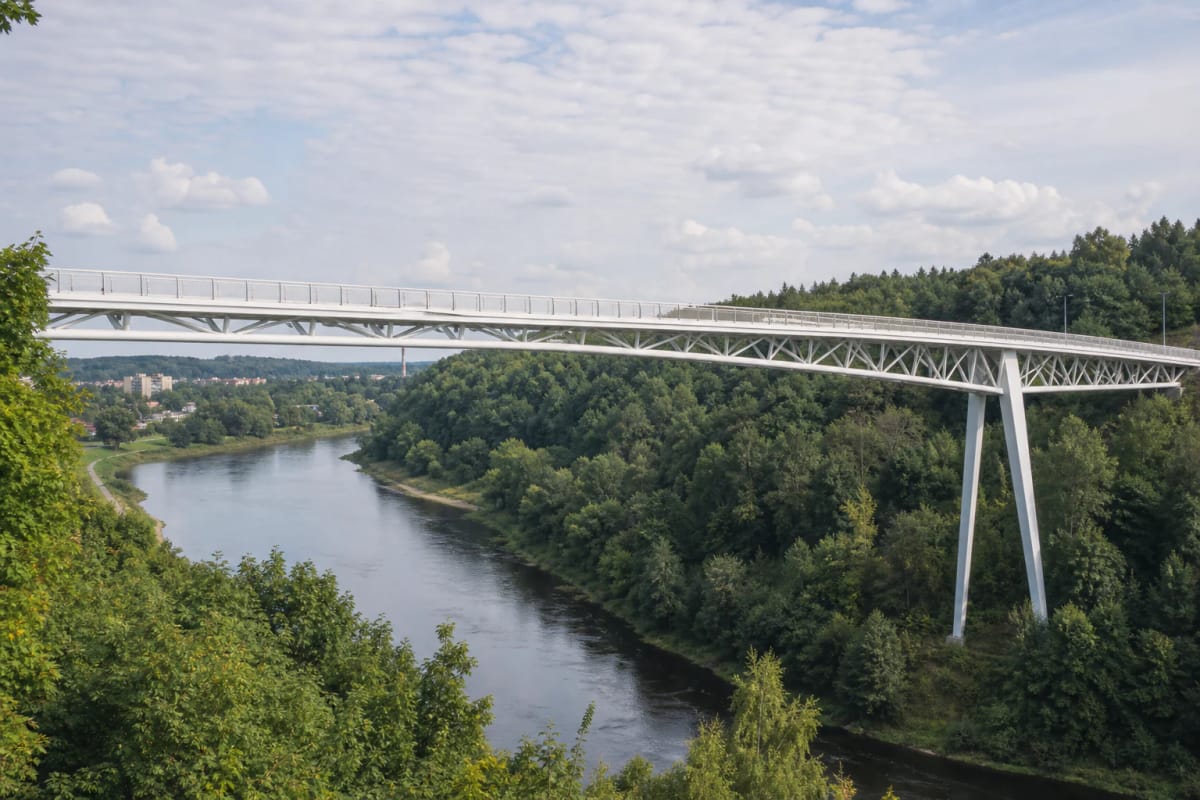
White Rose Bridge is Lithuania's highest pedestrian and bicycle bridge. It crosses the Nemunas in Alytus about 38 m above the river, and its length is about 240 m. Because of its height and views, it has become one of the city's best-known sites and is listed in the Lithuanian Book of Records.
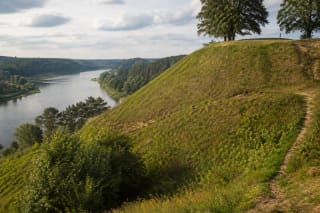
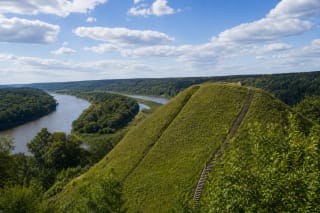
The bridge is not only transport infrastructure but also a viewpoint: it opens a broad Nemunas valley panorama and a view toward Alytus Hillfort, the city's place of origin across the river.
From railway bridge to pedestrian bridge
The current bridge stands on historic piers. In 1899 a railway bridge was built here for the Varėna-Alytus-Grodno line, designed by noted Russian engineer Nikolai Belelyubsky. In 1915, during the First World War retreat, the Russian army blew up the bridge, but the stone piers remained.
Those surviving piers were declared a local engineering monument and entered in the Cultural Heritage Register. In 2013-2015 a new metal pedestrian and bicycle bridge was built on them and opened to the public in 2016. The old heritage thus received a new life.
Why 'White Rose'
The name comes not from flowers but from the Alytus coat of arms: a white rose on a red field. King Stephen Báthory granted this coat of arms together with Magdeburg rights in 1581, so Alytus is often called the City of the White Rose.
The bridge name was chosen by city residents in a vote, linking it with the historical symbol of Alytus. It is therefore not a romantic nickname but a reference to the old city emblem.
What to notice on the bridge
Besides the panorama, the bridge and its surroundings include details such as a stainless-steel heart for love locks, the so-called Love Metres, and sculptural accents. A recreation area with paths and shelters is arranged nearby, so the site works both for a walk and for views.
The bridge is also known for extreme sport: rope jumps are organised from it by separate providers. For most visitors, the calmest way to experience it is simply to cross on foot and pause over the Nemunas.
How to visit White Rose Bridge
The bridge is open, public, and free, so it can be visited at any time. It combines well with Alytus Hillfort, the old town, and riverside paths; allow 1.5-2 hours for the broader walk.
Themed walks can be booked through the Alytus Tourism Information Centre, while love-lock and rope-jump services are provided by separate organisers. Check the official page for current information before travelling.