- Place
- Ventė, Kintai Eldership, Šilutė District
- Region
- Nemunas Delta Regional Park
- Type
- bird-ringing research station with a migration exhibition and traps
- Address
- Marių g. 24, Ventė, Kintai, LT-99361 Šilutė District
- Coordinates
- 55.34100, 21.19000
- Visit duration
- 1.5-2 hours; longer during intensive migration or with a booked tour
- Best time
- spring and autumn migration, especially September-October; follow the relevant monthly timetable for the exhibition
Ventės Rago ornitologinė stotis, Ventė Cape Bird Ringing Station
An active research station that welcomes visitors
Ventė Cape Ornithological Station is a branch of the Kaunas Tadas Ivanauskas Zoological Museum engaged in bird research, education, and conservation. It stands on the eastern shore of the Curonian Lagoon in Nemunas Delta Regional Park, where the end of the peninsula and open water concentrate migrating birds.
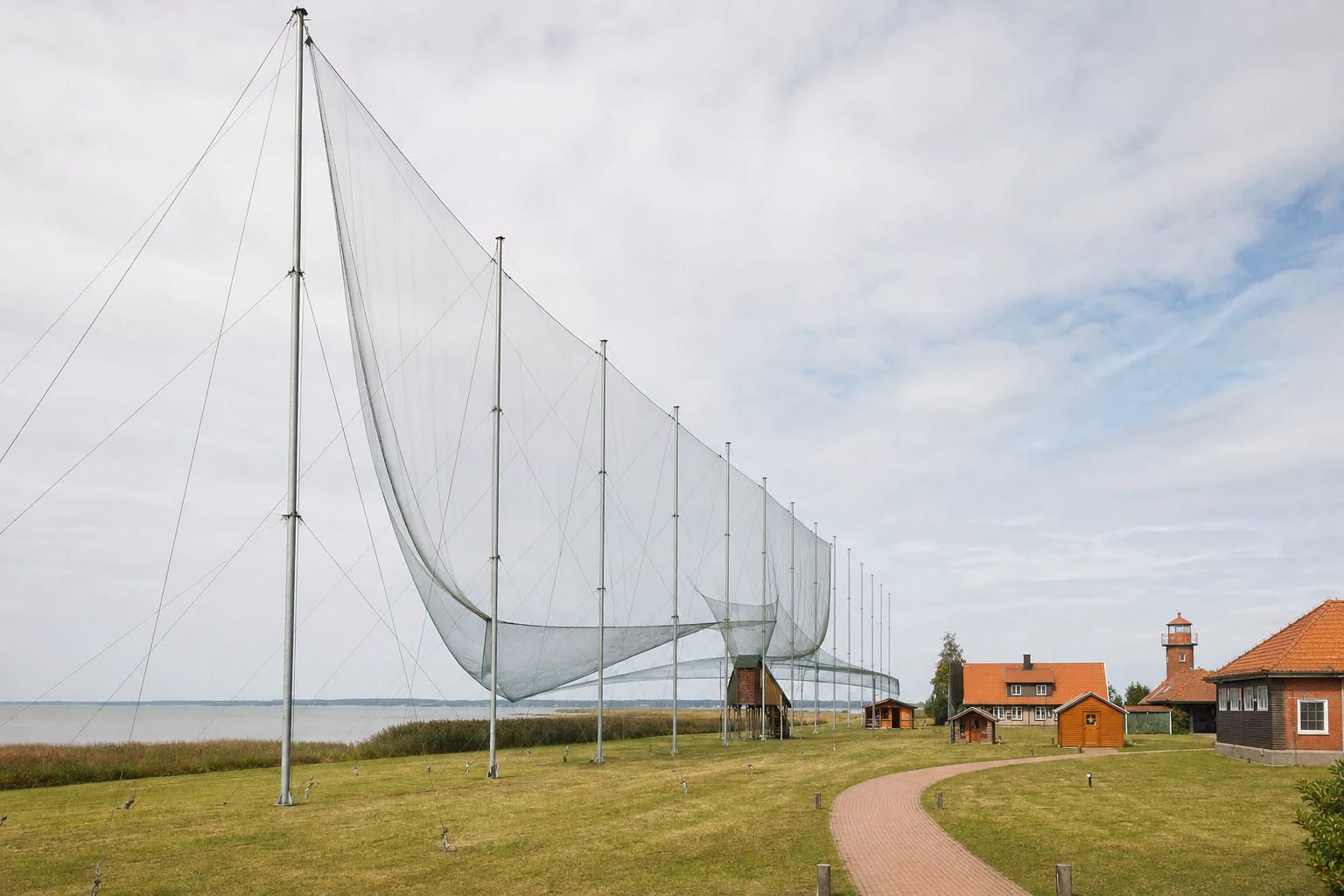
The most striking visitor features are the giant net trap, several types of smaller trap, the bird-ringing work areas, and the migration exhibition. The lighthouse and lagoon panorama are important parts of the setting, but the station is first and foremost a working research site, not a staged open-air museum.
Capturing and ringing birds depends on season, time of day, wind, rain, and the migration flow passing at that moment. Visitors may see ringing in progress, but it cannot be treated as a demonstration guaranteed with every ticket.
From Mikas Posingis's observations to Lithuanian rings
Lighthouse keeper Mikas Posingis, who worked here from 1924 to 1944, recognised the bird route at Ventė Cape. He was in contact with scientists at Rossitten Ornithological Station and suggested that Tadas Ivanauskas begin research at Ventė. Regular migration observations began in 1929, which is accepted as the station's founding year, although deliberate ringing on site began in 1930.
The first birds were marked with German rings obtained from Rossitten. Lithuanian rings bearing the inscription Université Lithuanie entered production in 1931, followed by Museé Zool. Lithuania; today's metal rings identify the zoological museum in Kaunas. The sequence shows how a lighthouse keeper's local observation became systematic international data work.
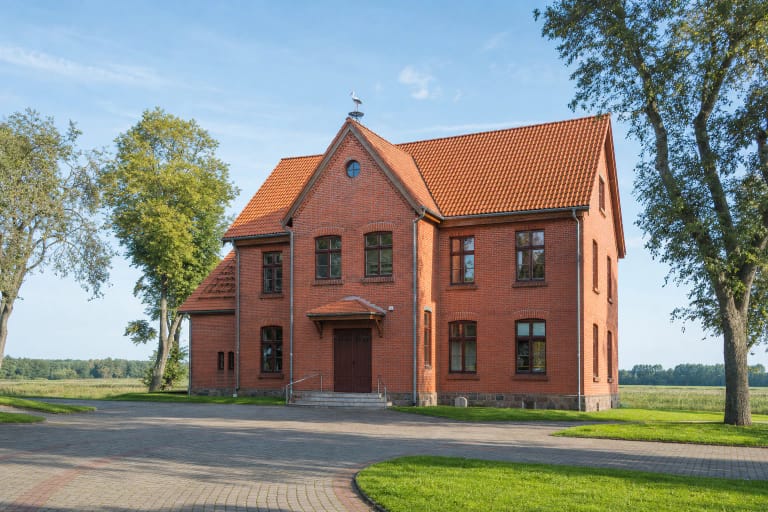
Station activity ceased in 1944 and resumed in 1950. The first fixed traps were built in 1959, new station premises beside the lighthouse in 1968-1969, and a museum was established in 1980. A renewed bird-migration exhibition has operated since the 2013-2015 reconstruction.
The giant and zigzag bird traps
A large metal-framed trap was erected at Ventė in 1978, followed by a second structure of the same type a year later. Electric winches could raise the net onto poles up to 25 m high in 1-2 minutes, although stronger wind limited its use. The official museum describes the Ventė structure as the world's largest bird trap.
The station's published trap guide gives the lower Rybachy-type trap as 113 m long and 69 m wide, with one bird-collection chamber. It is a broad net funnel: birds flying towards the vegetation are progressively guided into its narrower end, where licensed ringers can collect them safely.
In 1982, long-serving station head Leonas Jezerskas designed a zigzag trap. Its chambers can receive birds arriving from different directions, while the structure keeps them from becoming entangled in the net. Traps placed in reedbeds, scrub, and open-shore habitats allow the station to study species that do not enter the giant structure.
What one ring can tell science
A metal ring carries an individual number and the name of the centre holding its record. When the same bird is caught again, observed, or found elsewhere, linked records help reveal migration routes and speed, wintering grounds, longevity, juvenile dispersal, causes of death, and population change. Ringing gains its value not from attaching the ring alone, but from connecting the first capture with a later recovery.
The station remained highly active in 2026. An official update published on 10 July reported 16,616 birds of 70 species ringed in June alone, including 15,246 common starlings. From the start of January through the end of June, staff had ringed 31,251 birds of 114 species.
On 2 June 2026, the station caught a Cetti's warbler, announced as a new bird species for Lithuania. The record shows another value of standardised mass trapping: alongside long sequences for common species, it can occasionally document an exceptional change in the country's avifauna.
2026 exhibition hours, tickets, and visitor rules
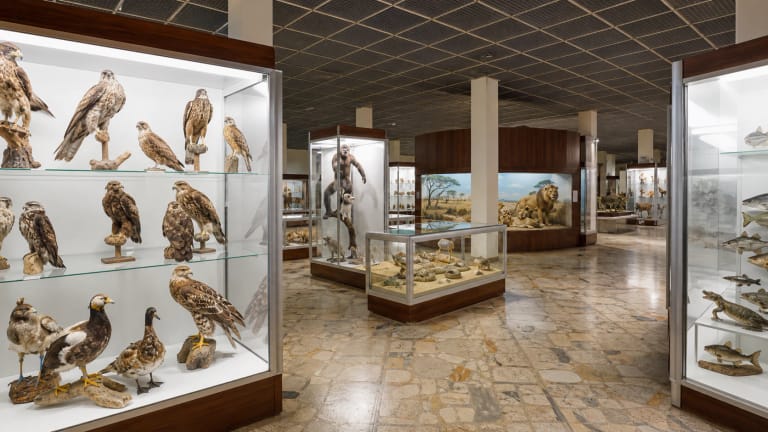
The bird-migration exhibition introduces the station's history, the ringing method, and migratory and wintering birds. A timetable published by station staff for July 2026 listed Monday-Friday 11:00-17:00 and Saturday-Sunday 12:00-18:00. Hours vary by month and may have exceptions, so check the station's latest information or call the ticket desk before travelling.
In the museum's official price list, checked on 14 July 2026, admission to the bird-migration exhibition was €4 for an adult, €2 for school pupils, students, and seniors, free for children under six, and €25 for a guide per group. Prices and concession terms may change, and tours must be arranged with the station in advance.
Station rules prohibit entering bird traps without staff permission, making disruptive noise, and allowing pets to run loose. Use Marių g. 24 and the Google Maps place card for navigation; the listed coordinate marks the station site rather than a particular museum doorway. The lagoon shore is often windy, so binoculars, windproof clothing, and patience are useful.