- Place
- Šiauliai City Municipality
- Region
- Samogitia
- Type
- interwar house-museum and civic-memory site of the Venclauskiai family
- Address
- Vytauto g. 89, Šiauliai
- Coordinates
- 55.92760, 23.31300
Venclauskiai House
A House Where the Family Story Matters Most
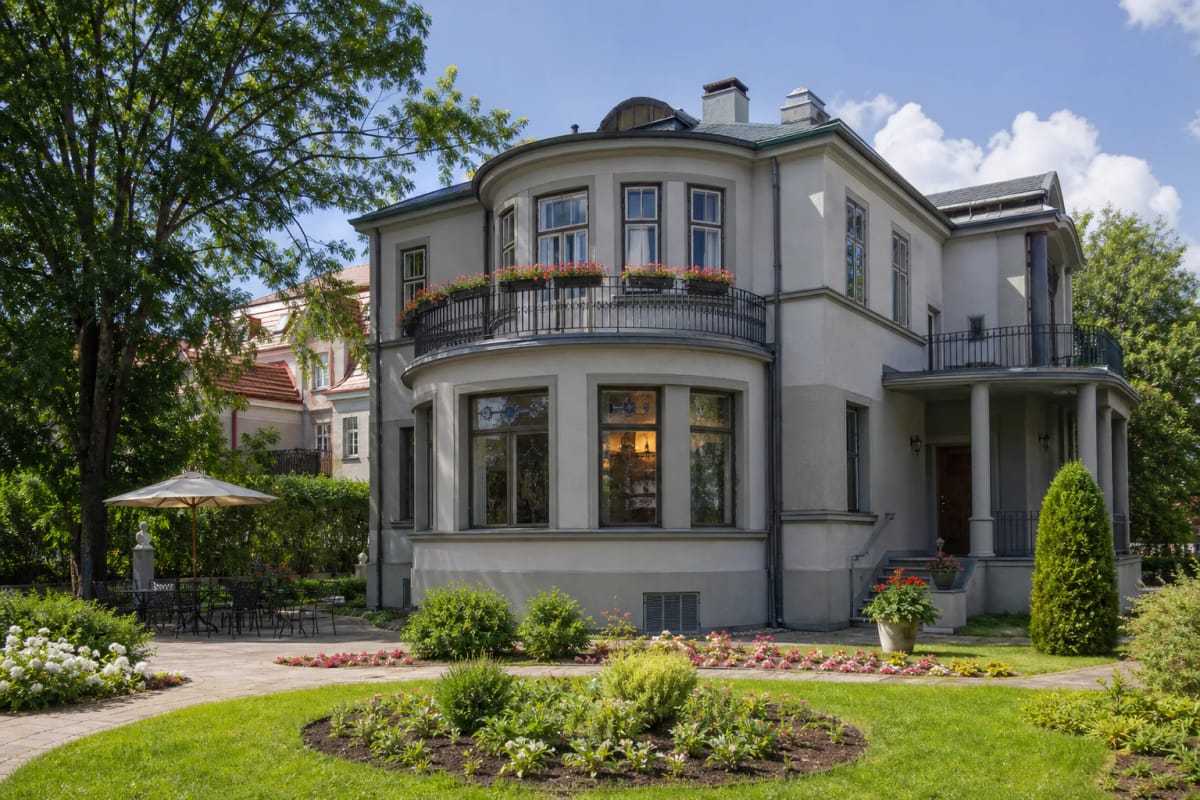
Venclauskiai House-Museum is not only an architectural object. Its axis is the story of the Venclauskiai family: public activity, city culture, child foster care, and civic responsibility. Today the museum works as a multifunctional centre for learning history and culture.
According to the Šiauliai Aušra Museum, the refined residential house was designed by the well-known interwar architect Karolis Reisonas. Sources give the construction date slightly differently, as 1926 or 1927; Visuotinė Lietuvių enciklopedija associates the Venclauskiai house with 1927.
Kazimieras and Stanislava Venclauskiai
Kazimieras Venclauskis (1880-1940) was a lawyer and figure of the Lithuanian Social Democratic Party. In 1918 he helped establish Šiauliai municipality and became the first city mayor; in 1920-1922 he was a member of the Constituent Seimas, contributing to the 1922 Constitution of the State of Lithuania. He supported education, culture, and charitable organizations both publicly and financially.
Together with his wife, actress Stanislava Jakševičiūtė-Venclauskienė, he sheltered and raised more than 100 orphaned and poor children. This foster-care history gives the house its special civic meaning and explains the name of the Orphans' Garden.
A Gift to the Museum and an Authentic Interior
In 1991 the daughters Gražbylė and Danutė Venclauskaitės donated the house to the Šiauliai Aušra Museum on the condition that it would always remain open to the public and operate as a museum. In this way private family heritage became a public memory site for the city.
Inside, fragments of interwar wall painting survive, including art nouveau and national-style painted decor; these are among the more distinctive examples of private interiors from the first half of the twentieth century in Lithuania. In 2019 the house was restored with European Regional Development Fund and state-budget support. When visiting, look not only at exhibition texts, but also at walls, stairs, layout, and the atmosphere of the house.
The Orphans' Garden
One of the most sensitive features of the site is the Orphans' Garden with a children's playground. It is connected with the Venclauskiai family's foster children, so the museum speaks not only about a wealthy urban house but also about responsibility for others.
At the time of research the garden could be visited free of charge. Even if you have little time for the exhibition, it is worth stopping in the courtyard and garden space, because it helps explain both the house name and the family's reputation.
Opening Hours and Tickets
At the time of research, the Šiauliai Aušra Museum listed Venclauskiai House as open Tuesday-Friday 10:00-18:00 and Saturday-Sunday 11:00-17:00. The ticket was 5 EUR, reduced 2.50 EUR, a guide service for a group of up to 30 people 20 EUR, and the garden was free. Check the official page before travelling.
Allow about one hour for the main visit, or 1.5 hours with a guide and the garden. The building has a ramp, lift, and accessible WC.