- Place
- Vilnius, Vilnius City Municipality
- Region
- Vilnius
- Type
- Baroque church and former Trinitarian monastery ensemble, now retreat house
- Address
- Verkių g. 70, Vilnius
- Coordinates
- 54.73080, 25.29130
Vilnius Church of the Holy Trinity (Trinapolis), Trinapolis Retreat House
The Trinapolis ensemble by the Neris
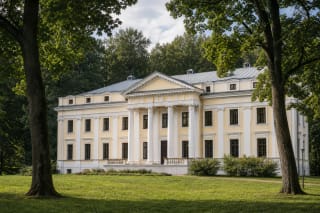
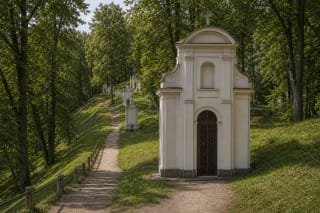
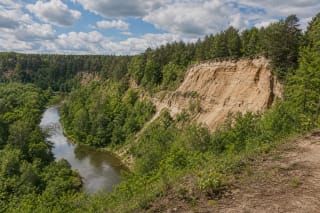
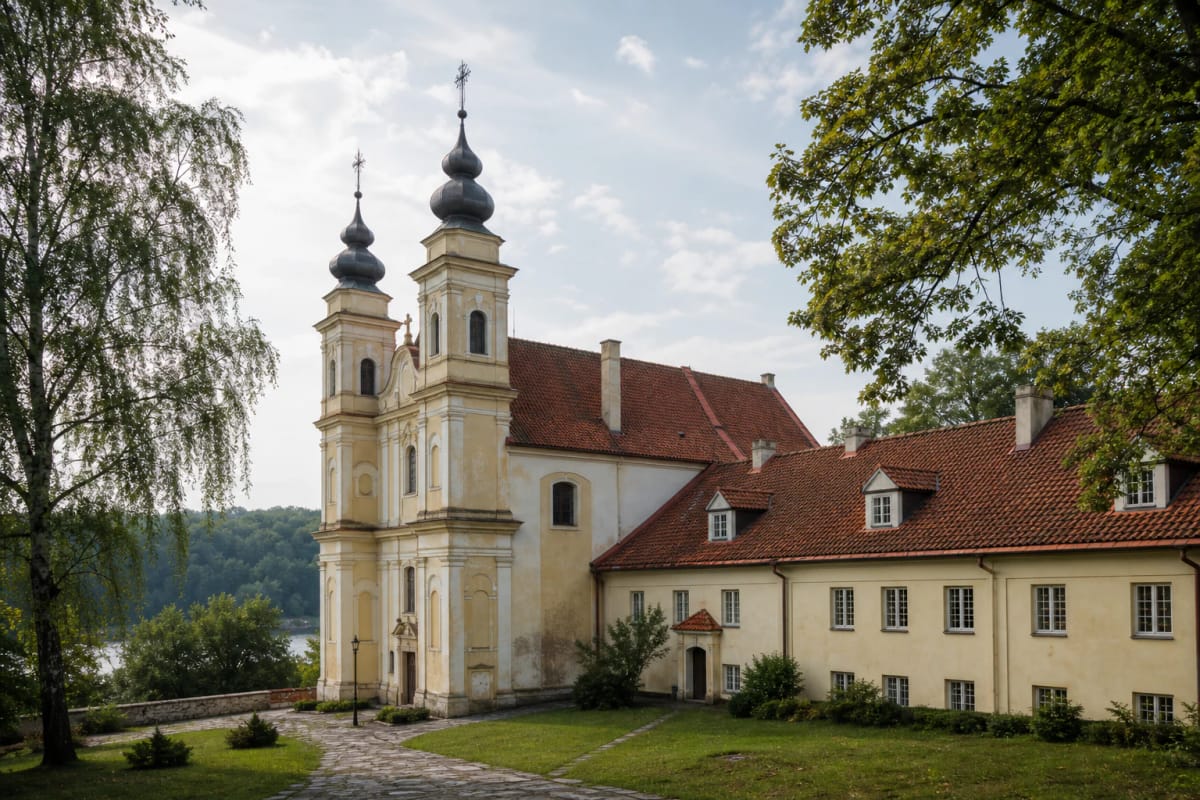
Trinapolis Church of the Holy Trinity and the former Trinitarian monastery stand on the right bank of the Neris in Verkiai, in northern Vilnius. It is a quiet Baroque ensemble in a scenic place, near Verkiai Manor and Verkiai Calvary, in the surroundings of Pavilniai and Verkiai regional parks.
The place should be distinguished from several similarly named sites: it is not Verkiai Manor, not the Old Town Basilian Church of the Holy Trinity, and not the Antakalnis Trinitarian Church of the Lord Jesus. Trinapolis is a separate ensemble with its own history.
The Trinitarian monastery: 1700
The ensemble was founded in 1700 by Vilnius Bishop Konstantinas Kazimieras Bžostovskis. He settled and endowed Trinitarian monks here, built the first wooden church and monastery, and named the place Trinapolis, as if it were a city of the Trinitarians. The Trinitarian Order, founded in twelfth-century France, cared for the ransom of Christian captives.
The wooden buildings burned down in 1710. Construction of the masonry church began in 1715 and it was consecrated in 1722, while the masonry monastery rose in the mid-eighteenth century. This is how a mature Baroque ensemble formed on the bank of the Neris.
Later centuries
During the Napoleonic War in 1812, the ensemble was devastated and the monastery housed a French military hospital. In 1832, after the 1831 uprising, the monastery was closed. In 1846-1849 it was rebuilt and adapted as the Orthodox bishop's summer residence, with the church turned into an Orthodox church.
In 1917 the ensemble was returned to the Catholic Church. During the Soviet period, in 1948, the church was closed; the monastery housed a tuberculosis hospital and later a tourist base. In 1992 the ensemble was returned to the Vilnius Archdiocese.
Baroque architecture and setting
The Trinapolis ensemble is an example of mature Baroque: a modest two-storey monastery with cross vaults and a church standing beside it on a high terrace above the Neris. The tower tops were altered more than once, so the building bears traces of several periods.
The setting leaves the strongest impression: a quiet Neris riverbank surrounded by forest, near Verkiai Manor and Verkiai Calvary. It is one of the calmest sacred heritage places in Vilnius.
How to visit Trinapolis
Trinapolis is convenient to combine with Verkiai Manor, Verkiai Calvary, and a walk along the Neris. The exterior and surroundings usually take 30-45 minutes.
It is important to know that the ensemble houses the Vilnius Archdiocese retreat house, cared for by sisters. It is not a museum but a place of silence and prayer. Visitors should respect the house rules, and before going it is worth checking the official page for the possibility of seeing the church or taking part in retreats.