- Place
- Nemunėlio Radviliškis Eldership, Biržai District Municipality
- Region
- Biržai District
- Type
- Devonian dolomite exposure by the Nemunėlis, near the Latvian border
- Address
- Tabokinė village, left bank of the Nemunėlis, Biržai District
- Coordinates
- 56.41000, 24.83300
Tabokinė Dolomite Exposure
Tabokinė Exposure by the Latvian border
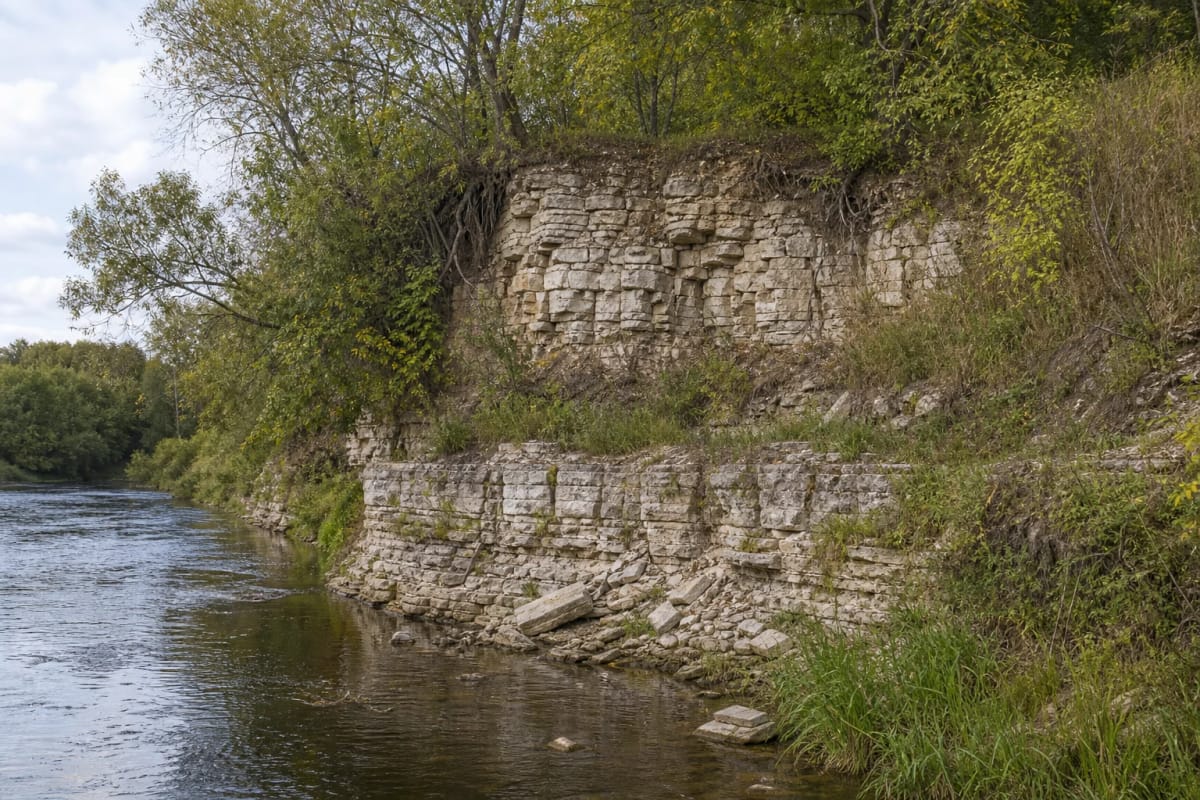
Tabokinė Exposure is in Biržai District, Nemunėlio Radviliškis Eldership, on the left bank of the Nemunėlis, right by the Latvian border. It belongs to Biržai Regional Park and the Nemunėlis-Apaščia geological reserve, which protects Upper Devonian dolomite and marl exposures, river valleys, and underground springs.
It is one of the most expressive geological objects in the Biržai karst region: northern Lithuania's dolomitic ground, where dissolving Devonian rock layers create sinkholes and underground springs. The exposure has been protected since 1964 and has been a geological natural heritage object and natural monument since 2000.
Dolomite walls and Devonian rocks
According to VLE, the exposure is up to 11.2 m high and about 130 m long. It has two levels: an upper scarp up to 3-4 m high with large cracked dolomite blocks, and a lower 1.5-2 m wall flooded by Nemunėlis spring floods. Dolomite blocks lie at the foot, and springs emerge in places.
The exposure reveals Late Devonian rocks laid down more than 360 million years ago. At the top is up to 4 m of light grey Įstras Formation dolomite with calcite-crystal cavities, described by VLE as the most complete section of this formation; below lies about 7 m of Tatula Formation dolomite with marl interlayers. Shell imprints of gastropods and brachiopods are found in the dolomite.
A quarry that became a monument
Tabokinė Exposure is partly artificial in origin. Around 1959, the upper part of the dolomite wall was dismantled and taken to Latvia for lime burning; extraction stopped only after public protest. This is why the upper wall is now more sloping, with accumulated fallen material.
The episode is a good example of a natural monument protected at the last moment. Today the exposure is a place for learning and nature, not industry, showing what Lithuania's underground Devonian rocks look like.
How to visit Tabokinė Exposure
This is a wild riverbank exposure without developed visitor infrastructure, not a standard tourist object. Drive to Tabokinė village, then descend the slope toward the Nemunėlis; the lower part is often overgrown with trees, so the wall can be hard to see from the bank.
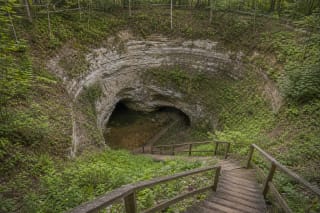
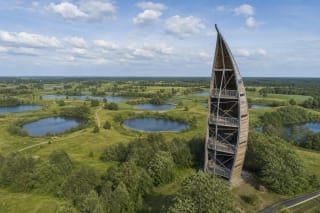
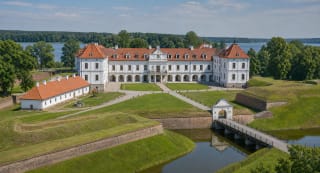
Use caution: rockfalls occur on the upper scarp, and the lower wall is flooded by spring high water. Half an hour is enough for a visit. Tabokinė combines well with other Biržai karst objects - Kirkilai lakes, Cow Cave, and Biržai Castle; for precise access, ask Biržai tourism information.