- Place
- Pervalka, Neringa Municipality
- Region
- Neringa
- Type
- memorial sculpture and Curonian Spit memory point
- Coordinates
- 55.40928, 21.07196
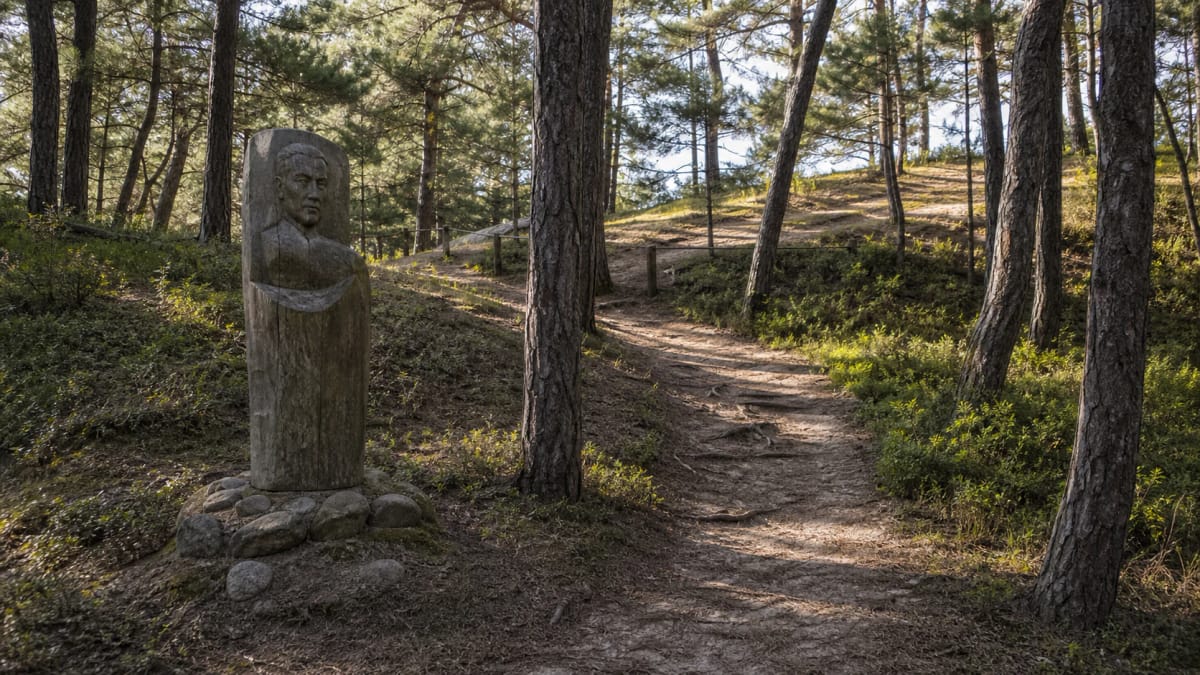
Skirpstas dune, Liudvikas Rėza sculpture in Pervalka, Rėza monument at Skirpstas Hill
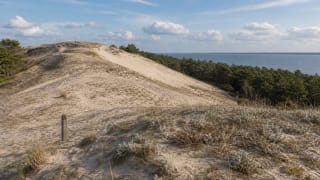
Skirpstas Hill in the Karvaičiai Reserve
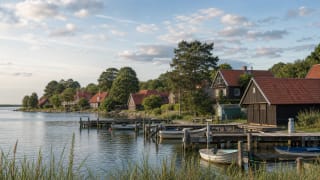
Skirpstas Hill, also called the Skirpstas dune, is one of the mountain-pine-covered dunes of the Karvaičiai Landscape Reserve, alongside the Giedružė, Preila, and Karvaičiai dunes, which rise to about 60 m. The hill stands near the Pervalka settlement, in a quiet setting of lagoon and pine forest.
What matters here is not the dune as a viewpoint, but the memorial: the Liudvikas Rėza sculpture on Skirpstas Hill links the Pervalka landscape with the dramatic story of buried Karvaičiai and its most famous son.
The Liudvikas Rėza sculpture on Skirpstas Hill
The monument to Liudvikas Rėza on Skirpstas Hill, near Pervalka, was created by the folk artist Eduardas Jonušas. The Universal Lithuanian Encyclopedia dates the sculpture to 1975, while Curonian Spit National Park gives 1979 - so the exact date is best treated with caution.
The sculpture matters because Rėza was born nearby, in one of the Curonian Spit's sand-buried villages. It is not merely a local monument: it recalls the Curonian Spit's contribution to the history of Lithuanian literature and folklore.
Who was Liudvikas Rėza
Martynas Liudvikas Rėza (German: Martin Ludwig Rhesa, 1776-1840) was an Evangelical Lutheran pastor, worker of Lithuanian letters and folklorist, a doctor of philosophy and professor at Königsberg University. From 1810 he headed the reorganised Lithuanian Language Seminar and trained many figures of Lithuanian writing, among them the linguist Friedrich Kurschat.
In 1818 Rėza was the first to publish Kristijonas Donelaitis's poem Metai (with a German translation), and in 1825 he issued the first printed collection of Lithuanian folk songs, Dainos. In his poetry collections Prutena he recalled with nostalgia his native Karvaičiai, buried by dune sand at the end of the eighteenth century.
Karvaičiai - Rėza's buried birthplace
Until 1797, where Karvaičiai Hill now stands - in the northern part of the reserve, between Preila and Pervalka - there was the village of Karvaičiai. Its inhabitants, retreating from drifting sand, moved from place to place several times, and finally, after even the Karvaičiai church was buried, they abandoned the village - some moving to the southern edge of Juodkrantė, others to Nida and Nagliai.
It was in this vanished village that Liudvikas Rėza was born. The sculpture at Skirpstas Hill joins, in one place, Pervalka's quietness and the dramatic memory of sand-buried villages, so on site it is worth seeking not a grand memorial but the orientation of the landscape: Pervalka, the lagoon, the dunes, and the memory of Karvaičiai all speak together here.
Visiting
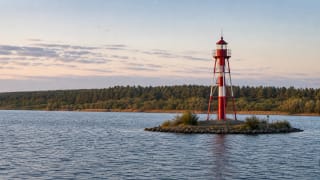
Skirpstas Hill and the Rėza sculpture combine easily with Pervalka village, Pervalka Lighthouse, and the direction of the Karvaičiai village site. There is no separate ticket, and the place is best experienced on a slow walk along the lagoon shore.
Because this is a memory place within the protected Curonian Spit, stay on the paths, do not damage the dune relief, and respect the quietness of the place. Plan 20-40 minutes, or more if you are walking a wider Pervalka route.