- Place
- Daugaliai, Ukmergė District Municipality
- Region
- Ukmergė
- Type
- Renaissance castle and manor ensemble
- Address
- Daugalių k. 1, Ukmergė District
- Coordinates
- 55.28641, 24.51176
A castle name in a manor landscape
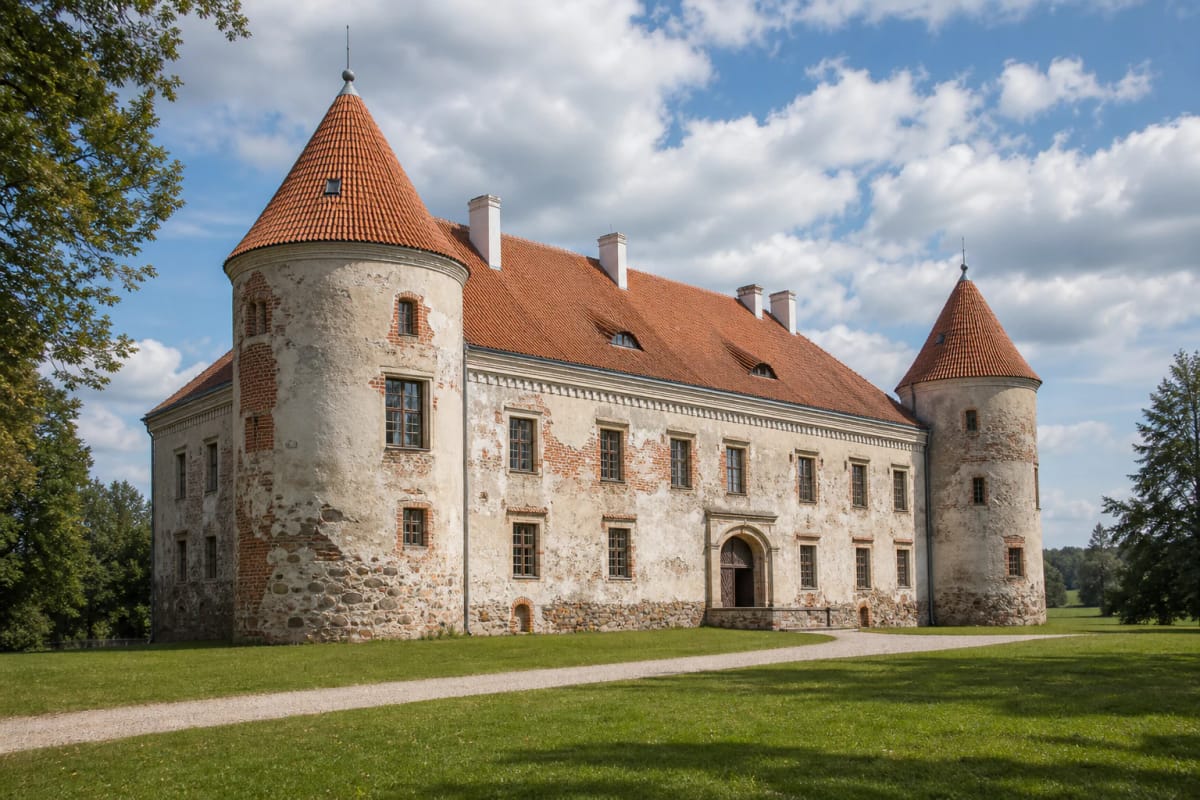
Siesikai Castle is in Daugaliai village, Ukmergė District, by Lake Siesikai. Today it is visited as a museum branch and manor-heritage object, but the castle name is meaningful: the building preserves a castle image with towers, thick walls, and representative enclosure. Ukmergė Museum calls it the oldest surviving residential building of this type in Lithuania.
The Cultural Heritage Register protects both the Siesikai manor estate and the castle building. The fortified estate was bordered on three sides by defensive ditch, ramparts, and bastions, and on the west by the Armona stream, so view it as a wider manor environment, not only a palace-castle.
Daumantai-Siesickiai and early construction
KVR dates the walls to the sixteenth-early seventeenth century, while VLE also gives the earlier 1493-1517 date, so dating is debated. The traditional founder is Gabrielius Daumantas-Siesickis, a member of the Council of Lords who died in 1517. The family held Siesikai for more than two centuries, until 1736.
Siesikai shows a residential castle type moving toward manor life: not a medieval defensive castle, but a noble residence still using castle architecture. A round north-west tower and square north-east tower survive; the third, round south-east tower, was later demolished.
Daugėlas, old-faith shrine, and later changes
In 1736 the castle passed as dowry to the Radziwiłłs, and in 1746 it was sold to Konstantinas Martynas Daugėla. The Swedes damaged it during the Northern War in 1704; in the late eighteenth-early nineteenth century it was rebuilt, giving the facades a Classical appearance.
KVR records a distinctive local account: during the Daugėla period, a shrine of the old Lithuanian faith with images of Perkūnas, Patrimpas, and Pikuolis and sacred snakes was arranged in the castle; the idols were supposedly taken by Germans during the First World War. The castle is also linked with a legend of an unfaithful wife walled into a tower; present this clearly as legend.
What to see inside
The best-known room is Months Hall (KVR room No. 210), where seventeenth-century wall painting survives: three of twelve month compositions, November, December, and January, created after engravings by Italian Antonio Tempesta, and the mythological scene 'Perseus slays the monster and frees Andromeda'. Other second-floor rooms preserve sixteenth-eighteenth-century polychromy layers.
Vaulted cellars with barrel masonry vaults remain under the building. The museum page stresses the importance of guided tours, which is logical: interiors make most sense with stories about the family, iconography, restoration, wall-painting research and conservation in 2020-2022, and changing functions.
Opening hours, tours, and tickets
During research, the Siesikai Castle page stated that current opening-hour information is posted in the Google Maps description for Siesikai Castle and provided by phone. Do not rely on old schedules; check same-day information before travelling.
During research, the Ukmergė Museum paid-services page listed tickets and guided-tour prices, including adult, discounted, and group-tour rates. Since prices may change, check the official price page.