- Place
- Skuodas District Municipality
- Region
- Samogitia
- Type
- nature trail through boulder field, juniper scrub, and tundra-like landscape
- Address
- Šaukliai Boulder Field, Skuodas District
- Coordinates
- 56.12800, 21.59500
Šaukliai Boulder Field, Šaukliai Juniper Scrub
Šaukliai Boulder Field: Lithuania's tundra impression
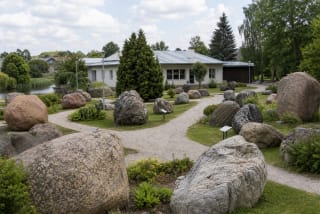
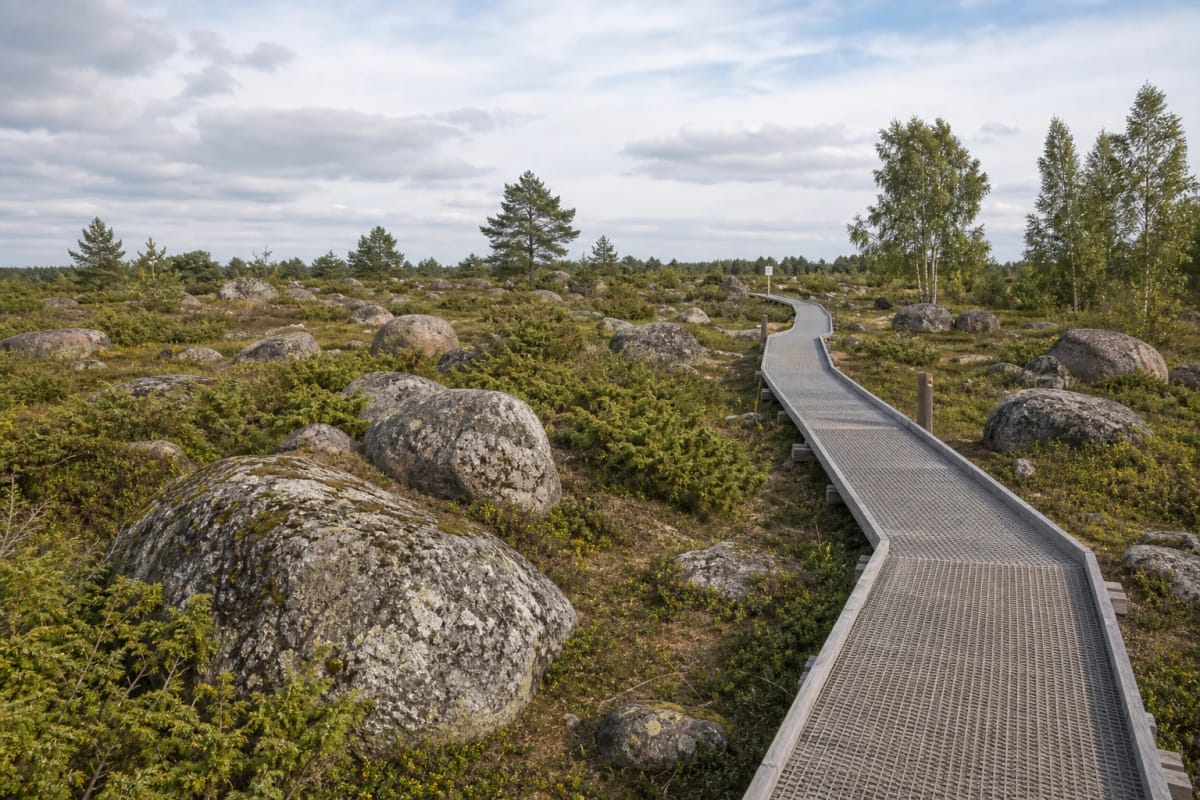
Šaukliai Boulder Field Nature Trail leads through a landscape that feels unexpected in Lithuania. Open space, large glacial boulders, junipers, and low vegetation create not a forest atmosphere but something almost tundra-like. The site is in Salantai Regional Park, Šaukliai Landscape Reserve, Skuodas District.
According to VLE, Šaukliai Boulder Field covers about 79 ha and contains more than 300,000 cubic metres of boulders. It is one of Lithuania's largest boulder fields and is overgrown with junipers, considered the country's largest juniper scrub. Visitors see this immediately: stones here are not isolated decorative objects but a whole landscape layer.
A glacial stone field: how it formed
Šaukliai Boulder Field is a legacy of the last Ice Age. About 12,000-13,000 years ago, glacial meltwater washed out and accumulated a huge quantity of boulders across a broad flow zone. Most are crystalline rocks, up to 3 m in diameter, carried by the glacier from Sweden, western Finland, and Baltic Sea seabed rock massifs.
This is an especially good trail for showing geology to children or travel companions without a museum display case. The scale, form, and abundance of stones explain more than a single sign, while the open space lets visitors feel the power of glacial meltwater processes.
The 2.2 km trail and raised path
Saugoma.lt states that the renewed Šaukliai Boulder Field-Juniper Scrub Nature Trail is 2.2 km long. About 850 m is a raised metal path and about 1.2 km is a ground trail. The route has eight rest stops with benches, and the raised part is accessible for visitors with limited mobility. Bicycle stands are near the car park.
The raised path matters not only for convenience. It protects the sensitive boulder-field, juniper, and meadow vegetation, which does not tolerate trampling. Entry is by ticket through the Paysera system, and visitors can choose either independent or guided visits. Stay on the route and do not look for shortcuts.
Junipers, open space, and mouflons
The site's character is created not only by stones. Lithuania's largest juniper scrub and open grassland give the landscape a distinctive texture. Rare protected vegetation grows here, and Salantai Regional Park records 26 plant species listed in Lithuania's Red Data Book. Grazing mouflons help maintain the open landscape.
Because of the grazing mouflons and the sensitive protected-area rules, official information states that pets are not allowed on the trail. This is not a formality: dogs can disturb animals and harm the ecosystem.
How to visit
Allow about 1-1.5 hours. Wear comfortable footwear, especially if you plan to walk the ground section as well. After rain there may be slippery or wetter places, and the open area can be windy.
For photography, early morning or evening is best, when the light is lower and the boulders stand out more clearly. At midday the landscape may look flatter, but the trail remains impressive because of its scale.
What to combine nearby
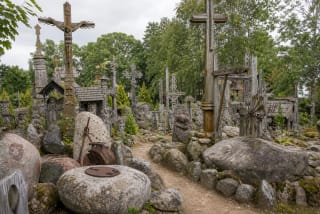
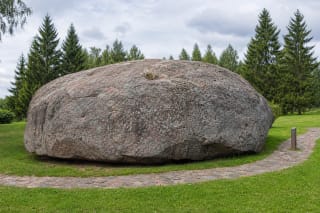
Šaukliai Boulder Field combines well with Mosėdis Stone Museum, Barstyčiai Stone, or Orvidai Homestead. Such a route shows stone in several different ways: geological phenomenon, museum collection, cultural composition, and landscape element.
If travelling through Skuodas and Kretinga districts, Šaukliai is a strong natural contrast to seaside sites. There is no sea here, but there is a clear trace of the Ice Age and the Samogitian landscape.