- Place
- Vilnius City Municipality
- Region
- Vilnius
- Type
- historic Baroque park with a regular plan
- Address
- Tarp Antakalnio ir L. Sapiegos gatvių, Antakalnis, Vilnius
- Coordinates
- 54.69900, 25.31040
Sapieha Palace Park
A Baroque park in Antakalnis
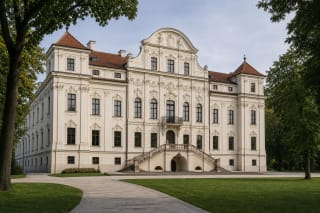
Sapieha Park lies in Antakalnis, between Antakalnio and L. Sapiegos streets. It is one of the oldest and clearest regular-plan Baroque, or French-style, parks in Lithuania. It is important to distinguish the park from the neighbouring Sapieha Palace: this page is about the park itself, not the palace.
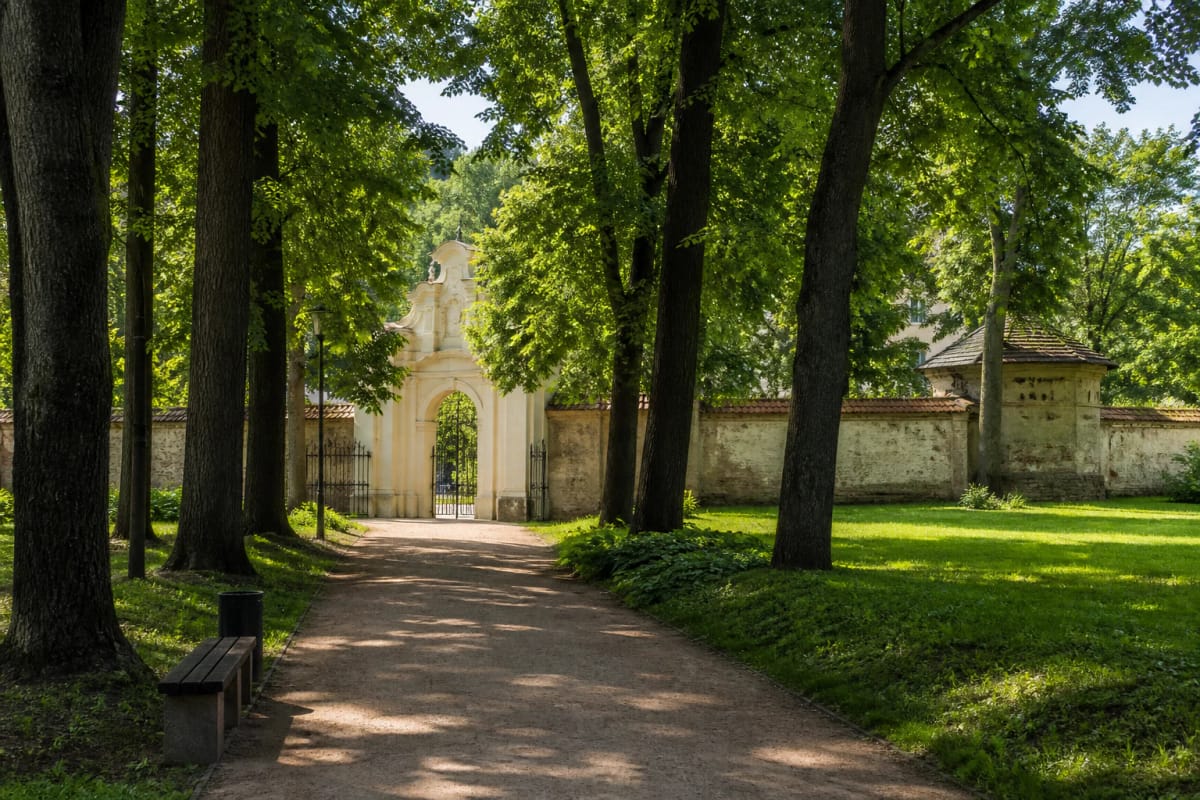
A masonry wall surrounds the whole park, two Baroque gates survive, and the central axis is directed toward the palace. On the northern side stands the Church of the Lord Jesus and an active monastery; together they form a coherent Baroque ensemble.
The Sapieha residence
The park appeared beside the grand Sapieha residence. The Baroque palace was built in 1689-1692 by Kazimieras Jonas Sapiega, Grand Hetman of Lithuania and Voivode of Vilnius; it was designed by architect Giovanni Battista Frediani and decorated by famous artists of the period.
The park began to be formed in the late seventeenth century together with the palace, and in the mid-eighteenth century it was supplemented by a southern, freer landscape-plan section. Palace, park, and neighbouring monastery formed one of Lithuania's most distinctive Baroque ensembles.
A regular Baroque park
The park stands out for its regular, geometric structure. Its green framework consists of old tree avenues: in the northern part, dense avenues of linden, maple, ash, and birch create deep shade, while on the southern side tree groups alternate with open meadows.
This composition, with a central axis toward the palace, masonry wall, and gates, is a rare surviving Baroque park scheme in Lithuania. That is why the park is valued as one of the country's oldest parks of this type.
From hospital grounds to public park
In 1809 a military hospital moved into the Sapieha Palace, monastery, and park buildings, changing the function of the site for a long time. Later, Vilnius Tech Park also operated in a wooden building on the former hospital grounds.
In recent years the park has increasingly been opened to residents. At the end of 2020, its maintenance was transferred to the public institution Vilniaus miesto parkai. It is worth knowing that historic Baroque reconstruction of the park has repeatedly stalled, so it is more accurate to say that the park is open and cared for as a living public city park, not that it has been fully restored as a Baroque park.
How to visit Sapieha Park
The park is open, public, and free, so it can be visited independently at any time. A walk through the avenues and meadows usually takes 45 minutes to 1.5 hours; the old gates and wall are also worth noticing.
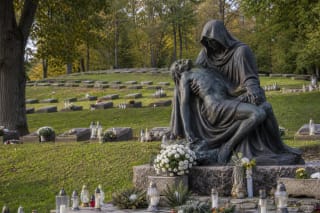
The visit is easy to combine with the neighbouring Sapieha Palace, the Church of the Lord Jesus, and Antakalnis Cemetery. Before travelling, check official Vilnius city pages for more precise information about park maintenance and events.