- Place
- Vilnius, Vilnius City Municipality
- Region
- Vilnius
- Type
- memorial city necropolis with the Freedom Defenders Memorial
- Address
- Karių kapų g. 11, Vilnius
- Coordinates
- 54.69910, 25.32160
Antakalnis Military Cemetery
Antakalnis Cemetery as a Vilnius pantheon
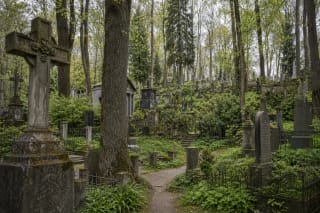
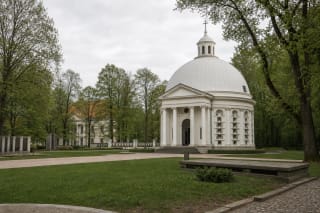
Antakalnis Cemetery stretches through the Antakalnis district of Vilnius and is regarded as the city's most important necropolis. It covers about 15.6 ha, and its history reaches back to 1809, when the first burial ground, the so-called Hospital Cemetery, was established beside the Antakalnis military hospital. Two more cemeteries later appeared nearby, and in the early twentieth century the area became known as Antakalnis Military Cemetery.
Today this is a place where several layers of memory meet: victims of freedom struggles, soldiers from different wars, and major figures of Lithuanian culture, science, and public life. That is why the cemetery is often described as a kind of national pantheon.
The January 13 memorial and Pieta
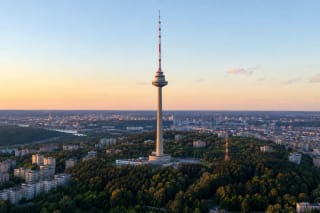
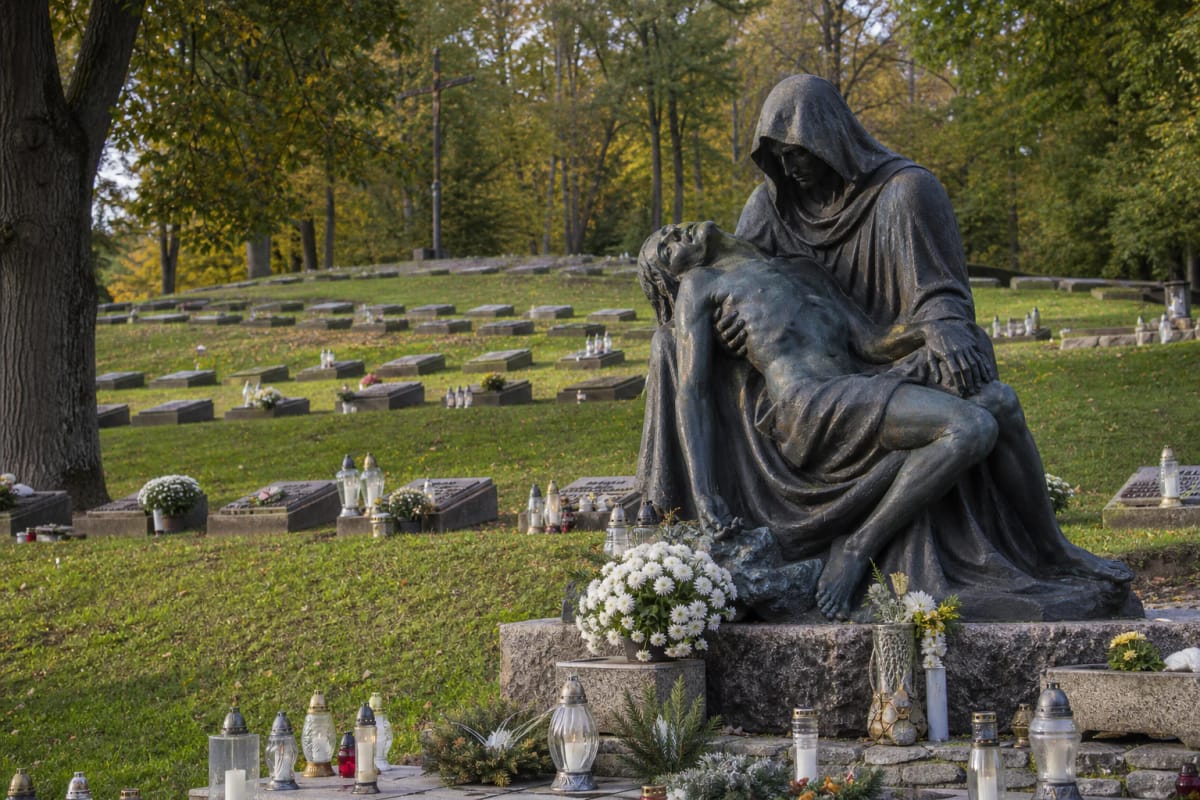
The most important modern memorial space in the cemetery is the Freedom Defenders Memorial. In 1991, the January 13 freedom defenders who died while defending Lithuania's independence at the Vilnius Television Tower and the Radio and Television Committee were buried here on the central slope of the cemetery.
The memorial was erected in 1995, with the Pieta, or Sorrowful Mother, by sculptor Stanislovas Kuzma at its centre. It is important to know that the monument commemorates not only the victims of January 13 but also the victims of the Medininkai massacre. Thirteen people were killed during the night of January 12-13, and Vytautas Koncevičius died from his wounds later, on February 18; he is often named as the fourteenth victim.
Military burial grounds
Several military cemeteries are located within Antakalnis Cemetery. Russian and German soldiers from the First World War are buried here, with Polish legionaries killed in 1919-1921 nearby. Soviet soldiers were buried here during the Second World War; a memorial for them was installed in 1951, but its monument was dismantled at the end of 2022.
The cemetery also connects with an older war. In 2003, soldiers of Napoleon's army who had died in Vilnius in 1812 were reburied here after their remains were found in the Šiaurės miestelis area. In this way, the cemetery reflects a broad span of Vilnius' wartime history.
A place of national memory
From the 1970s onward, prominent Lithuanians began to be buried in Antakalnis Cemetery, strengthening its role as a national memory site. Among those resting here are President Algirdas Mykolas Brazauskas, partisan commander Adolfas Ramanauskas-Vanagas, poets Justinas Marcinkevičius and Sigitas Geda, actor Donatas Banionis, mythologist Norbertas Vėlius, and many other figures of culture, science, and politics.
The cemetery is also valuable as an open-air collection of twentieth-century memorial art. Many gravestones and memorials were created by important sculptors and architects.
How to visit Antakalnis Cemetery
The cemetery is open and free to visit. For a meaningful visit, plan about 1-1.5 hours and include the Freedom Defenders Memorial with the Pieta, the January 13 victims' graves, and the national pantheon area. This is an active and respected memory site, so visitors should behave quietly and with restraint.
The most significant days are January 13, Freedom Defenders Day, and November 1-2, All Saints' Day and Vėlinės, when the cemetery receives many visitors. Before travelling, check current visitor information through official Vilnius municipal channels if you need practical details.