- Place
- Priekulė, Klaipėda District Municipality
- Region
- Lithuania Minor
- Type
- Catholic church and regional-significance heritage object
- Address
- Turgaus Street 11, Priekulė, Klaipėda District
- Coordinates
- 55.55360, 21.31634
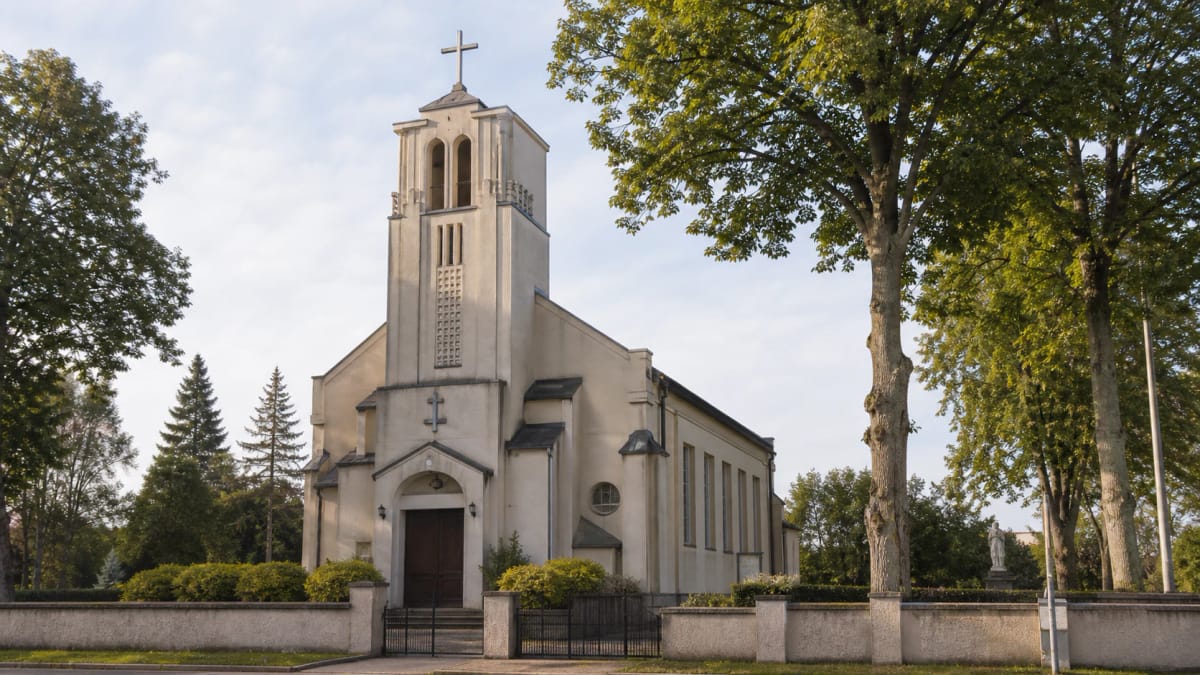
Priekulė Catholic Church
A Catholic church in the Lutheran Klaipėda Region
Priekulė St. Anthony of Padua Church is especially interesting because of its context. Priekulė (German Prökuls) belongs to the Klaipėda Region, where the Evangelical Lutheran tradition dominated for a long time, and most of the town lies on the right bank of the Minija. An interwar Catholic church here therefore speaks about the demographic and political change after 1923, when the Klaipėda Region joined Lithuania.
In the Cultural Heritage Register, the church is listed as a regional-significance heritage object. It is not an old Baroque sanctuary; its importance is tied more closely to the first half of the twentieth century in the Klaipėda Region and to the identity of a Catholic minority community amid an Evangelical Lutheran majority.
Built in 1937 through community effort
Official descriptions state that the Catholic community in Priekulė formed after the Klaipėda Region was incorporated into Lithuania. Before the separate church was built, services were held in rented premises of the Evangelical Lutheran community. In 1936 a construction committee was formed and a plot was acquired, and the church itself went up in 1937.
Sources differ slightly on the date: the Cultural Heritage Register and Klaipėda District data give 1937, while the Universal Lithuanian Encyclopedia dates the church to 1938 (probably its completion or consecration). These concrete facts show that the church did not appear as an abstract state symbol but as a local community effort to have its own sacral space.
Architecture, altar, and churchyard
The building shows modernist tendencies: it is a three-nave church with a bell tower and apse. This is restrained, functional interwar church architecture, different from the nearby red-brick Lutheran sanctuaries. The Cultural Heritage Register highlights the object's architectural, artistic, and sacral value.
Official data mention a neo-Gothic high altar installed in 1949 and mature lindens growing in the churchyard. A visit is therefore worth giving not only to the facade but also to the churchyard space with its trees, crosses, and small architecture.
Heritage status in the Cultural Heritage Register
In the Cultural Heritage Register, the church (code 31048) is a registered, regional-significance object at Turgaus Street 11; it was entered in the register in 2006, with a protected area of about 2,306 sq m. The historical documentation was prepared by Janina Valančiūtė in 2006.
This status explains why the church matters not for its age but as a clearly dated, well-documented example of twentieth-century Catholic heritage in the Klaipėda Region. For a visitor it is a convenient reference point for understanding the interwar building wave in the region.
Visiting within a Priekulė route
No public tourist opening hours were found during source review. To see the interior, it is best to align your visit with services or contact the parish; the exterior and churchyard can be viewed respectfully at any time of day.
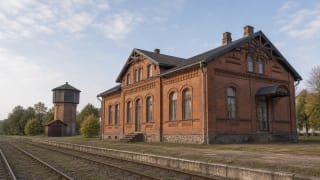
In Priekulė, this church combines well with the Ieva Simonaitytė Memorial Museum, the Freedom Fights and Deportation History Museum, and the 1875 railway-station complex. The town then appears as a crossing point of literature, religion, transport, and twentieth-century history in Lithuania Minor.