- Place
- Pivašiūnai, Alytus District Municipality
- Region
- Dzūkija
- Type
- wooden pilgrimage church and shrine of the Blessed Virgin Mary
- Address
- Trakų g. 6, Pivašiūnai, Alytus District
- Coordinates
- 54.46078, 24.37257
Pivašiūnai Shrine, Pivašiūnai Church of the Assumption of the Blessed Virgin Mary
Pivašiūnai shrine
Pivašiūnai Church is one of Dzūkija's most important pilgrimage sites. Its full name is the Pivašiūnai Church of the Assumption of the Blessed Virgin Mary, though in everyday speech it is often simply called Pivašiūnai Shrine.
VLE presents Pivašiūnai as a town with a significant church, while Kaišiadorys Diocese emphasizes the parish and pilgrimage status. Both the architecture and the famous Marian painting matter here.
The 1825 wooden church
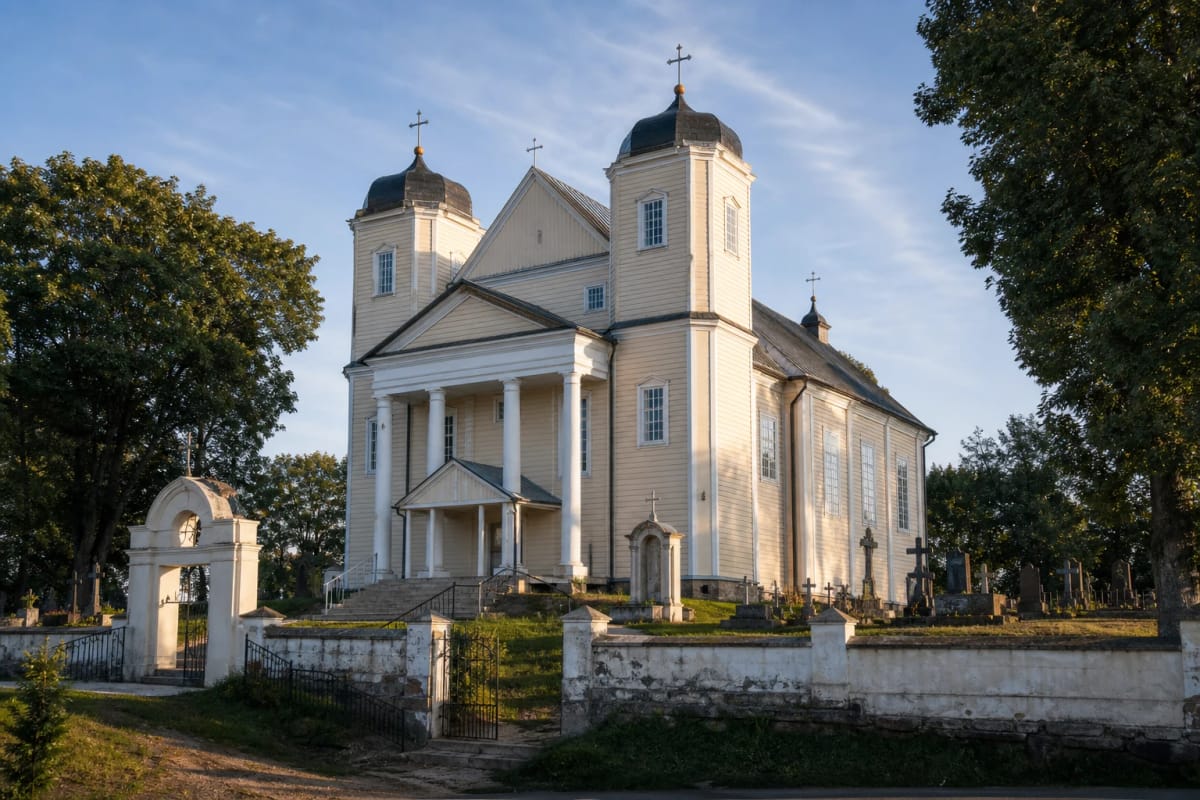
VLE states that the current Pivašiūnai church was built in 1825. It is a classicist wooden church with a Latin-cross plan. Its scale and hilltop position create a clear shrine image in the town landscape.
The complex includes more than the church. VLE mentions the cemetery fence with gates, a chapel, rectory, granaries, icehouse, farm building, and a monumental cross, so it is worth walking around the churchyard and surrounding space.
The Comforter of the Afflicted image
The shrine's most important religious treasure is the image of the Blessed Virgin Mary, Comforter of the Afflicted. VLE dates it to the mid-seventeenth century.
On August 15, 1988, the image was crowned with a crown of Pope John Paul II. This date is central to Pivašiūnai's pilgrimage identity because it confirmed the shrine's importance at the national level.
Assumption feast and pilgrimage
Pivašiūnai is especially alive around Žolinė, the Assumption feast. Then the church becomes not only a parish space but a destination for large numbers of pilgrims, where services, indulgence feasts, and personal intentions shape the town's rhythm.
If you want to look calmly at the architecture, avoid the main feast days. If the goal is living pilgrimage, the Assumption period is essential, but you need to plan parking, time, and crowds.
Services and visiting
During research, the parish services page listed Mass on Sundays and feast days at 10:00 and 12:00, Saturdays at 10:00, and weekdays usually at 9:00, with seasonal exceptions.
This can change, so check the Pivašiūnai parish services page before travelling. No separate tourist ticket was found during research, but visitors should respect the rules of an active church.