- Place
- Paežeriai, Vilkaviškis District Municipality
- Region
- Suvalkija
- Type
- a state-protected botanical natural heritage object in Paežeriai Manor Park
- Address
- Paežeriai Manor Park, 5-6 Dvaro Street, Paežeriai village, Šeimena Eldership, Vilkaviškis District
- Coordinates
- 54.63910, 22.97950
- Visit duration
- 20-40 minutes for the oak and nearby park, longer when combined with the manor museum, tower, and lakeshore
- Best time
- May to October for green or autumn foliage; the leafless season best reveals the five-part stem structure
Paežerių dvaro ąžuolas, Paežeriai Manor Park oak
The 2017 measurements describe the whole tree, not just a thick trunk
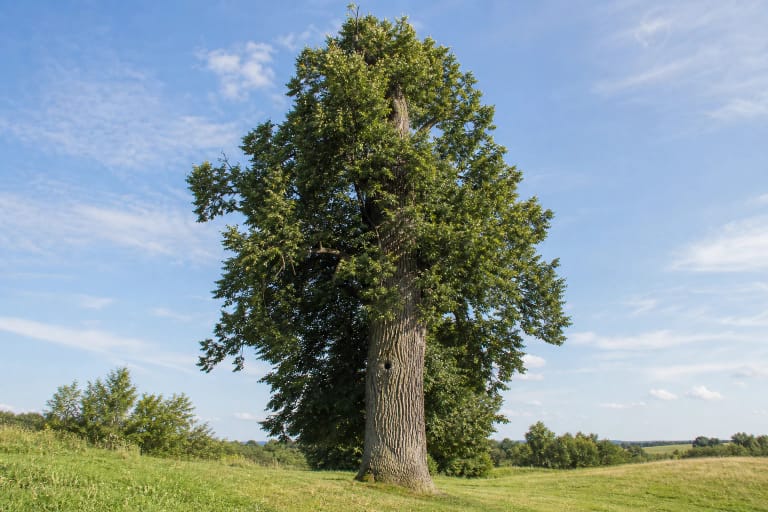
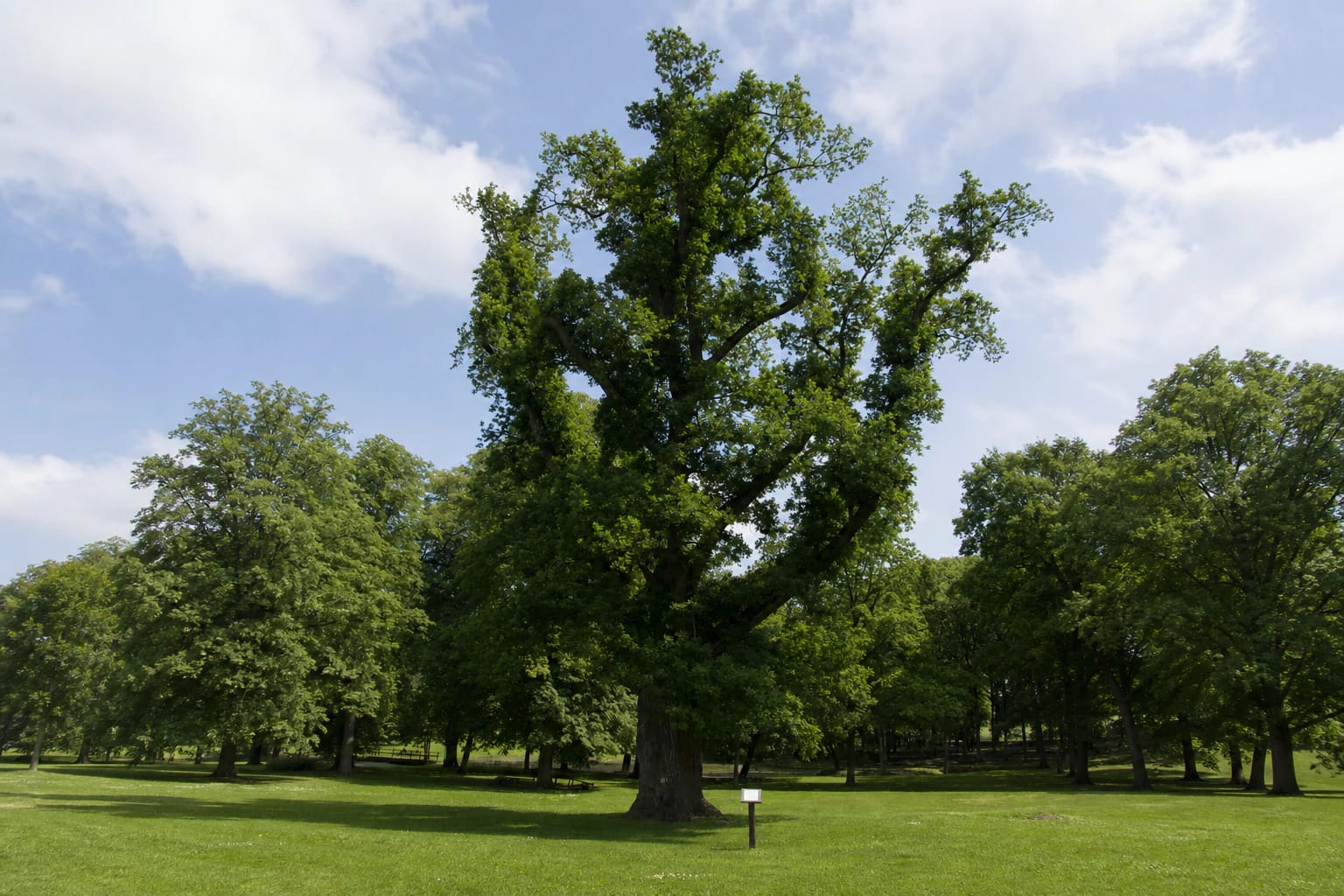
Paežeriai Manor Oak stands on an open, maintained park lawn, making it possible to take in the tree from roots to crown. Its trunk is neither short nor contorted: it rises before separating at roughly 5 m into five substantial stems. Above them grows a broad, irregularly open crown, while an information board helps distinguish this protected tree from the park's other oaks.
The State Forest Service inspected the tree for its veteran-oak inventory on 14 September 2017. It measured 32 m high, 6.3 m around the trunk, and 30 m across the crown; the site lies about 56 m above sea level. The table also records 27 for a second crown dimension, so the canopy is best understood as roughly 27 by 30 m rather than a perfect circle.
The survey described the crown as exceptionally healthy, attractive, and symmetrical, with abundant acorns. That is an observation from one day in 2017, not a permanent safety guarantee. Breakage, storms, cavities, and root-zone conditions matter in a veteran tree, and only an arborist can assess its current structural safety reliably.
The old hollow is part of the tree's biology, not a space for visitors to enter
The same 2017 inventory says that the entire base of the trunk had long been decayed. It also records a local recollection of people crawling inside as children. That detail explains the hollow's scale, but it is no invitation to repeat the habit: entering compacts the root zone, damages cavity edges, and exposes a visitor to splintered wood or falling branches.
A VSTT management guide uses this oak as a specific example of correcting obsolete treatment. Its photographs show the cavity containing unsuitable concrete and the same trunk after the old fill was removed. Contemporary arboricultural practice keeps large dry cavities clean and ventilated instead of sealing them with material that can shift and tear living wood.
A hollow does not mean the tree is dead. An oak can leaf, flower, and produce acorns with a hollow trunk, while cavities may provide habitat for insects, birds, and small mammals. Visitors should inspect it from outside and never insert, pour, or leave anything inside.
An embedded cable and an air spade reveal the oak's real care history
The VSTT guide includes a photograph of an old crown-support cable already embedded in the trunk of Paežeriai Manor Oak. It is an instructive warning: even a protective system must be selected and inspected professionally, because unsuitable equipment left too long can injure a tree. The inventory also mentions five stems splitting under their own weight and secured with chains, so any visible connections belong to its management history, not decoration.
Other photographs in the guide document soil loosening with an air spade in the oak's active root zone. A powerful air stream relieves compaction while avoiding damage to fine roots. A further image shows mulch beneath the crown. Together they demonstrate that veteran-tree care takes place below ground as well as above it: a living crown depends on air, water, and functioning soil.
The simplest visitor rule follows directly from that work: use the paths and do not approach the trunk merely to embrace it. Never climb on roots, move supports, or attach a hammock. A photograph from several metres away often communicates the thirty-metre crown far better than one taken against the bark.
The protected tree belongs to an 18 ha estate park but is not the museum itself
VSTT lists Paežeriai Manor Park Oak among Vilkaviškis District's botanical natural heritage objects. That is its precise current status. Everyday descriptions may call it a natural monument, but this guide does not assign the separate higher legal designation because the checked VSTT list does not state one.
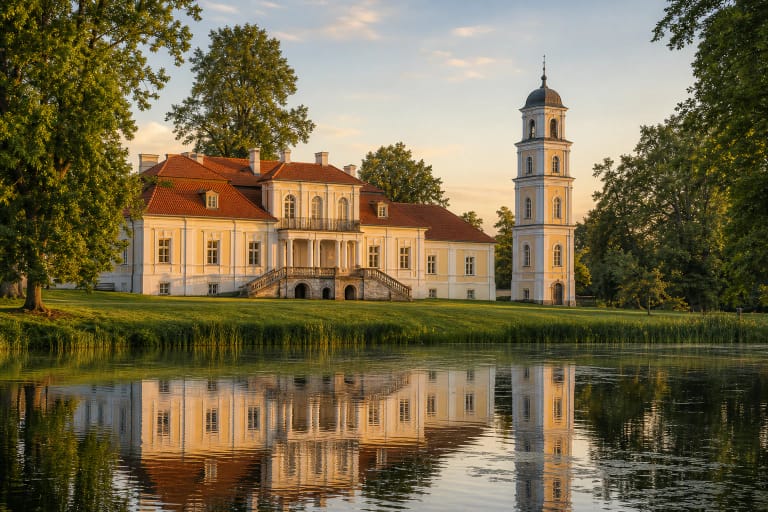
The official manor website describes an 18 ha park with two ponds, veteran trees, a beech, and a lakeshore. The oak is one living part of that landscape rather than a separate fenced exhibit. Its open lawn makes it possible to see how the immense crown fits among the park's other trees and the spaces of the manor ensemble.
Public descriptions estimate the tree at around four or five centuries old and sometimes connect its planting with the manor's beginnings. The checked official inventory gives neither an exact age nor a planting date. Those figures should therefore be treated as approximate traditions, not as a dendrochronologically established birth year.
The exact Google pin marks the tree, while the manor address marks the complex
The exact Google Maps listing Paežeriai Manor Oak, place ID ChIJ4ZNRjpE14UYR31Lo3yUoS78, marks 54.6390963, 22.9794998. On 15 July 2026 it showed an average rating of 4.7 out of 5 from 10 reviews. The point is only metres from the forestry coordinates published in 2017, confirming that it identifies this protected tree.
The tree's Google listing gives 5 Dvaro Street, while the museum's official contact address is 6 Dvaro Street. The two numbers do not indicate two different oaks: one point directs visitors to the park tree and the other to the institution. Navigate to the tree listing, leave the car only where parking is officially permitted near the complex, and continue on foot along park paths.
The 2017 inventory noted a direction sign at the park gates and an information board beside the oak. Signs, traffic arrangements, and event restrictions can change, so follow current instructions on site. During major festivals or concerts, parts of the park may be allocated to an event.
The oak is visible in the park, but museum hours and tickets are separate
Google marked the tree listing accessible 24 hours on the verification date. The official manor site also says that the palace and park welcome visitors, but it publishes seasonal hours, closure days, and separate tickets for museum exhibitions. Do not interpret a 24-hour map label as a guarantee that gates, the palace, or the tower will be open at any hour of the night.
In July 2026, the official price list showed a EUR 7 adult ticket for the full complex, with separate admission for the main palace, servants' house, icehouse, and tower. It listed no dedicated charge simply for viewing the oak, but events, photo sessions, and museum visits have their own terms. Hours and prices change, so use the current links on the official visit page before travelling.
Allow 20-40 minutes for the tree alone, and longer for the palace, tower, rose garden, or lakeshore. Do not linger beneath old branches in strong wind, a storm, or wet snow. A calm leafless morning best reveals the five-part structure, while summer displays the full breadth of the crown and makes the tree easiest to recognise from a distance.