- Place
- Klaipėda City Municipality
- Region
- Klaipėda
- Type
- public library combining the historic Gerlach residence with a contemporary extension
- Address
- H. Manto g. 25, Klaipėda
- Coordinates
- 55.71691, 21.12794
- Visit duration
- 45-90 minutes; longer for an exhibition, event, or time in a reading room
- Best time
- during opening hours year-round; in warmer months when the courtyards are in active use
Ieva Simonaitytė Library, Klaipėda County Public Library, KLAVB
Why the library is worth entering even without a library card
This is the largest library in western Lithuania, but travellers will find more than a large collection. An ornate nineteenth-century villa faces H. Manto Street, historic interiors flow into bright contemporary spaces, and two courtyards behind the buildings hold distinctive works of art. Public exhibitions and events make it an easy cultural stop between other central Klaipėda sights.
On a first visit, begin at the main entrance and ask the information desk which exhibitions, historic rooms, and courtyards are accessible that day. You generally do not need a library card to enter public areas or see a free exhibition, although borrowing, certain services, and events requiring registration have separate conditions.
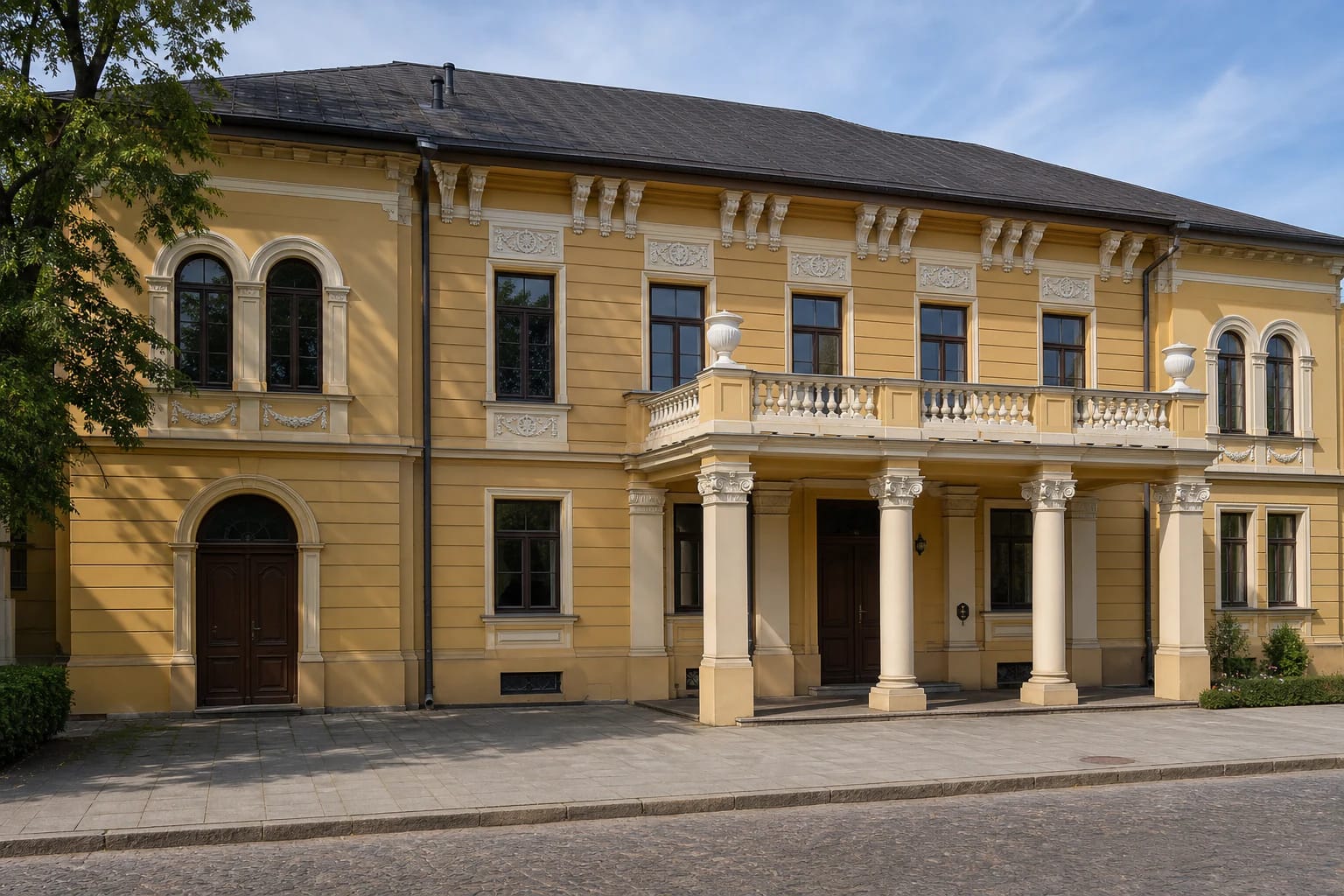
Do not hurry past the historic facade. Its two ochre storeys are articulated by white stucco decoration, tall windows, a columned portico, a balustrade, and ornamental urns. It is one of Klaipėda's most striking examples of historicist architecture.
The 1874 Gerlach residence and the city's first library here
The residence was built in 1874 for Hermann Gerlach, a Klaipėda timber merchant, commercial councillor, and Italian consul. The architect has not been established in surviving records. With its Neo-Renaissance forms, the villa projected the status of a prosperous port merchant and remained in the Gerlach family until 1935.
After Hermann's death, his widow Marie Gerlach sold the house to the city magistrate. The municipal library moved in during 1936 and was considered one of Lithuania's most modern, equipped with metal shelving and a book lift. It operated here until autumn 1944, and its holdings were destroyed during the Second World War.
The postwar public library moved into Gerlach House in 1953. The historic building is not a separate memorial museum today: it is a working part of the library complex, so access to particular rooms depends on daily operations and the event schedule.
From the institution founded in 1950 to a dialogue between old and new
The present county library was founded in 1950 and changed names and administrative status several times. It was granted Ieva Simonaitytė's name in 1978, which appeared in the institutional name from 1979. Its current official name has been in use since 15 December 2020.
As the collection and visitor needs grew, an extension project began in 1992. The long construction and restoration process was completed in 2008, although the new readers' building opened earlier, in 2006. Architect Neringa Blaževičienė's complex connects the restored residence with restrained twenty-first-century architecture.
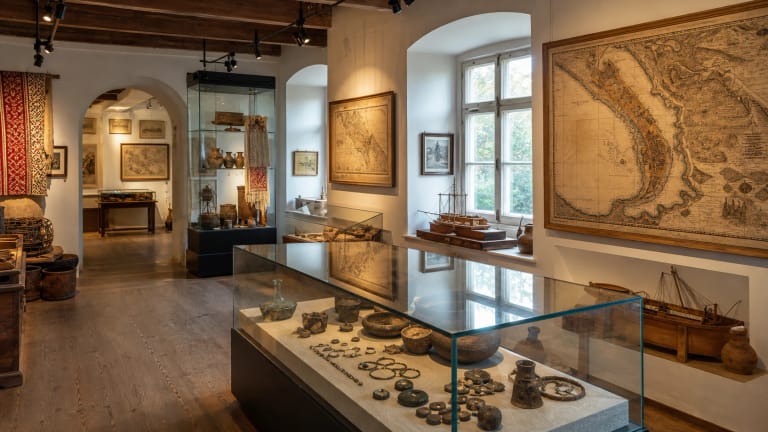
The almost 8,000-square-metre complex contains reading rooms, open stacks, event and conference halls, children's and youth spaces, exhibition areas, and the Gerlach attic. Its scale explains why the old street-facing villa reveals only one part of the library.
Rare books, music, and the memory of Lithuania Minor
VLE records more than 867,000 documents in the library, including about 596,000 books. Its oldest listed volume is Theologia moralis, printed in Antwerp in 1678; early periodicals include Auszra from 1883 and Gimtoji kalba from 1933. These are protected holdings rather than objects permanently displayed in an open case, so researchers hoping to consult a particular item should contact the library in advance.
The music collection contains more than 25,000 items, including around 10,000 records. Collections devoted to Lithuania Minor, maritime heritage, photography, and the AdM archive are particularly valuable for regional research. The Gerlach attic hosts a display on maritime cultural heritage, but ask the information desk whether it is accessible on the day of your visit.
The library commemorates Ieva Simonaitytė, whose fiction established the speech, lives, and historical experience of the Klaipėda Region in Lithuanian literature. Her presence extends beyond the institution's name: books, a dedicated courtyard, and site-specific artworks create a small interpretive route of their own.
Two courtyards: solar time, a language monument, and forgotten words
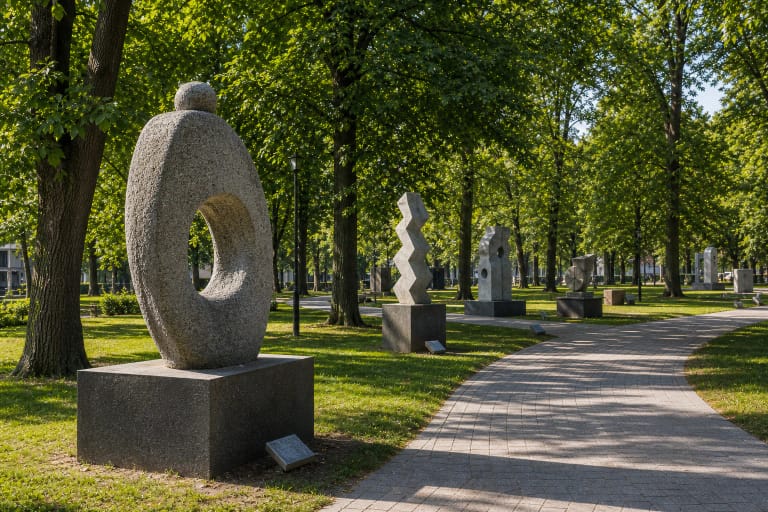
The library courtyards deserve to be treated as a sight in their own right. In the Sundial Courtyard, Romas Klimavičius and Romualdas Martinkus created the Book of Time, a combined sundial and calendar whose signs follow daily and seasonal rhythms. A 2013 monument to the Lithuanian language by sculptor Algirdas Bosas introduces words that have disappeared from ordinary use.
Ieva's Courtyard has held a bench dedicated to the writer since 2018, conceived by Juozas Šikšnelis and made by Romas Klimavičius. Sculptures by Jonas Virbauskas stand nearby, while the Forgotten Words Path, begun in 2020, recovers rare Lithuania Minor words from Simonaitytė's texts that are scarcely used today.
In warmer months, the courtyards host readings, concerts, performances, and other events, and may include an outdoor reading area. A quiet look at the art and an event evening offer different experiences, so consult the current programme before making a special journey.
Opening hours and planning a practical visit
On 14 July 2026, the library's official information listed opening hours of 10:00-19:00 Monday to Friday and 10:00-17:00 on Saturday, with closure on Lithuanian public holidays. It closes one hour earlier on the day before a public holiday. Timetables can change, so verify both the general hours and the timing of a particular exhibition or event on the official website.
Public areas and free exhibitions can normally be visited without an admission ticket. Borrowing requires registration in the LIBIS system and a reader's card, while educational sessions, guided tours, or special events may require registration or payment. Check the terms given for each event.
The library provides Wi-Fi, public computers, scanning and printing services, and family-oriented spaces. Its Library for Everyone programme includes communication and sensory aids; for a specific route through the historic and modern buildings, or individual assistance, contact staff before arrival.