- Place
- Kalvarija, Kalvarija Municipality
- Region
- Suvalkija
- Type
- three-building synagogue complex and Jewish sacred-heritage site
- Address
- Sodų g. 16, Kalvarija
- Coordinates
- 54.41440, 23.23310
Kalvarija Synagogues, Kalvarija Summer and Winter Synagogue
Kalvarija Synagogue Complex
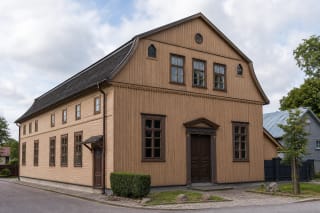
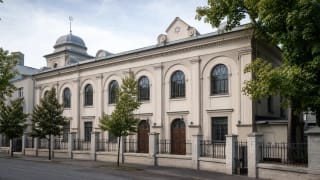
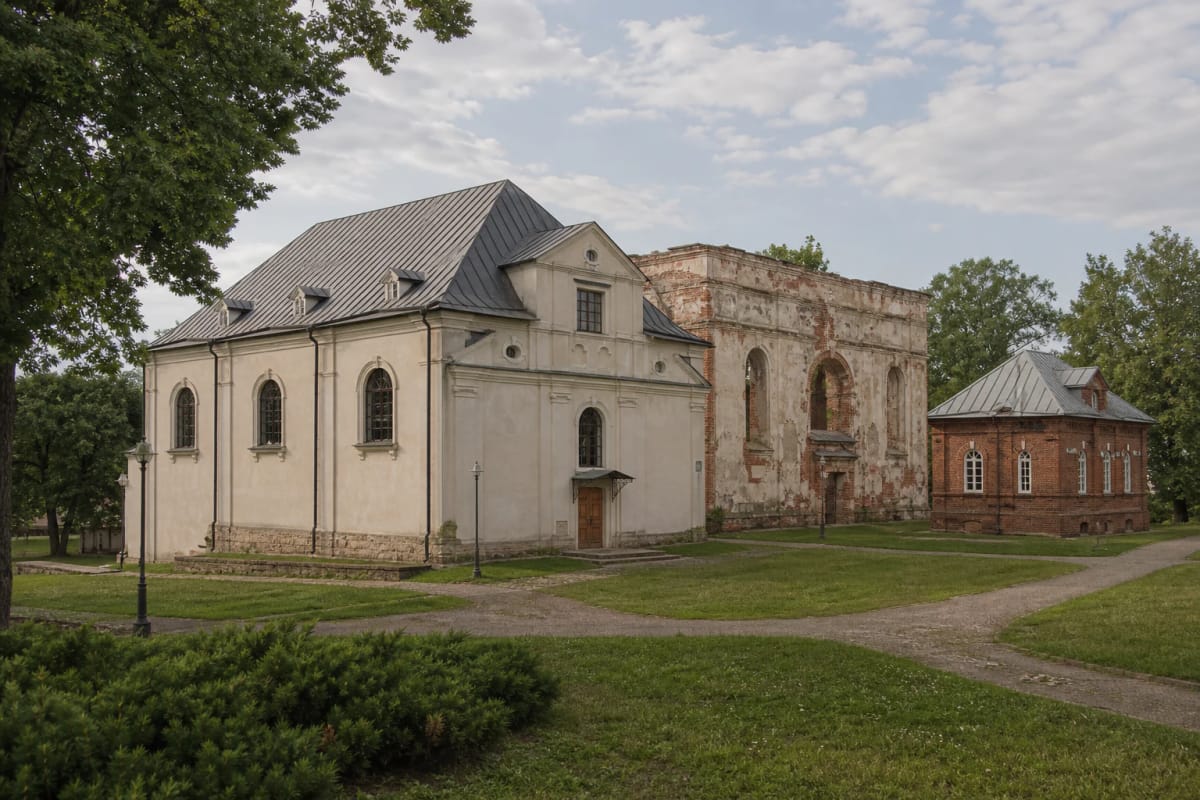
The Kalvarija Synagogue Complex stands on one fenced site by the Šešupė River in Kalvarija, Suvalkija. It is a rare surviving group of three synagogue-related buildings: the Baroque summer synagogue, the eclectic winter synagogue, and the brick Talmud school, also described as the rabbi's house. The complex is widely called the only surviving synagogue ensemble of this type in Lithuania, though that statement is best treated as a widely repeated claim rather than a strictly confirmed encyclopedic conclusion.
Kalvarija was long an important Jewish town and, because of its large community, was sometimes called Jewish Kalvarija. The synagogue complex on the Šešupė bank is the clearest surviving witness of that history.
Three buildings
The summer, or great, synagogue is the oldest building. Its thick stone-and-brick walls reach about 1.5 m in places, and its architecture belongs to the transition between Baroque and Classicism. Sources place its construction in the late eighteenth or early nineteenth century, sometimes specifying 1795-1803. It is one of Lithuania's most valuable surviving synagogues.
The winter synagogue is later: an eclectic building from the second half of the nineteenth century. It is worth knowing that the popular claim that it was designed by L. Salkovskis in 1857 is inaccurate; that year refers only to measured drawings of buildings already standing on the site. The third structure is the red-brick Talmud school, or rabbi's house.
Kalvarija's Jewish community and the Holocaust
Jews settled in Kalvarija in the early eighteenth century. In 1713, the town's Jewish community received a privilege to trade, practise crafts, and build a synagogue. By the end of the eighteenth century, Jews made up most of the town's population, and a rich Litvak culture developed here.
During the Second World War, the Jewish community of Kalvarija was destroyed. Sources state that about one thousand Kalvarija Jews were murdered on September 1, 1941, but the exact victim count and killing site should be checked against historical sources because they are reported differently. After the war, the synagogues were used as warehouses.
Heritage and restoration
The synagogue complex is state-protected cultural heritage. In 2014, the Lithuanian Jewish Community transferred the buildings to Kalvarija Municipality for 50 years for cultural, educational, and tourism use. Even so, the complex has not yet been adapted for regular tourism.
The condition of the buildings varies. The summer synagogue has lost its roof, remains in emergency condition, and has only been conserved, with works carried out in 2018-2020. The winter synagogue was partly restored in 2004 and is occasionally used for events. Works on the Talmud school were planned but have been delayed by funding issues. The most accurate description is protected heritage still under care, not a fully restored visitor site.
How to visit the synagogue complex
The complex is convenient to see while walking through Kalvarija's old town by the Šešupė. Nearby are the nineteenth-century church and former postal-station buildings. For exterior viewing, 30-60 minutes is usually enough.
The interiors are accessible only occasionally, during events or by special arrangement, because the complex has not been adapted for continuous visiting. Before travelling, check current information on the official Kalvarija Municipality page.