- Place
- Vilnius City Municipality
- Region
- Vilnius
- Type
- Vilnius' oldest operating covered market in a steel-and-masonry hall
- Address
- Pylimo g. 58, Vilnius
- Coordinates
- 54.67370, 25.28580
Halės turgus, Turgaus halė
Halė Market: Vilnius' oldest operating market
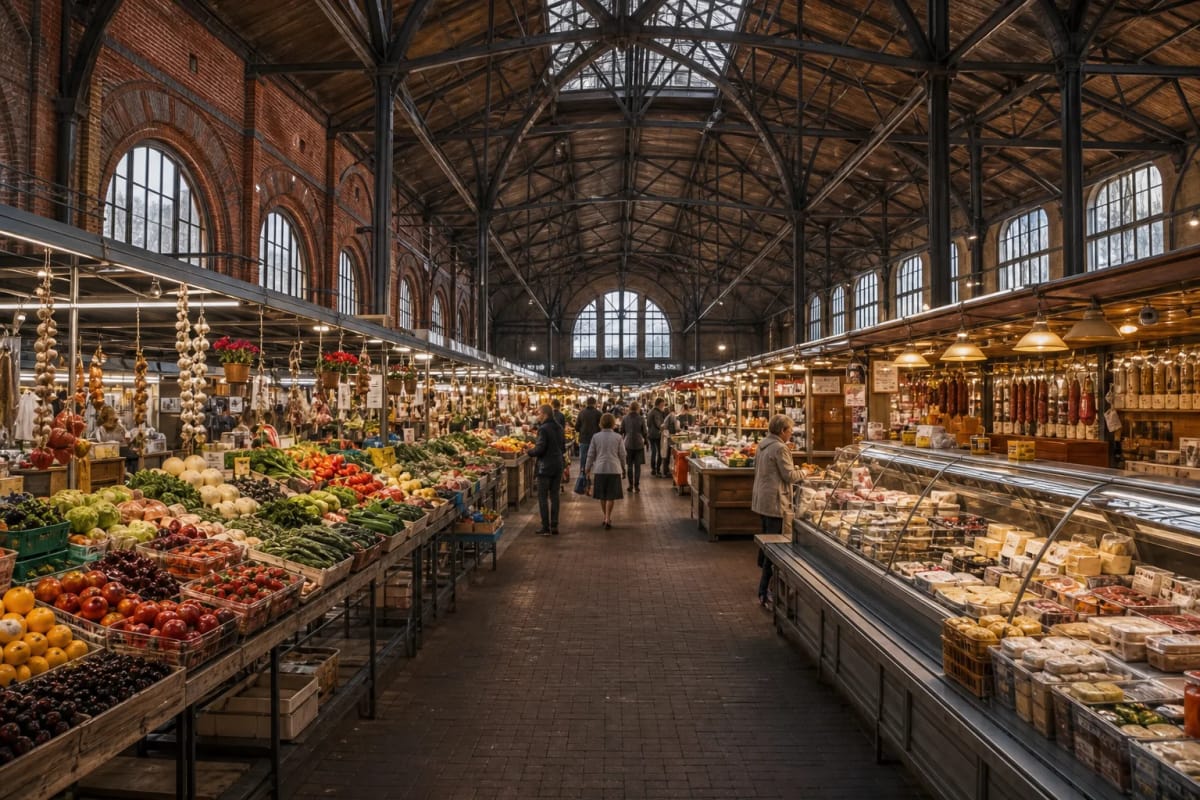
Halė Market stands on Pylimo Street, at the western edge of Vilnius Old Town. It is the city's oldest still-operating covered market, a place where rural farmers and urban shoppers have met for more than a century. Locals often simply call it Halės turgus.
Trading existed here much earlier: a horse market operated in the area, followed later by grain trade. In the early twentieth century the open market was closed, and a modern covered building rose in its place, matching the European urban trend of moving marketplaces under a roof.
A steel-and-masonry hall
The hall was built in 1904-1906 to a design by Lithuanian engineer and architect Vaclovas Michnevičius (1862-1947); VLE directly lists the 1906 market hall among his Vilnius works. The building opened in 1906 and is considered one of the earliest covered marketplaces of this type in Lithuania.
The architecture stands out for its steel and reinforced-concrete structures and brick-style masonry. The space is planned somewhat like a basilica: a higher central nave and lower side wings covered with metal structures. This engineering solution was rare in Lithuania at the time and is considered an important example of industrial architecture.
Halė Market in old-town history
Halė Market is part of Vilnius Old Town, a complex entered in the Cultural Heritage Register and protected as a UNESCO World Heritage property. The market is therefore valued not only as a trading place but also as a piece of the historic urban fabric.
Through both world wars and the Soviet period, the market operated almost without interruption. In the early twenty-first century the building was reconstructed and expanded, and trading spaces were updated, while the historical spirit of the hall remained. Today it is a living centre of food, craft, and city culture.
How to visit
Halė Market is in the city centre beside the old town, so it is easy to reach on foot. Entry is free, and visitors come for fresh meat, fish, cheese, honey, vegetables, and fruit bought directly from farmers; cafes and food spots operate around the market.
Opening days and hours change, and the market is usually closed on Mondays, so check the official page before visiting. For a look around and some shopping, 30-60 minutes is usually enough. Weekdays and Saturday morning are generally liveliest.