- Place
- Aukštadvaris, Trakai District Municipality
- Region
- Trakai District
- Type
- hilly regional park with lakes, hillforts, and nature trails
- Coordinates
- 54.57880, 24.52380
Aukštadvaris RP
Aukštadvaris Regional Park: Hilly Dzūkija Landscape
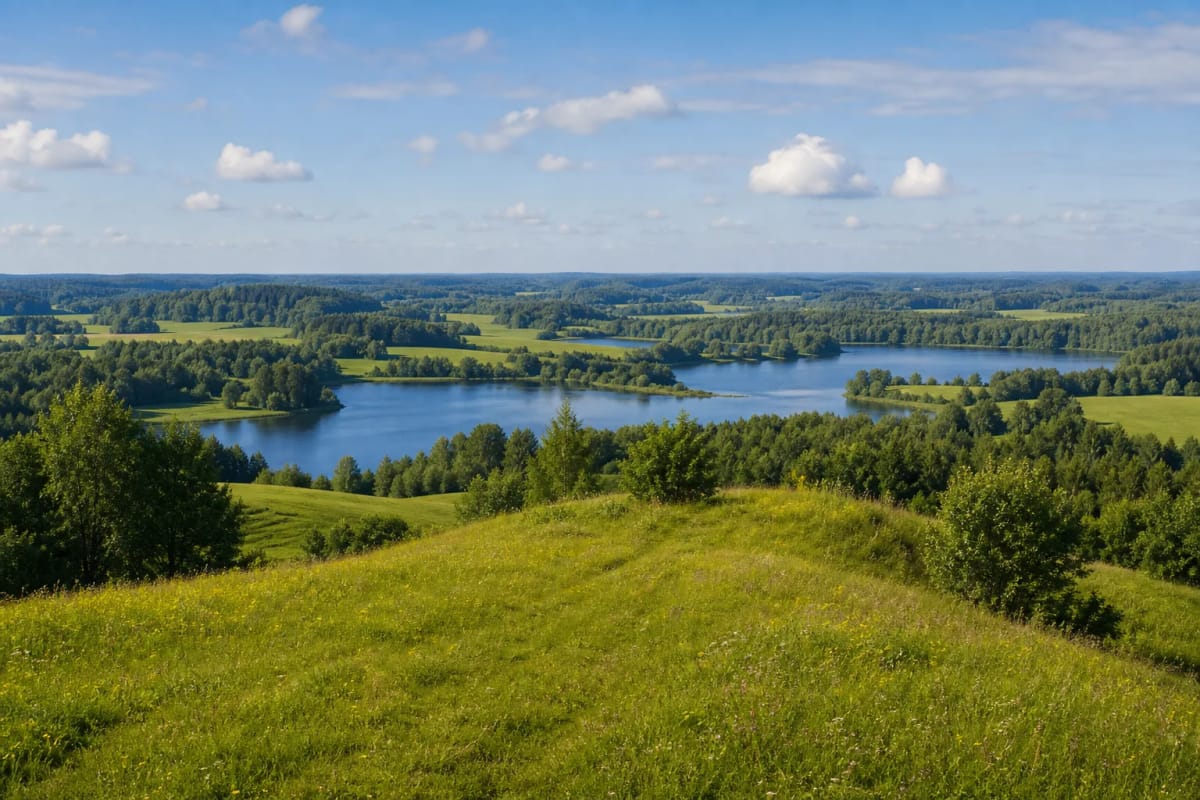
Aukštadvaris Regional Park lies in the western part of Trakai district, around the town of Aukštadvaris. VLE gives 1992 as its founding year and about 15,912 ha as its area. The park protects one of the hilliest landscapes in the highest part of the Dzūkai Upland, where hundreds of hills, lake basins, and the upper Verknė and Strėva shape the relief.
This is a park where nature and human history are tightly interwoven. Hillforts, mythological places, old village traces, lakes, and short trails make Aukštadvaris a place to explore through several stops rather than one quick viewpoint.
Hills, Lakes, and Devil's Pit
VLE notes more than 250 hills in the park, with absolute elevation ranging from about 83 m to 257 m. Gedanonys Hill is one of the highest peaks in Dzūkija. The park has about 90 lakes; the largest are Vilkokšnis and Spindžius. The Strėva and Verknė rivers also flow through it with many smaller streams.
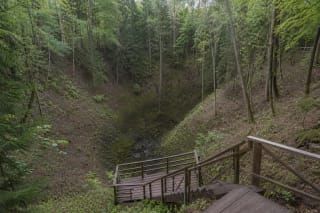
The best-known object is Devil's Pit, a geomorphological natural monument and a large hollow near Aukštadvaris. Together with the Strėva collapse hollow, it shows how striking the landforms of this hilly region can be.
Hillforts and Cultural Heritage
The Aukštadvaris area is rich in archaeology. VLE mentions Aukštadvaris Hillfort with its settlement and several other hillforts; in total, more than a hundred cultural-heritage objects are protected in the park, including hillforts, burial mounds, mythological places, and valuable buildings.
In Aukštadvaris itself, the manor estate and old town structure survive, so a visit can combine nature and heritage. That makes the park convenient for a trip where hill panoramas shift into hillfort and manor history.
Trails, Water Tourism, and Nature
The park has several educational and nature trails, while cycling routes and water routes on the Verknė and Strėva suit more active visits. Forests cover about half of the park, mostly pine woods, and the protected values include rich plant and animal life.
The easiest way to begin is at the visitor centre in Aukštadvaris, where route and object information helps match the plan to your time: from a short walk to a full-day trip.
Visiting: Where to Start
For a first trip, choose the Aukštadvaris visitor centre, Devil's Pit, and one hillfort or lake. During research, the visitor centre was operating on weekdays, so check current protected-area information before travelling, especially on weekends and outside the main season.
Nature trails and outdoor areas are visited freely, but protected-area rules matter: do not trample slopes, do not litter, and light fires only in designated places. The park combines naturally with other Trakai-region stops.