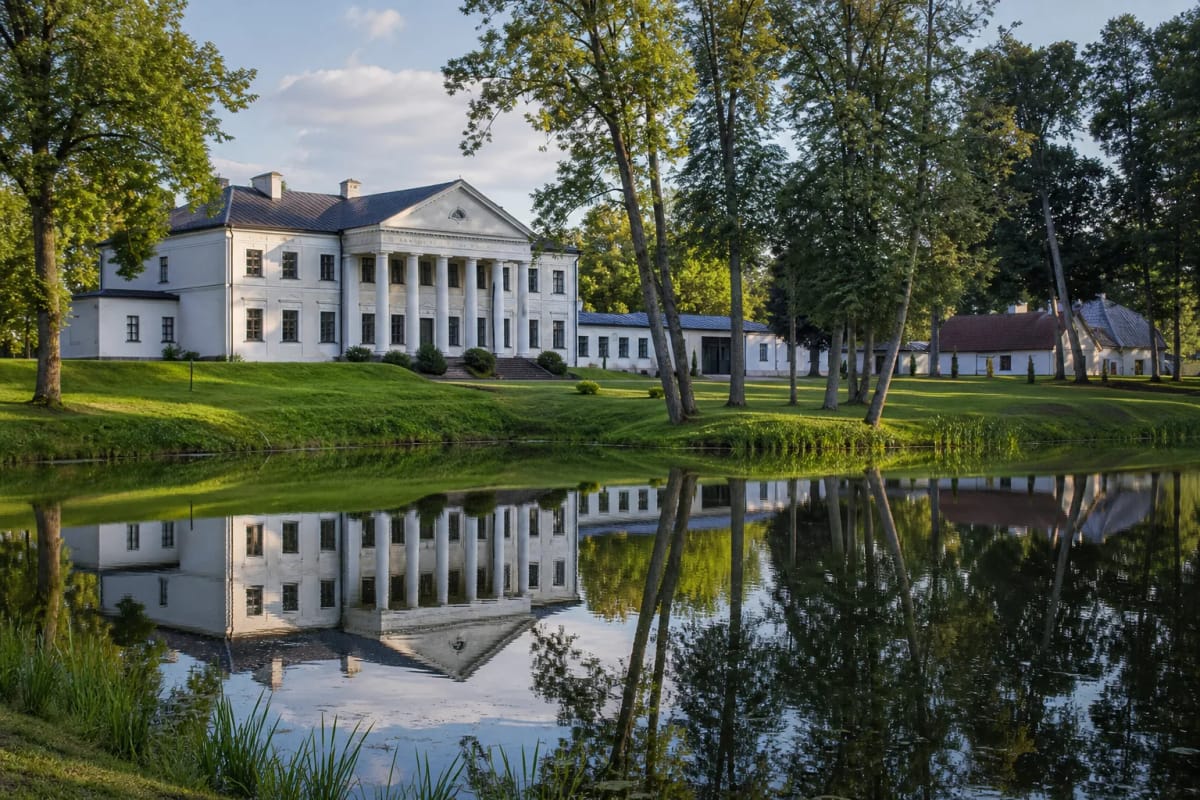
- Place
- Aštrioji Kirsna, Lazdijai District Municipality
- Region
- Lazdijai District
- Type
- classicist manor estate with park and stud farm
- Address
- Žvejų g. 11, Aštrioji Kirsna village, Krosna eldership, Lazdijai District
- Coordinates
- 54.30412, 23.39165
Aštrioji Kirsna manor estate, Kirsna-Ostrów (historic Polish name)
One of the largest Užnemunė manors
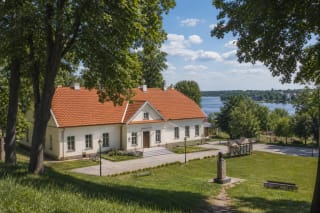
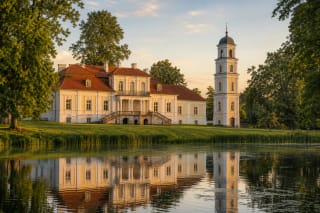
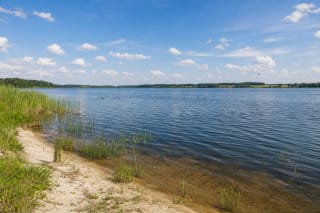
Aštrioji Kirsna Manor stands in Lazdijai District, by the Kirsna River in Krosna eldership. It is one of the largest surviving Užnemunė manor ensembles: about twenty buildings of different functions still stand around enclosed yards, surrounded by an old landscape park on hilly terrain.
The Department of Cultural Heritage describes it as a large protected estate whose complex includes the manor house, office, kitchen, icehouse, distillery wing, several barns and cattle sheds, forge, tower house, warehouses, gardener's house, gate posts, and park. It is therefore not one building but a whole manor settlement, and that scale is what makes Aštrioji Kirsna impressive.
From Sapiehas to Karengas and Gawrońskis
The estate by the Kirsna is mentioned from the early sixteenth century; sources give either 1506 or 1536 as the first record of land granted here, so the exact date should be treated as approximate. In the second half of the sixteenth century the property was acquired by Kyiv castellan Povilas Sapiega, and the Sapiehas are traditionally considered the manor's founders.
In the eighteenth century the Karenga family owned the manor for about 76 years. After a 1787 fire destroyed the earlier building, Hektoras Karenga built the surviving classicist manor house in the early nineteenth century and reshaped the park as an English-style landscape garden. Later, under the Gawrońskis, most surviving farm buildings were built, with Romantic and historicist features.
In the early twentieth century the manor changed owners several times, and in 1925 agronomist Vladislovas Kriaučiūnas bought it, founding an agricultural school here in 1927. In 1997 the manor estate was entered in the Cultural Heritage Register.
Ensemble and park
The manor house is restrained classicist architecture, with symmetrical facades and a southern portico of four Ionic columns. A stream separates the main masonry building from the wooden farm-building yard, dividing the ensemble into residential and economic parts. This system of enclosed yards supports the idea of the manor as one large, coherent complex.
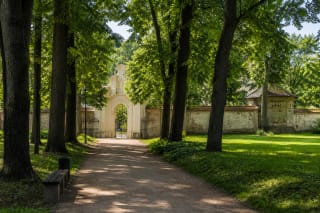
The landscape park was formed in the second half of the nineteenth century and is part of the protected ensemble, fitting into the hilly Kirsna valley. Historically the manor economy included a brickyard, lime kiln, distillery, mill, and sawmill, showing how large and self-sufficient the estate once was.
Agricultural school, Soviet period, and restoration
In the interwar period the manor served agricultural education: the school founded in 1927 trained its first students here. In 1940 the manor was nationalized, and in 1945 the Aštrioji Kirsna Soviet farm administration occupied the manor house; the owners' family was deported.
In 1992 the manor was returned to heirs, and in 2001 the Narauskas family bought it and began gradual restoration. According to the Department of Cultural Heritage, the kitchen and grain warehouse were recently restored, while work on the main buildings is planned in later heritage-programme stages. Aštrioji Kirsna is therefore a living, gradually reviving manor rather than a frozen museum.
How to visit Aštrioji Kirsna Manor
The estate has a farm with cattle and a stud farm in the historic stables; the official page lists spaces adapted for accommodation, riding, photo sessions, and events. Most services must be arranged in advance by phone or email, and interiors can usually be seen only with a guided tour.
During research the official manor page stated that the territory and park are visited daily, while separate entry prices were not published. Check the manor page or contact it directly for current visiting times, riding, or accommodation conditions. Aštrioji Kirsna combines well with other Lazdijai-region sites and Dzūkija lakes.