- Place
- Batėnai, Molėtai District Municipality
- Region
- Molėtai District
- Type
- family-run visitor farm offering pre-booked alpaca walks, wool-spinning sessions, and other animal experiences
- Address
- Batėnų k. 5, Videniškiai Eldership, Molėtai District
- Coordinates
- 55.19846, 25.24431
- Visit duration
- about 1 hour for an animal session; up to 4 hours with a reserved gazebo and longer stay
- Best time
- a pre-arranged time in dry weather from spring to autumn; summer suits combining the session with a picnic
Alpakalnis Farm, Batėnai Alpaca Farm, Rita Rinkevičienė's Alpaca and Bird Farm
What a visit to Alpakalnis is really like
Alpakalnis is not a zoo where visitors can arrive at any hour and roam among enclosures on their own. It is a working family farm, and visits take place at an agreed time with the owners hosting one family or group. This format leaves room for specific questions about the animals' care, behaviour, and fleece instead of a hurried walk past pens.
A personal session lasts around an hour. The Molėtai tourism-centre description says visitors may walk with, stroke, and feed the alpacas, but every interaction should follow the owner's guidance. An alpaca may prefer not to make close contact, and watching calmly is as valid an experience as hand-feeding it.
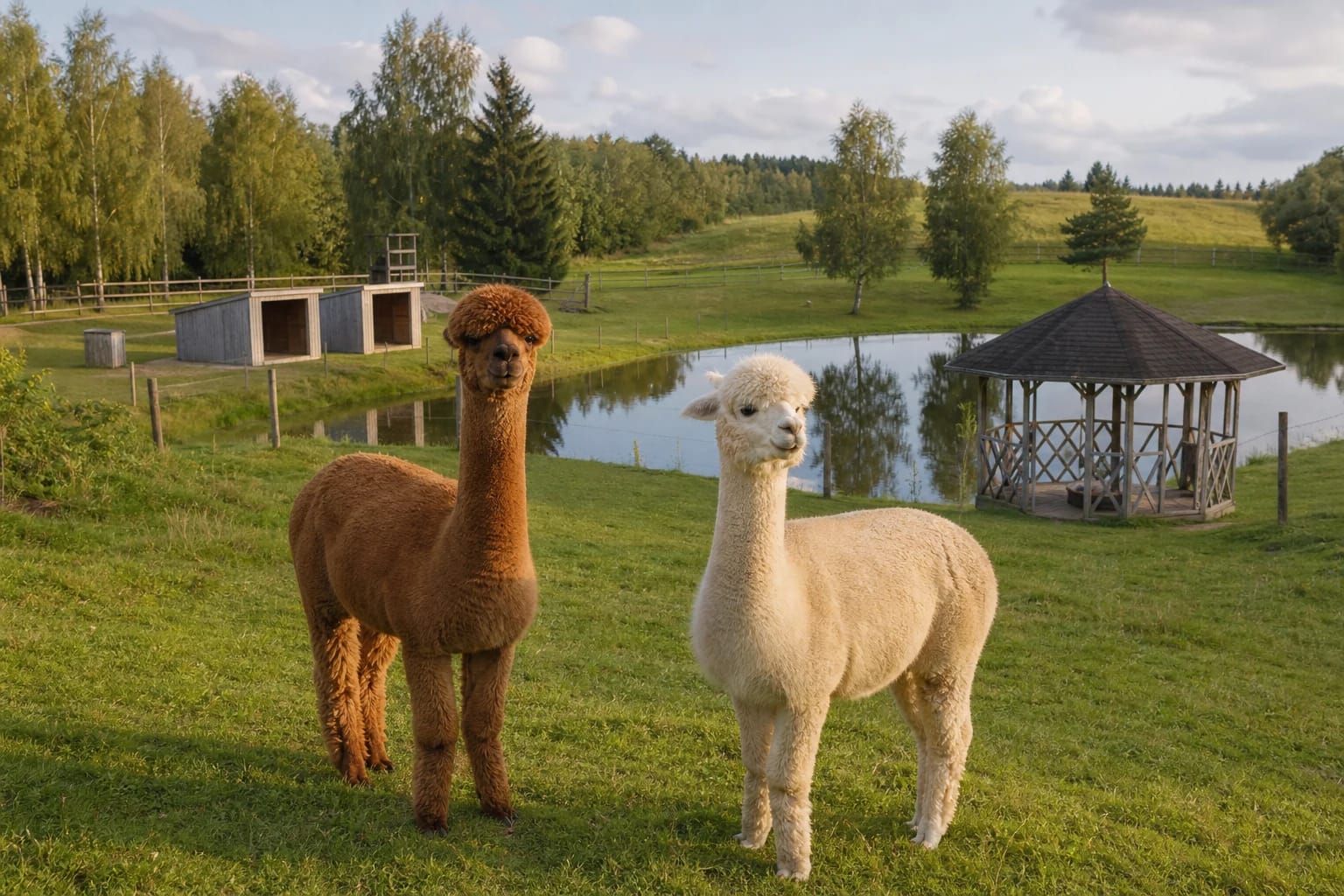
The farm occupies a rolling rural homestead with pasture and a pond. Surfaces are not paved urban paths: they may be wet or muddy after rain, and the route depends on the animals and conditions that day. Closed shoes with good grip are more practical than light city footwear.
From a family homestead to an educational farm
The Rinkevičius family created Alpakalnis after moving to the owner's grandmother's country property in Batėnai. In an interview published in 2026, Rita Rinkevičienė said that she had previously spent 17 years managing a shop and decided to change course during the pandemic. This is the modern story of a family farm, not an old manor or historic livestock institution.
According to the owner, about two years passed between the first idea and the arrival of the first alpacas. She used that time for courses and seminars, met other breeders, joined Lithuania's alpaca breeders' association, and learned from an international show in Austria. By 2026, the family had kept alpacas for roughly six years.
An official Videniškiai Eldership report names the place as R. Rinkevičienė's Alpakalnis alpaca and bird farm. That description captures its scale: a local family welcomes visitors to a rural homestead where animal education, practical craft, and unhurried recreation meet.
Beyond alpacas: the farm's other animals
In June 2026, the owner counted 58 animals at the farm, including 11 alpacas. She also mentioned pale fallow deer, a Shetland pony, an American Trotter mare, rabbits, peacocks, and many breeds of chicken. These figures are a dated snapshot: young are born and animals arrive or leave, so never expect a guaranteed list without asking first.
Many of the animals have names, and a hosted session gains depth from hearing their individual stories. It is not, however, an unrestricted petting visit. Lithuania's State Food and Veterinary Service describes alpacas as gentle and inquisitive, while stressing that welfare depends on suitable living conditions, companionship, feed, and calm handling.
Never offer food brought from home unless the owner explicitly approves it. Even an ordinary vegetable may be unsuitable for a particular animal or its current diet. Feed only what the host provides or confirms, do not enter an enclosure without permission, and wash or sanitise hands after contact.
How fleece becomes yarn at Alpakalnis
What distinguishes Alpakalnis is not only its variety of animals but the complete journey of alpaca fleece. The Universal Lithuanian Encyclopedia notes the animal's long, valuable fibre. At the farm those abstract qualities become tangible: visitors can handle fleece, see how it is prepared, and watch loose fibre turn into yarn.
The alpacas are shorn and their fleece is sent to a carding mill in Užpaliai. Rita has explained that she began spinning on an old wheel, later moved to an electric spinner, and knits the finished yarn into socks and mittens. Each alpaca's fleece is kept separate, allowing a garment to retain the natural shade of an individual animal.
The wool session must be booked; it should not be assumed to accompany every ordinary visit. Discuss the group size, children's ages, and whether participants will only watch or may try carding and spinning. That lets the owners shape a useful workshop without rushing the animal part of the experience.
Booking, prices, and responsible preparation
No reliable permanent opening schedule or official public price list was available on 21 July 2026. The Molėtai tourism centre stated that visits must be booked in advance by calling +370 675 42053. Confirm the date, start time, price, payment method, group size, and included programme directly before setting out.
In addition to the roughly hour-long alpaca encounter and the wool session, the listing offers a gazebo for a short stop or a stay of up to four hours. The longer option mentions a picnic, barbecue, swimming, and fishing, but rules for the pond, safety, equipment, and food should all be agreed when booking.
Official veterinary guidance tells visitors not to enter an animal-keeping area without the keeper's permission and to follow biosecurity rules. Do not bring a pet without prior approval, keep children away from electric fences and gates, avoid shouting or chasing animals, and follow the host's directions. The exact Google Maps listing showed 4.9 out of 5 from 48 reviews on 21 July 2026, but ratings change over time.