- Genre
- Sacred-site and place legend
- Source status
- historical and local tradition
- Motifs
- Birutė, hill, Palanga, sacred site, fire, coast
Palanga Birutė Hill, Legend of Birutė Hill, Birutė alka
The legend
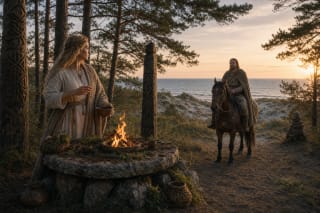
Birutė Hill in Palanga is linked with Birutė, who in legends is portrayed as a guardian of sacred fire. She is said to have lived or performed rites on or near the hill, belonging to the coastal sacred place.
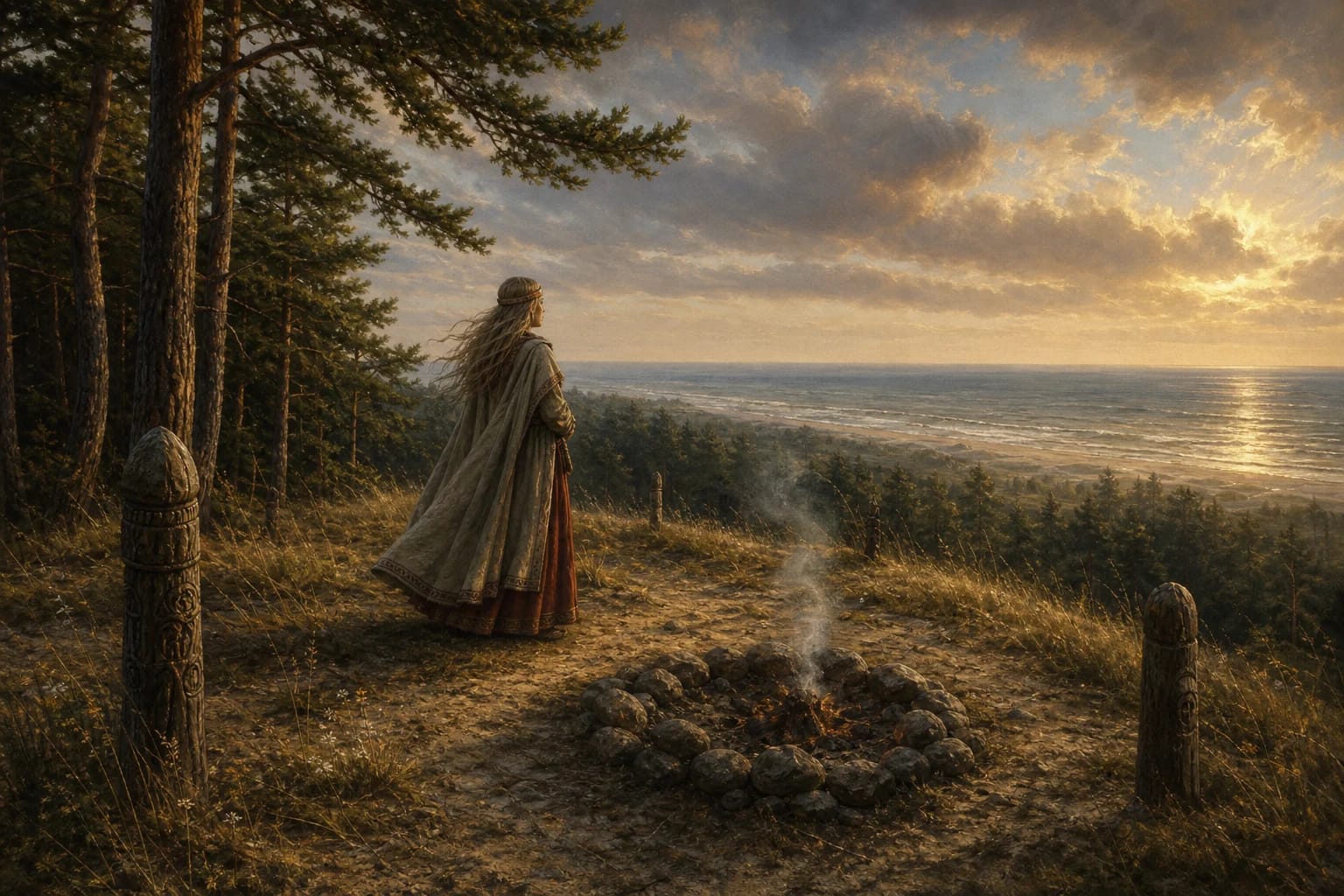
When Kęstutis saw Birutė, her place was already marked by holiness. In the legend, Birutė Hill is not just scenery for a romantic meeting; it is the place from which Birutė enters the history of Lithuania's rulers.
Later centuries added new layers: chapel, paths, visitation, memorial culture, and the landscape of Palanga Park. Yet Birutė's name remained the centre of the place's story.
Interpretation: what does Birutė Hill mean?
Birutė Hill is a fusion of person and place. It is hard to imagine Birutė without the Palanga hill, and the hill without Birutė's name. Strong place legends work this way: landscape and character begin to explain one another.
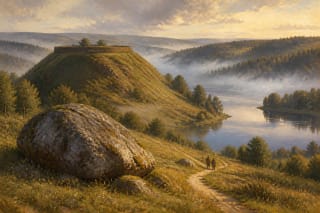
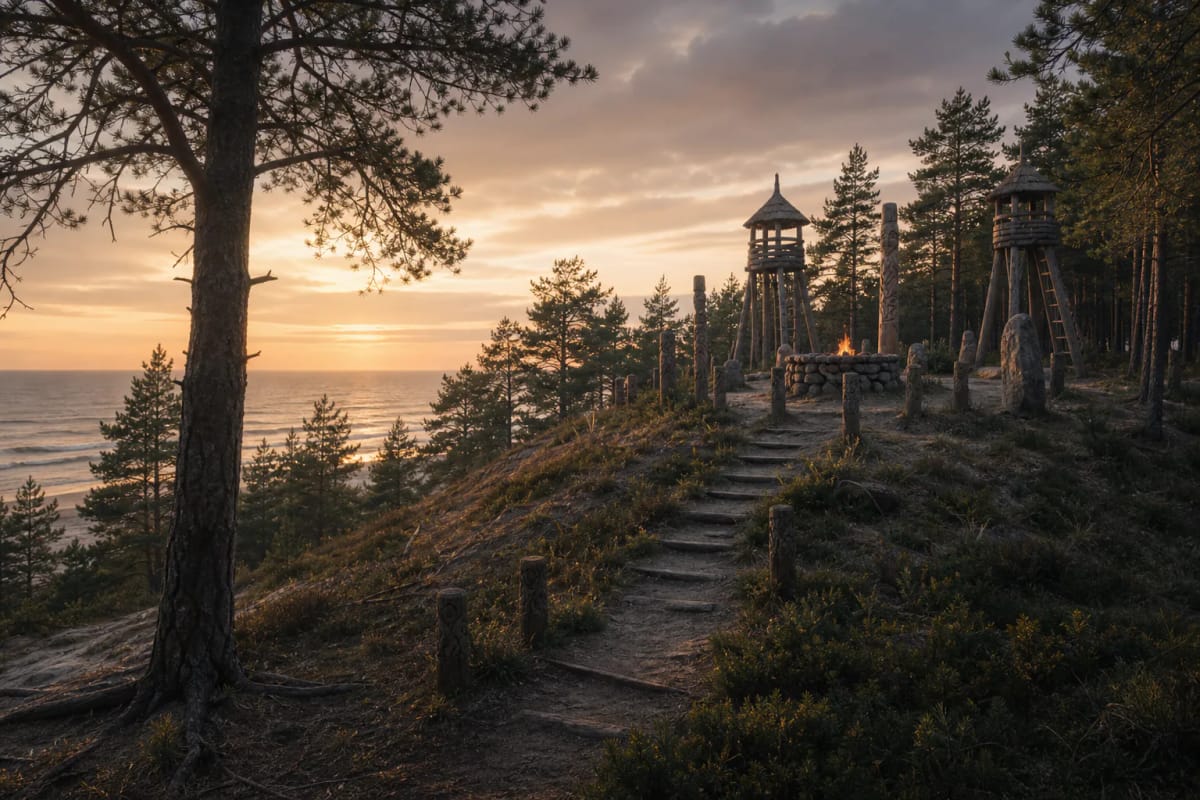
The hill is elevated space. It lifts a person above everyday coastal life and brings the imagination closer to holiness, fire, sky, and the horizon of the sea. That makes it well suited to the image of a sacred site.
The story also shows how one place can carry different religious and cultural layers: old sacred-site memory, Christian chapel, modern park, and tourism do not erase each other but form a layered visiting object.
History, archaeology, and local tradition
VLE describes Birutė Hill as a 21 m hill in the western part of Palanga park, about 150 m from the sea and covered with pines. In the pre-Christian period it is associated with an alka, or sacred place, and with the Palanga hillfort and sanctuary.
The chapel on the hill was built in masonry in 1869, while an earlier chapel stood from 1665. A sculpture called Birutė was placed at the foot of the hill in 1965. According to a tradition recorded in Maciej Stryjkowski's 1582 chronicle, Birutė was buried in Palanga, on Birutė Hill.
Research also mentions interpretations of the hill as an alka and possible paleoastronomical site. Such details enrich the place but should be presented as research hypotheses, not as the core narrative of the Birutė legend.
Why separate the hill from the Birutė and Kęstutis legend?
The Birutė and Kęstutis story is mainly about people, marriage, and dynastic memory. The Birutė Hill page explains the place itself, its sacred character, and its role in Palanga's landscape.
That helps visitors not only know the legend but understand why one particular hill became such an important coastal memory site.