- Genre
- Place and treasure legend
- Source status
- literary and local tradition
- Motifs
- Naglis Hill, treasure, Palanga, enchantment, sand, coast
Treasure of Naglis Hill, Legend of Naglis Hill, Place legend of Naglis Hill
The legend
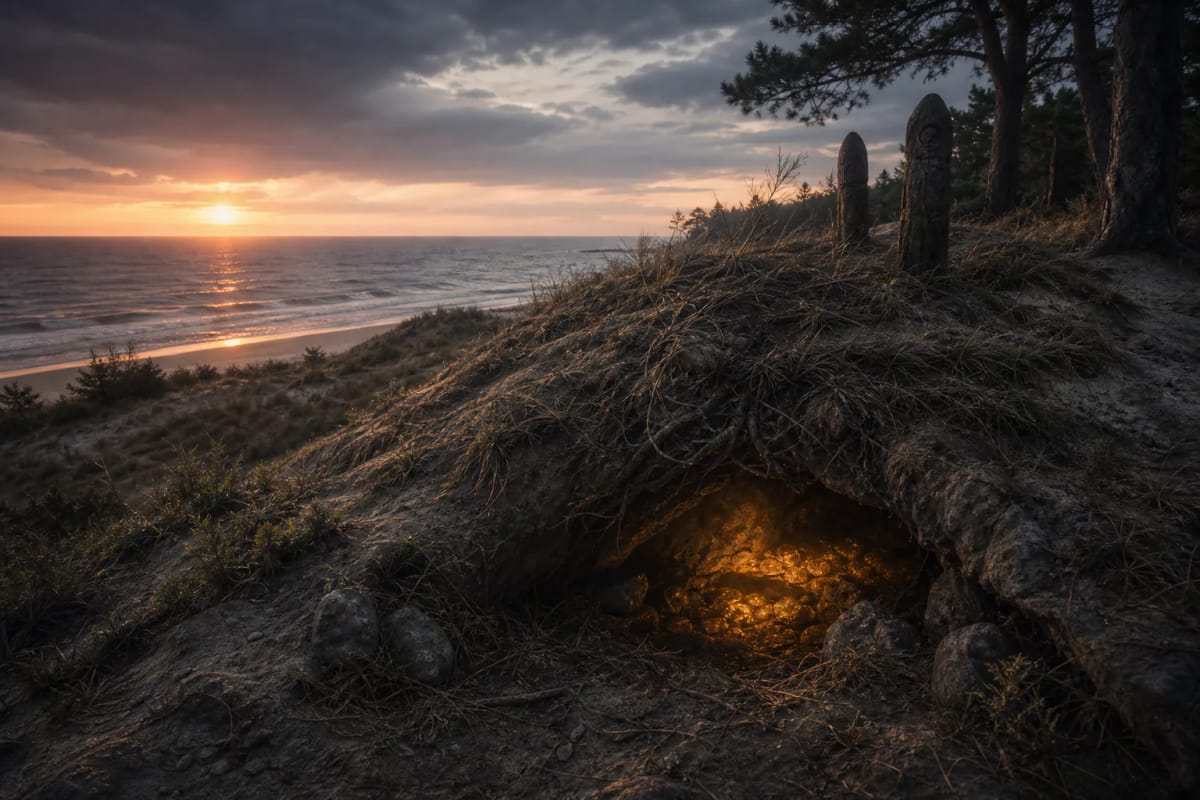
The Treasures of Naglis Hill is told as a secret of the coastal landscape. Under sand, in the depth of the hill, wealth is said to be hidden: something people may desire but cannot easily take.
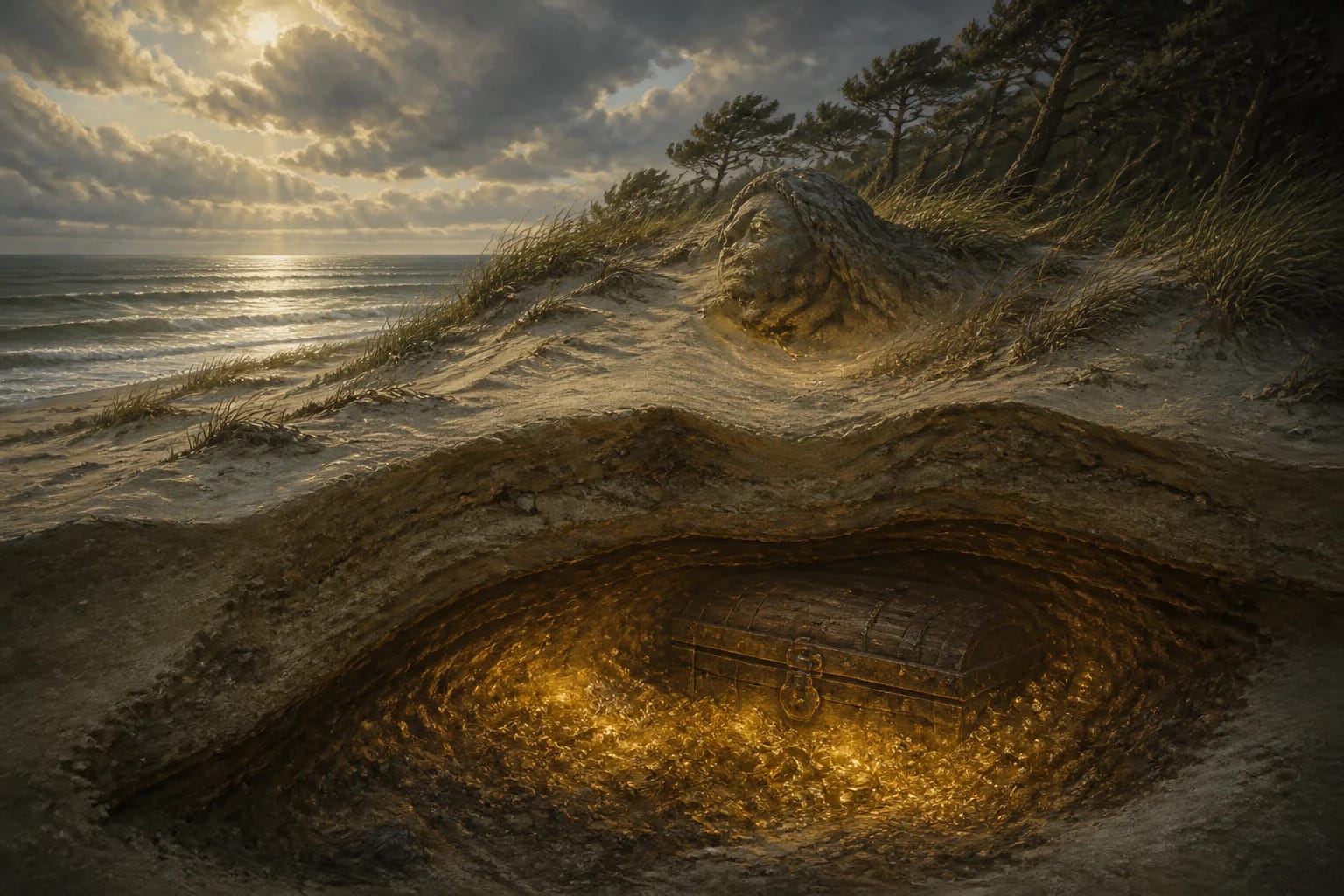
In such legends a treasure is rarely a simple find. It may be enchanted, guarded, or visible only at a special time. Anyone who tries to dig it up enters the rules of the place: the hill is not empty; it has memory.
Naglis Hill belongs to a seaside landscape where sand moves, covers, and reveals. That makes the treasure motif feel natural: what sea and sand conceal can be imagined as hidden wealth from the past.
Interpretation: what do the treasures mean?
A treasure in legend often means more than money. It is locked past, and it cannot be seized without cost. Human greed meets the power of place.
Sand is an important symbol here. It hides, shifts, covers, and uncovers. A treasure beneath sand becomes an image of unstable but returning memory.
The story also protects the place. It warns that the hill is not merely a sand mound or a convenient object for digging. It has a history that must be respected.
For a modern reader, the treasures of Naglis Hill can be understood as a metaphor for Palanga's coastal memory: beneath the tourist surface lie older stories, fears, hopes, and motifs of enchanted wealth.
History and literary layer
The Naglis Hill treasure theme is known from Palanga local tradition and literary retellings. „Naglio kalno lobiai" is one of the works based on Lithuanian folklore by the writer Antanas Vienuolis (real name Žukauskas, 1882–1957); the same group includes „Anykščių padavimai", „Šventavartė", „Medvėgalio pilis", and „Platelių ežero paslaptis". Vienuolis published such stories in his editions of legends and place legends (the collection „Padavimai ir legendos" appeared in 1957). This lets the page be regarded as a meeting point of literary and local tradition.
Coastal-hill stories are often tied to old graves, sacred places, sand-covered paths, and hard-to-verify local memories. Even when a specific treasure is not documented, the story helps the place acquire mystery.
Read beside Birutė Hill and Jūratė's legend, Naglis Hill shows how densely narrated the Palanga coast is in Lithuanian culture.
Why treasure legends endure
A treasure is a simple and powerful promise: under ordinary ground there may be something more.
At the same time, treasure legends often limit greed. The treasure may appear only to someone who acts rightly or respects prohibitions.