- Genre
- Religious apparition legend
- Source status
- church and pilgrimage tradition
- Motifs
- Šiluva, Mary, apparition, shepherd children, stone, pilgrimage
Šiluva apparition, Marian apparition at Šiluva, Our Lady of Šiluva
The story
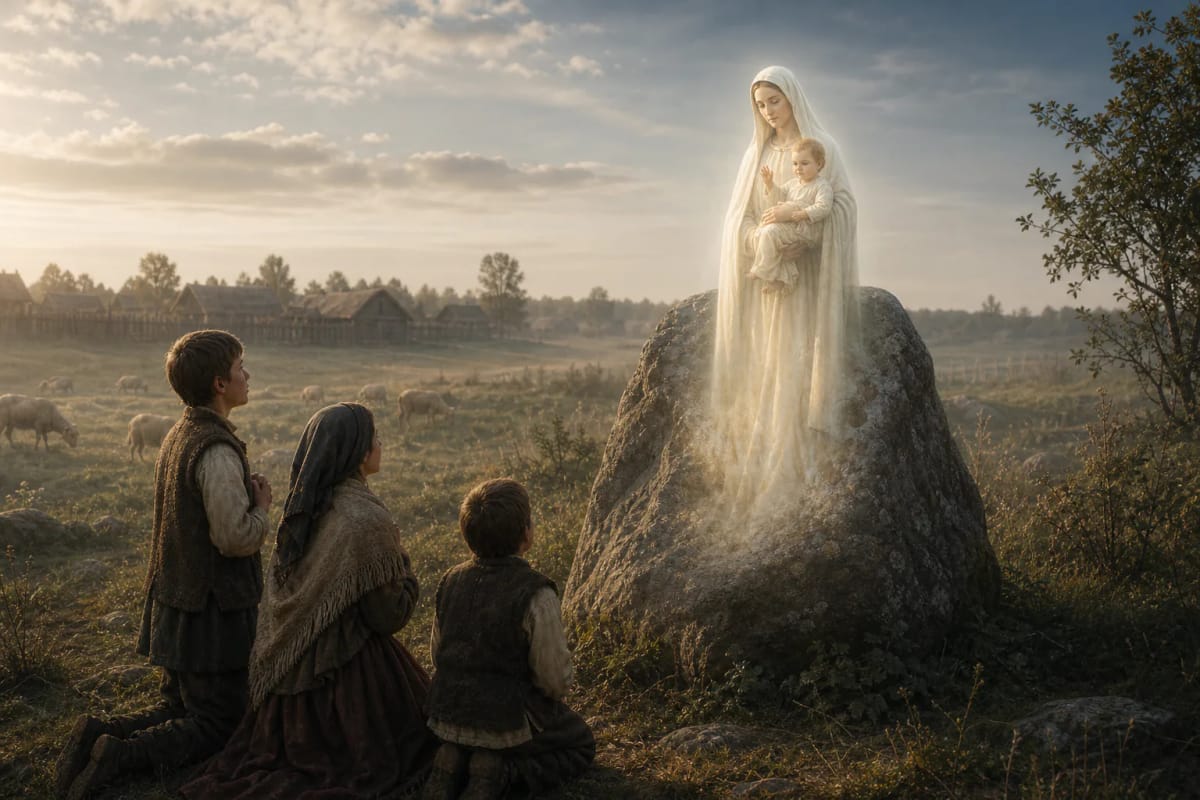
The Šiluva apparition tradition tells that in 1608 shepherd children saw Mary with the Child, weeping on a stone in the fields. In the story she laments that her Son had once been worshipped there, but now the land was ploughed and sown.
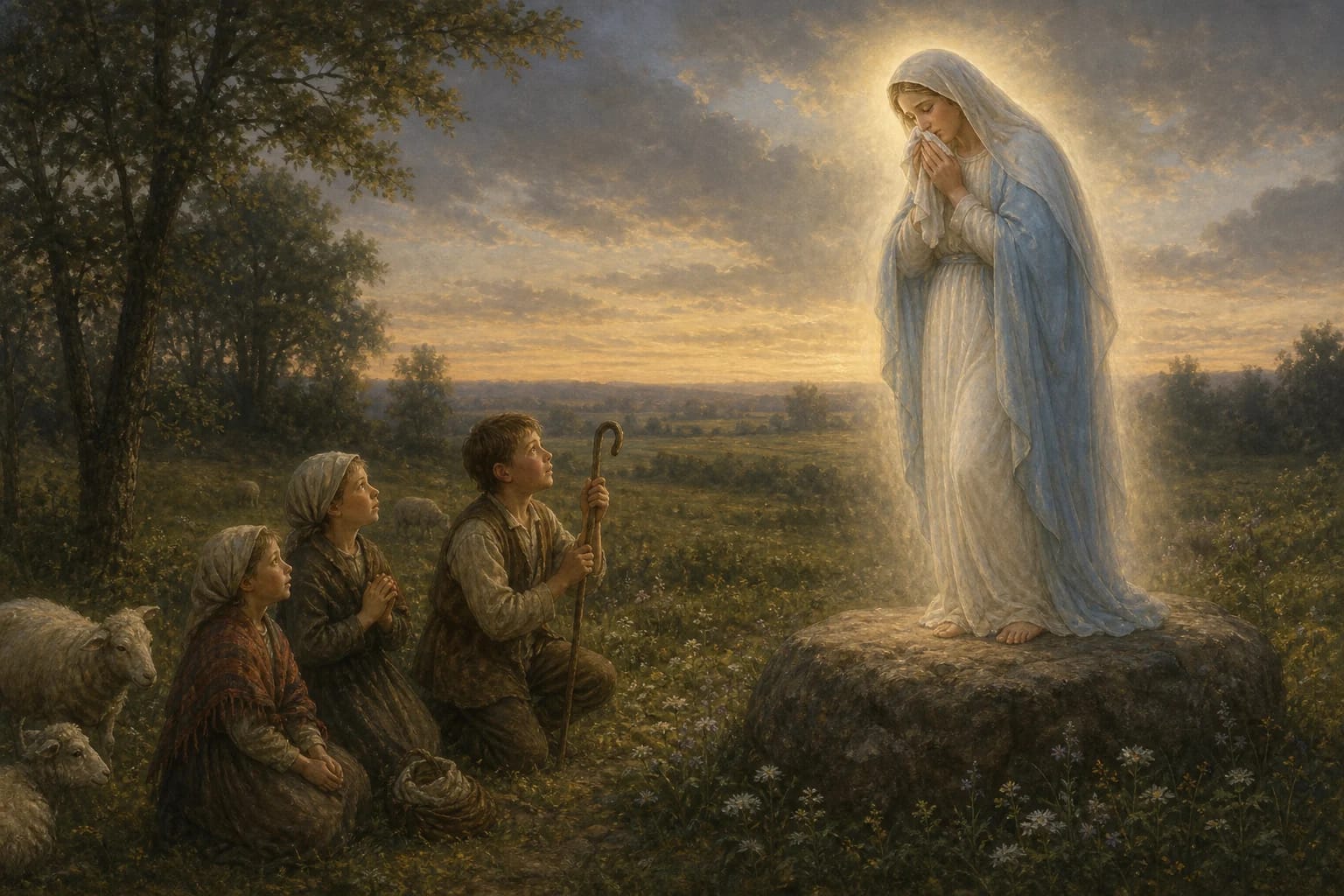
The children told adults, and the story became connected with the memory of a lost Catholic church. The apparition was understood not only as a miraculous event but as a sign restoring sacred memory to a place.
Church tradition considers this event one of the earliest Marian apparitions in Europe officially recognized by the Church. Sources also mention contemporary witnesses, the Calvinist catechist Mikalojus Fiera and the Protestant rector Saliamonas Gracijus; historically the details were passed down from generation to generation, so some of them should be regarded as the testimony of tradition rather than of an exact document.
The centre of the story is the stone, the children, the weeping Mary, and the return of church memory. This ties religion strongly to a concrete place.
Interpretation: what does the Šiluva apparition mean?
The story speaks about memory lost and returned. Mary's appearance is not only a private vision; it directs the community back to a forgotten sacred site.
The role of children matters. They are not rulers or learned interpreters, yet they see the sign first. In religious imagination, simple witnesses can begin the recovery of memory.
The stone becomes material testimony, a place to return to, pray, tell the story, and build pilgrimage practice.
History and church tradition
Official Šiluva and Kaunas Archdiocese sources connect the apparition with 1608 and treat it as one of Lithuania's most important Catholic memory events. Encyclopedic sources present it cautiously as happening 'according to legend' while also noting that it is considered the earliest apparition in Europe officially recognized by the Catholic Church.
The event is tied to a specific historical context: from the sixteenth century Šiluva was held by Evangelical Reformed landowners, and the Catholic church built in 1457 by Petras Simonas Gedgaudas had fallen into ruin. Tradition says old foundation documents were found after the apparition and Catholic land and property were restored through court proceedings.
A wooden chapel was built on the apparition site in 1663. The present Chapel of the Apparition of the Blessed Virgin Mary, with its altar over the apparition stone, was built in 1912-1924 to a design by architect Antanas Vivulskis.
The Šiluva shrine and pilgrimage later became a major part of Lithuanian religious life, joining apparition story, church history, indulgence feasts, and journeys of believers.
Why Šiluva matters to Lithuanian culture
Šiluva is one of Lithuania's clearest pilgrimage places. Its apparition narrative shows how a religious legend can shape place identity and travel tradition. The large Šilinės indulgence feasts take place each year in early September, around September 8-15; thousands of pilgrims were already coming in the first half of the seventeenth century, and Pope John Paul II visited Šiluva in 1993.
The theme also reminds readers that Lithuanian cultural memory is not only old mythology; it includes later Christian narratives and devotional practices.