- Genre
- Religious place-memory legend
- Source status
- historical and devotional tradition
- Motifs
- Barbora Žagarietė, Žagarė, devotion, miracles, remains, local memory
Barbora Umiastauskaitė, Servant of God Barbora Žagarietė, Barbora of Žagarė
The story
Barbora Žagarietė, associated in tradition with the Umiastauskai family and Žagarė, is remembered as a virtuous young woman whose life and death gained unusual weight in local memory. She is spoken of not only as a historical person but as a figure of devotion, suffering, and intercession.
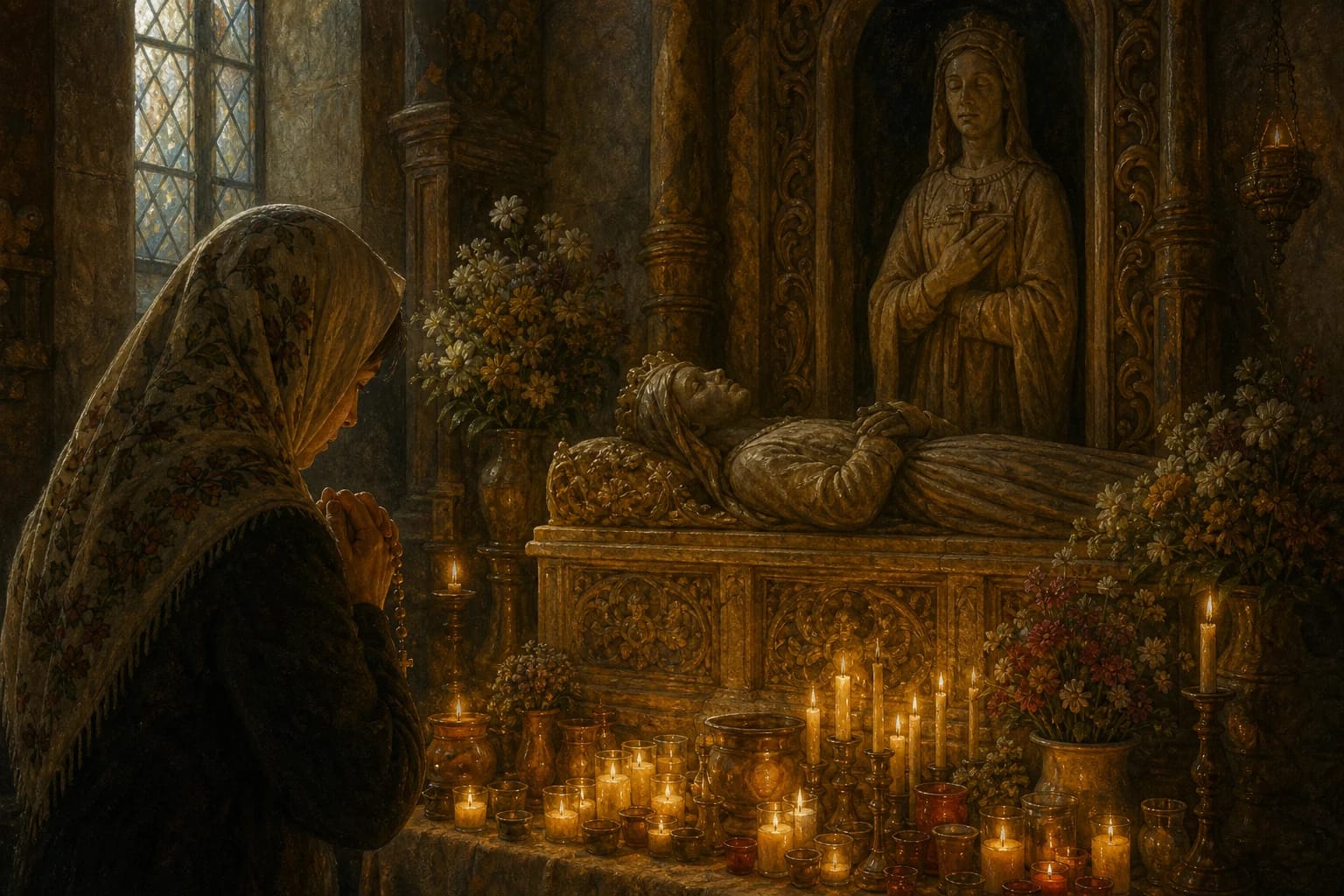
Žagarė tradition links Barbora with stories of chastity, mercy, injustice or violence, and continued trust in her intercession after death. A key devotional story says that during a Swedish incursion the Old Žagarė church was plundered and burned, yet Barbora's body was found unburned in the ashes. Later her remains lay in a glass coffin in the church crypt, and pilgrims came to pray by them.
Historical knowledge about Barbora herself is scarce and inconsistent. Šiauliai Diocese material states that she most likely lived in the second half of the 16th century, and that as early as 1755 bishop Antanas Tiškevičius wrote to the Holy See that no one among the living still knew her name or origin — the name "Barbora," it is said, she herself had revealed to some people in a dream. Other sources, for example the encyclopedia, date her life to 1628–1648 and link her with the noble Umiastauskai family, so the exact dates should be regarded as unconfirmed.
In contemporary church sources she is called the Servant of God. This means that her memory has an official status within a religious process and devotion, yet it is important not to be hasty in calling her a saint when this is not a matter of canonization.
Interpretation: what does Barbora Žagarietė mean?
The tradition of Barbora Žagarietė shows how a place can gather around one person's memory. Žagarė is not just a town in the story; it becomes a space of devotion and narration.
This religious legend differs from a mythological tale. It does not explain how a lake or animal came into being; it shows how a community recognizes signs of holiness, mercy, or intercession in a person's story.
The connection between body and memory is central. Remains, a coffin, candles, and prayer create a material place where believers encounter the story by visiting, not only by reading.
History, status, and sources
Official Šiauliai Diocese material presents Barbora Žagarietė as the Servant of God. Her beatification case began on September 24, 2005, so she should not be described as a canonized saint; the careful status is a Servant of God known for fama sanctitatis, or a reputation for holiness.
Devotion to her has been documented for centuries. In 1755 Samogitian bishop Antanas Tiškevičius sent Rome descriptions of healings experienced near Barbora's coffin; in 1860 bishop Motiejus Valančius ordered graces received there to be registered, and by 1940 the miracles book listed 97 cases.
During the Soviet period, especially after the Old Žagarė church was closed in 1963, the remains were desecrated and removed to an unknown place. Today the crypt holds only a symbolic coffin.
Stories of miracles and graces should be presented respectfully and with clear source status. On this site they are not treated as medical or theological proof, but as a living devotional tradition.
Why this theme matters
Barbora Žagarietė helps explain Žagarė's cultural and religious identity. In her memory, history, legend, prayer, and community storytelling meet.
She also expands the field of Lithuanian legends: beside rulers, mythical beings, and landscapes, there is a tradition of human holiness rooted in a specific place.