
Lithuanian traditional foods
Zrazai
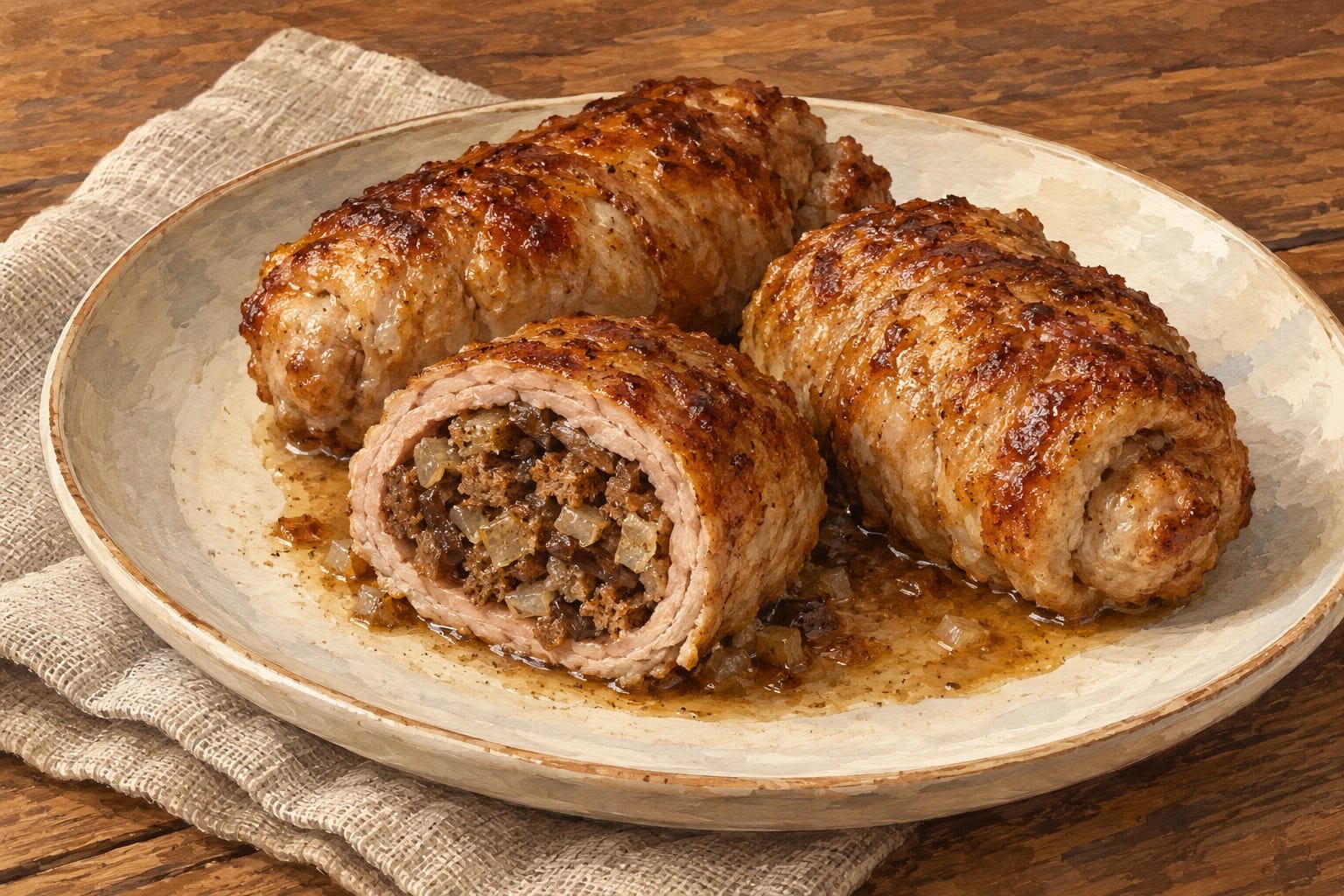
Zrazai here means thinly beaten slices of meat rolled around a filling. The dish belongs to both Lithuanian and Polish cooking; a beef version and a contemporary pork version should not be treated as one identical recipe.
a Vilnius gastronomy guide and a contemporary recipe
Preparation overview
Recognising zrazai and choosing a recipe
This is a comparison of documented methods, rather than a complete recipe with quantities.
Ingredients
Method
- Identify the meat preparation: these rolls use beaten slices wrapped around a filling.
- Choose meat and filling from one complete recipe. In the 2022 version, the mushroom, onion and bread filling is prepared before rolling.
- Compare the finishing method: the 2016 recipe uses a steam oven and offers a pot-braising alternative. Follow a complete chosen recipe with its own quantities and heat settings.
Notes
Lietuva.love has no cooking trial or original process photographs for this dish.
Food and heritage context
- Category
- Meat dishes
- Type
- thin slices of meat rolled around a filling
- Heritage status
- a Vilnius gastronomy guide and a contemporary recipe
- Context
- Zrazai, meat rolls, beef, pork, mushrooms, rye bread, Lithuanian and Polish cooking
Names and variants
Stuffed meat rolls, Zrazy
The chosen recipe matters
Beatos virtuvė’s 2022 example uses pork, onion, smoked bacon, dried porcini and rye bread. Thinly beaten meat encloses a separately prepared filling. This is a particular contemporary recipe, rather than a universal list of ingredients for historical zrazai.
Go Vilnius describes serving the dish with its cooking broth and potatoes or vegetable mash. The Beatos virtuvė version is baked in an oven. These are different methods; their timing and liquid requirements should not be combined into a new instruction.
Which method suits your kitchen?
Beatos virtuvė’s 2016 recipe fills pork rolls with leek, carrot, dried porcini and prunes. After browning, they are finished in a steam oven; a pot with stock is suggested as an alternative. Before choosing a recipe, check the equipment and finishing method it requires.
Questions
Are zrazai exclusively Lithuanian?
No. Go Vilnius explicitly describes their popularity in Lithuania and Poland. This page presents them in that shared culinary context.
Must zrazai use beef?
Go Vilnius describes beef as usual, but the linked 2022 recipe is made with pork.
Is this a complete zrazai recipe?
No. This page explains the dish and compares documented variants. The sources include a complete 2016 steam-oven recipe.