
Lithuanian traditional foods
Užkulas ir taukinė
Užkulas, elsewhere called taukinė, užtrinas, or įsnauja, is an old Lithuanian pork-fat product: belly fat seasoned with spices and garlic, wrapped in caul fat, pressed, and smoked, then used to flavor porridges, soups, and steamed potatoes.
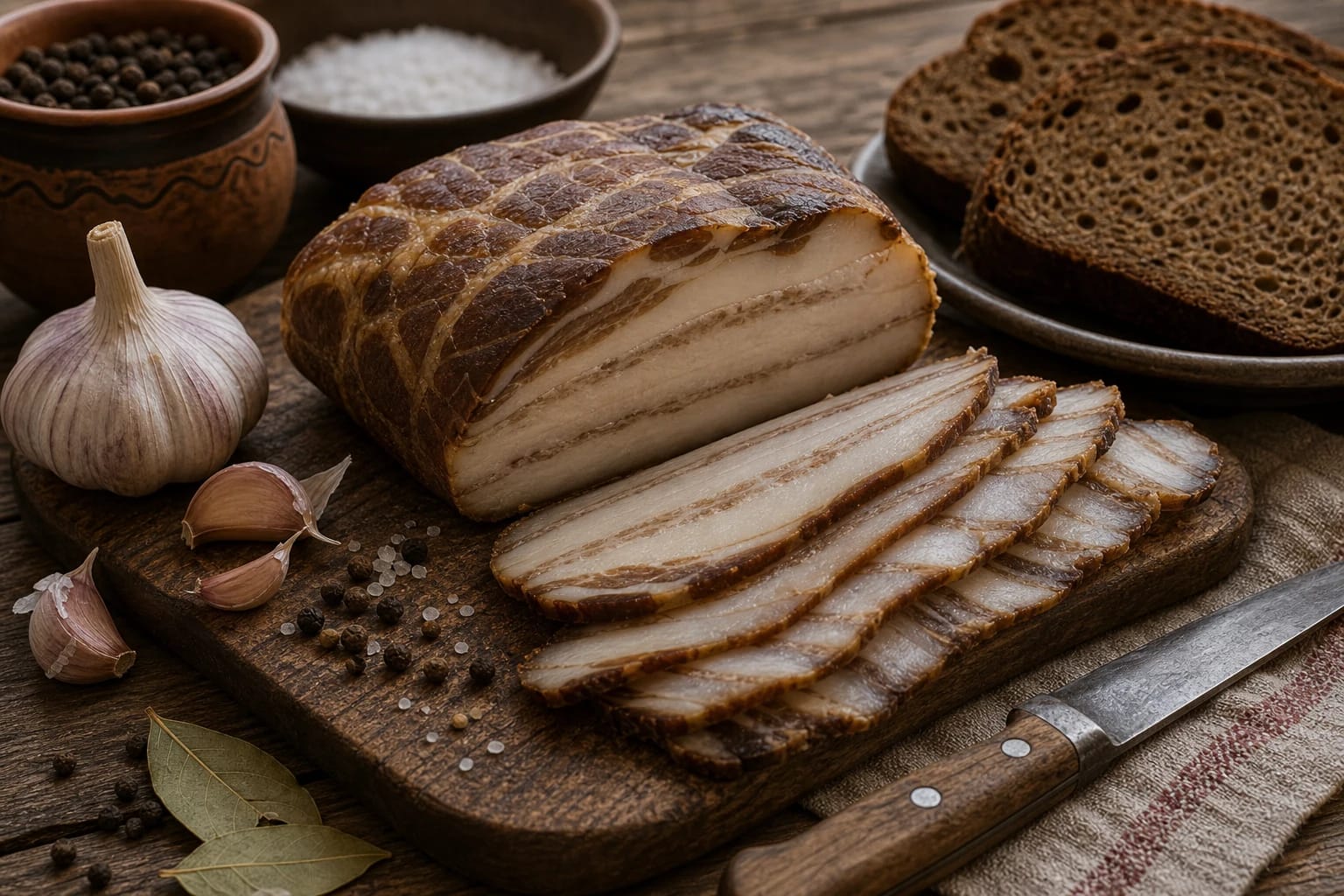
Food and heritage context
- Category
- Meat products
- Type
- seasoned pork fat wrapped in caul fat and smoked
- Heritage status
- well attested
- Context
- Pork fat, caul fat, taukinė, užkulas, spices, garlic, smoking, porridge seasoning, rural table
Names and variants
Taukinė, Užtrinas, Įsnauja, Samogitian užkulas
What are užkulas and taukinė?
Užkulas is an old Lithuanian pork-fat product: pork belly fat seasoned with spices and garlic and wrapped in a thin fatty membrane. That membrane, which surrounds the internal organs of the animal, is called pilvaplėvė, taukinė, or įsnauja in Lithuanian, and in many places the whole product is named taukinė after it.
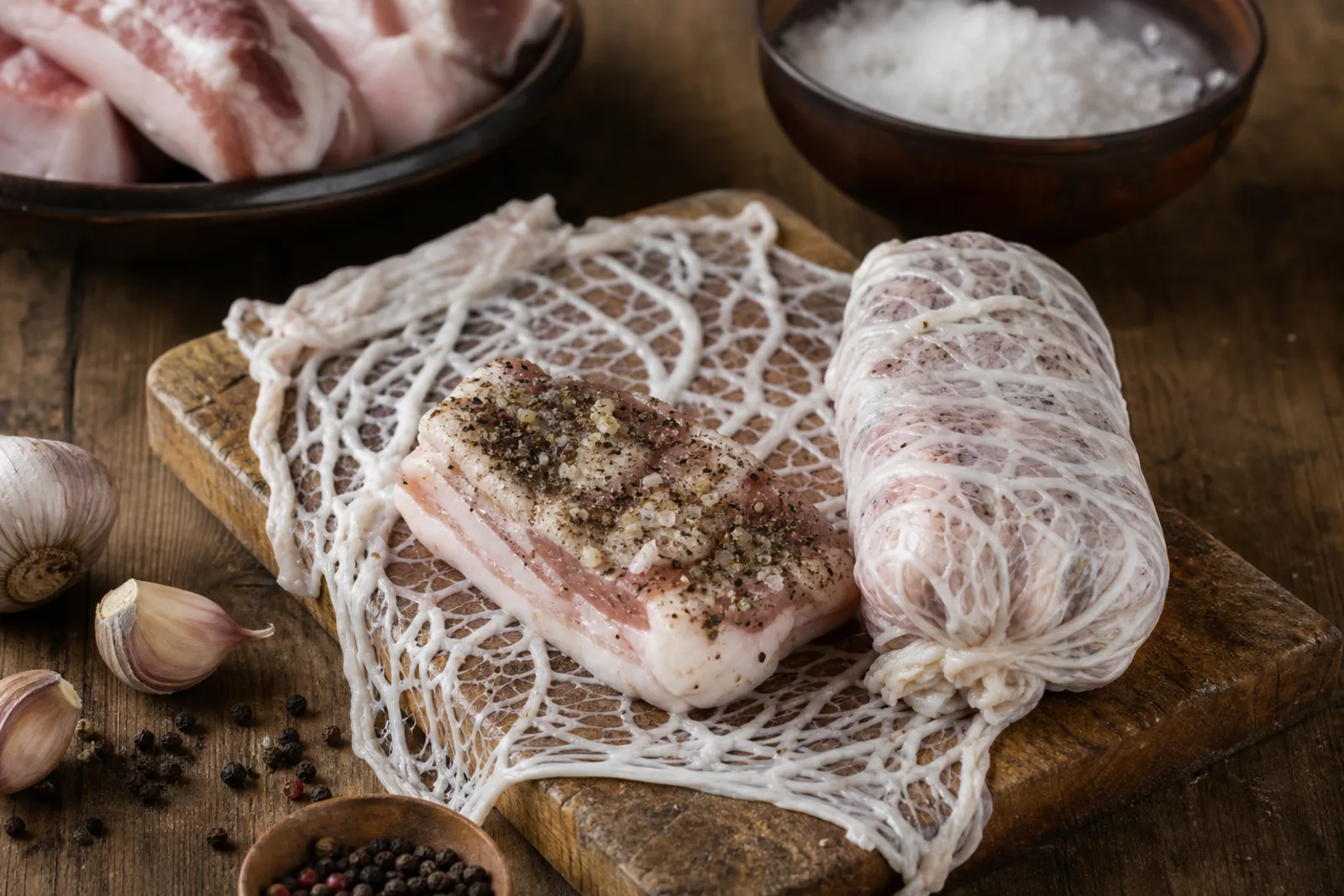
Names change by region: in Samogitia, užkulas is also called užtrinas, while in Aukštaitija it is called taukinė. This explains why the same food appears in the literature under several names, and why the word taukinė means both the membrane itself and the product made from it.
The essence is that užkulas is not rendered fat and not a single slab of salted lašiniai, but a soft, seasoned fat mass wrapped in a membrane and smoked, whose main purpose was to flavor everyday foods.
History of užkulas in Lithuania
Animal fat has long been used in Lithuania. The Universal Lithuanian Encyclopedia notes that from the beginning of the sixteenth century, manor inventories mention 'loaves of fat', probably taukinės. This shows that a seasoned, shaped fat product was known here at least from the early modern period.
According to the Universal Lithuanian Encyclopedia, until the late nineteenth and early twentieth centuries, fat was most often salted, rolled in caul fat with spices added, sometimes packed into the stomach, pressed, and smoked. This is the production pattern for užkulas and taukinė. Only in the first half of the twentieth century did another method spread: rendering fat in bread ovens or clay pots in northern and western Aukštaitija and storing it in wooden vessels or clay jars.
Užkulas was poor people's food, later partly forgotten, and revived in recent decades. Culinary heritage overviews say that seasoned užkulas was sold at fairs in woven baskets, where it could keep for an entire year.
Raw material: belly fat and caul fat
The main raw material is fat from the slaughtered pig's lower belly together with the caul fat, or taukinė, įsnauja. It is a thin, net-like fatty membrane that almost completely melts when heated, while its connective-tissue membranes remain and can hold the product's shape.
This membrane is used in many European cuisines to wrap meat and fat preparations, so užkulas has relatives: French crépinette, English faggot, Cypriot sheftalia, and Italian fegatelli. The Lithuanian version stands out through generous seasoning, garlic, and smoking.
Flavor and keeping quality depend on the freshness and fattiness of the raw material. A good, well-fattened pig gives more and better caul fat, as captured in the folk saying that a good pig makes a large užkulas.
Samogitian užtrinas: production technology
Classic Samogitian užtrinas is made like this: pork belly fat, or taukinė, is heavily salted, even more heavily seasoned, wrapped in parchment or baking paper, and kept warm until it yellows and gains a noticeable sharp, tangy quality. This maturing stage gives the characteristic flavor.
After maturing, the product is cold-smoked for about a week. Prepared this way, užtrinas can be kept for several years, which made it a convenient long-term source of fat and seasoning in the rural household.
The older method described by the Universal Lithuanian Encyclopedia adds to this pattern: seasoned fat was wrapped in caul fat, sometimes packed into a stomach, pressed, and only then smoked. Pressing compacts the mass and helps it keep better.
Regional variants: užtrinas, taukinė, įsnauja
The product has a strong regional face. In Samogitia, cold-smoked užtrinas dominates: matured, slightly sharp, and long-keeping. In Aukštaitija, taukinė is widespread, and Aukštaitian įsnauja is hot-smoked seasoned pork belly.
The name is not the only difference; so is the purpose. Samogitian užtrinas is more often sliced and eaten, while Aukštaitian įsnauja is primarily a seasoning: soups, stews, and porridges are enriched with it. This flavoring function also explains the word užkulas, something used to 'finish' or season a dish.
These variants show that there is no single 'correct' užkulas. There is a family of related regional recipes united by the same raw material and the goal of preserving fat with spices.
How it is eaten and served
Traditionally, užkulas was first of all used to season everyday foods. Ethnographic descriptions say it was used in barščiai, potato soups, cabbage soup, and eaten with porridges, but most often it flavored steamed potatoes.
The richness that užkulas gives plain food is captured by the folk saying that a householder without a housewife is like barščiai without užkulas: without it, everyday food seemed dull and lean. Matured smoked užtrinas can also be sliced thinly and eaten with black rye bread.
Today revived užkulas is more often served as a snack or an authentic regional delicacy, recalling a time when every piece of fat in the household was valued and preserved.
Its place in Lithuanian pork cooking
Užkulas is part of the broader homemade pork-product tradition together with lašiniai, spirgai, skilandis, smoked ham, and sausages. All arose from the same need: after slaughter, to preserve as much meat and fat as possible for a long time.
Užkulas differs from lašiniai because lašiniai are firmer, single pieces of salted or smoked fat, while užkulas is a soft seasoned mass wrapped in a membrane. It differs from spirgai because it is not rendered: spirgai are already rendered fat remnants, while užkulas remains unrendered.
The logic of salting, seasoning, pressing, smoking, and maturing links užkulas with skilandis and ham, while the use of caul fat and spices links it with homemade sausage making. Užkulas becomes a bridge between simple fat and matured meat products.
National heritage and making it today
In recent years, užkulas has moved from poor people's food to a valued regional product. According to Wikipedia, it became a certified Lithuanian culinary heritage product, and certified traditional products in Lithuania are administered through the National Heritage Product system. Specific certified products and producers should be checked in the heritage register.
To make it at home, you need fresh pork belly with caul fat, generous seasoning, warm maturing, and slow cold smoking. This is craft work, not a quick recipe: salt amount, cleanliness, and temperature determine both taste and safety.
For beginners, it is easiest to work with an experienced smoker or at least try Aukštaitian hot-smoked įsnauja, which can be used right away to season soups and porridges. The tradition is easiest to recognize from the caul-fat layer, abundant spices, and smoke aroma.
Recipe
How is užkulas prepared?
Samogitian užkulas, or užtrinas, is a preserved product, so cleanliness, enough salt, maturing, and cold smoking matter most. The base is fresh pork belly fat with caul fat and generous seasoning; smoking requires equipment and experience.
Ingredients
Method
- Chill the fresh belly fat and caul fat well, dry them, and check that they are clean.
- Rub the fat generously with salt and even more generously with spices and chopped garlic.
- Wrap in the caul fat, form a tight roll or packet, and tie or press it if desired.
- Keep warm until the product yellows and gains noticeable sharpness and tang; this is the maturing sign.
- Cold-smoke the matured užkulas for about a week in a suitable smokehouse.
- Keep cold. Slice thinly and eat with bread or use to flavor porridges and steamed potatoes.
Notes
For Aukštaitian įsnauja, the seasoned belly is not matured and cold-smoked; it is hot-smoked and used to flavor soups, stews, and porridges.
Food safety matters more than speed: maturing and smoking require experience, cleanliness, and low temperature, so beginners should work with an experienced smoker.
Related pages about Užkulas ir taukinė
Lašiniai
Lašiniai are firmer salted or smoked pork fat, while užkulas is a soft, seasoned fat mass wrapped in caul fat.
Spirgai
Spirgai are rendered fat pieces, while užkulas is an unrendered, wrapped, and smoked fat product.

Skilandis
Like skilandis, užkulas relies on salting, seasoning, smoking, and maturing.
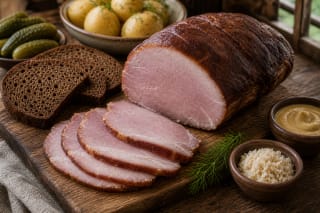
Smoked ham
The same home-smoking craft used for ham is also used to smoke taukinė.
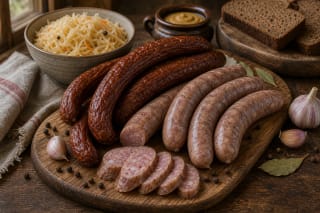
Lithuanian sausages
Caul fat and spices connect užkulas with the homemade pork-product tradition.
Užkulas ir taukinė: frequently asked questions
How is užkulas different from lašiniai?
Lašiniai are firmer, single pieces of salted or smoked pork fat, sliced thinly. Užkulas is a soft fat mass seasoned with spices and garlic, wrapped in caul fat, and smoked. Lašiniai are more often eaten with bread, while užkulas is primarily used to flavor dishes.
How is užkulas different from spirgai?
Spirgai are rendered, browned pieces of fat or their remnants. Užkulas is not rendered; it is an unrendered, wrapped, matured or smoked fat product. The essence differs: spirgai come from rendering, while užkulas comes from wrapping and smoking.
Why is the product called užkulas, taukinė, užtrinas, and įsnauja?
These are regional names for the same type of product. In Samogitia people say užkulas or užtrinas; in Aukštaitija, taukinė or įsnauja. The word taukinė means both the pig's belly membrane and the product made from it.
What is caul fat and why is it important?
Caul fat, pilvaplėvė or taukinė, is a thin fatty membrane surrounding the pig's internal organs. When heated, its fat almost completely melts, but the membranes remain and hold the product's shape, making it useful for wrapping seasoned fat.
How does Samogitian užtrinas differ from Aukštaitian įsnauja?
Samogitian užtrinas is matured warm until it yellows and gains tang, then cold-smoked for about a week and can keep for years. Aukštaitian įsnauja is hot-smoked seasoned pork belly used right away to flavor soups, stews, and porridges.
What is užkulas traditionally eaten with?
Traditionally it flavored barščiai, potato soups, cabbage soup, and porridges, but most often steamed potatoes. Matured smoked užtrinas can be sliced thinly and eaten with black rye bread.
How long can užkulas be kept?
Matured and cold-smoked Samogitian užtrinas can be kept for several years. In the past, seasoned užkulas was sold at fairs in woven baskets where it kept for an entire year. Cold storage and good raw material are essential.
Is užkulas really a certified national heritage product?
According to Wikipedia, užkulas became a certified Lithuanian culinary heritage product. These products are administered by the National Heritage Product system, so any specific certified product and producer should be checked in the heritage register.
How long has this kind of fat product been known in Lithuania?
According to the Universal Lithuanian Encyclopedia, animal fats have long been used in Lithuania, and from the beginning of the sixteenth century manor inventories mention loaves of fat, probably taukinės. Until the late nineteenth and early twentieth centuries, fat was often salted, seasoned, wrapped in caul fat, and smoked.