
Lithuanian traditional foods
Lietuviškos dešros
Lietuviškos dešros include fresh frying sausages, smoked sausages, blood sausages, and other stuffed meat products. Their base is pork, the balance of fat and lean meat, garlic, pepper, and a natural casing.
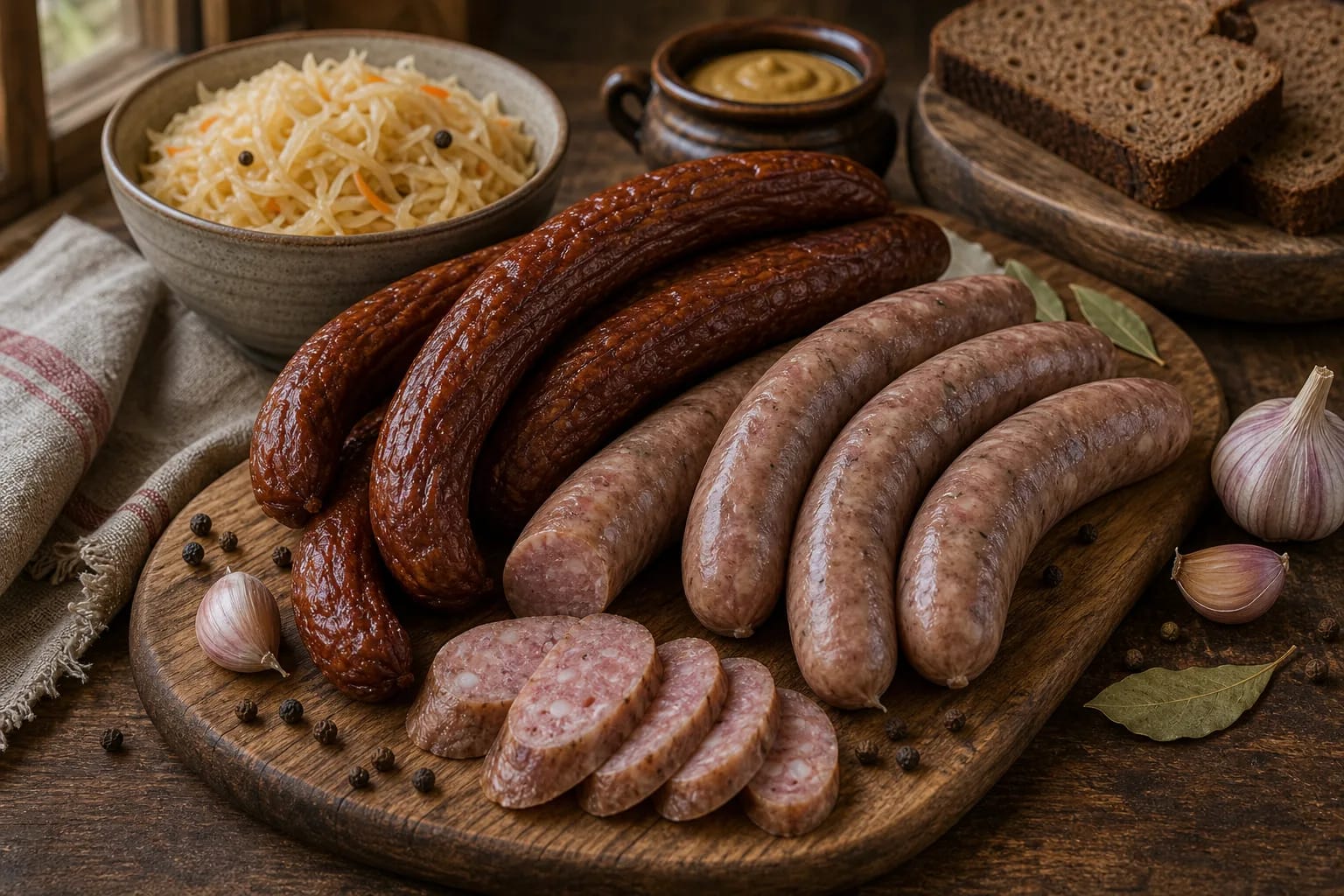
Food and heritage context
- Category
- Meat products
- Type
- fresh, boiled, smoked, or cured sausages
- Heritage status
- living tradition
- Context
- Pork, natural casings, garlic, pepper, smoking, blood sausages, village slaughter season
Names and variants
Homemade sausages, Smoked sausages, Blood sausages
Varieties of sausage
Lithuanian sausages are not a single product. There are fresh frying sausages, smoked sausages, cured sausages, blood sausages, and other local versions. According to the Universal Lithuanian Encyclopedia, sausages are classified by processing as raw, boiled, lightly smoked, boiled-smoked, smoked, liver, and blood sausages; smoked sausages are smoked for 3-4 days and dried for 25-30 days.
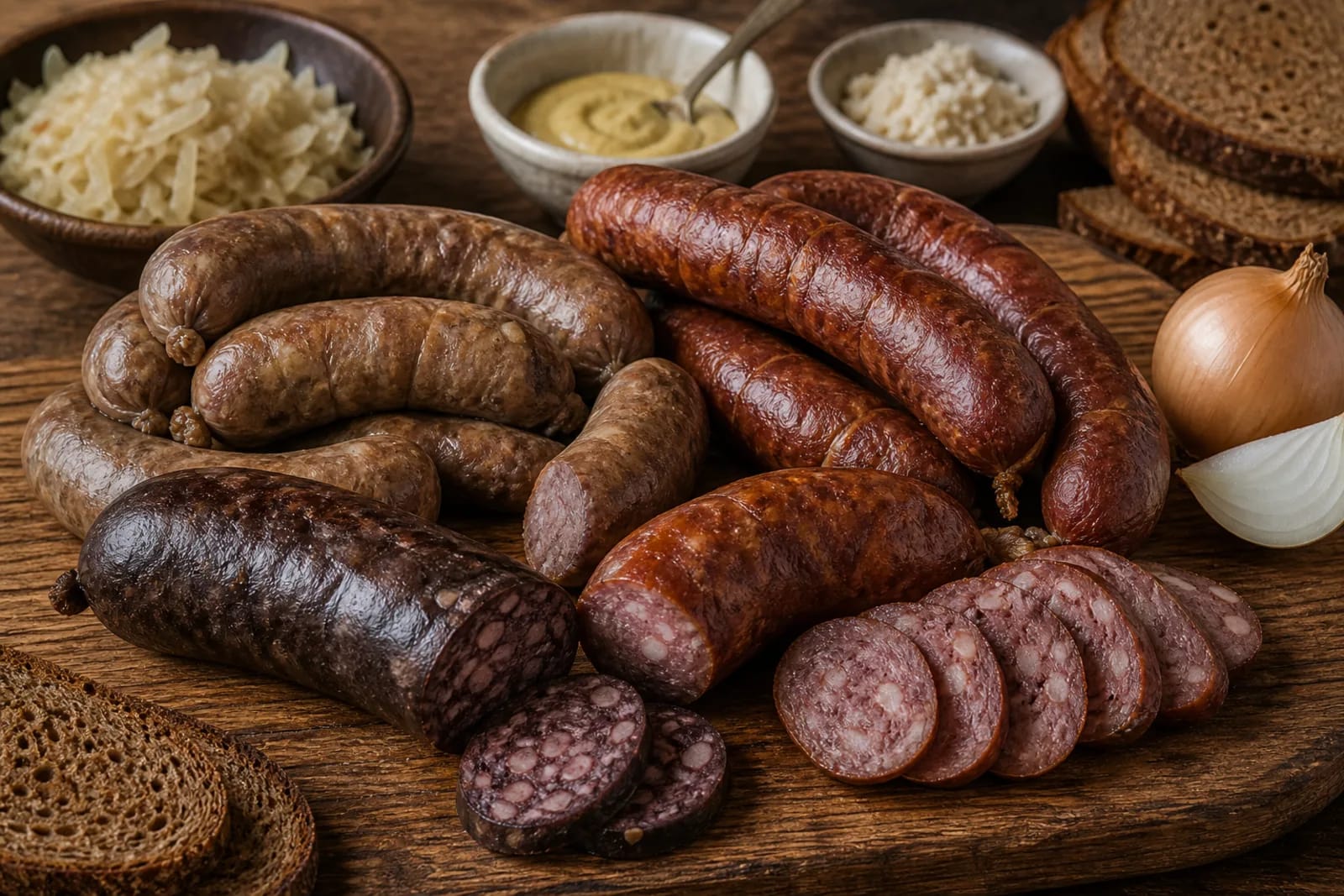
They are connected by the pork tradition, natural casings, garlic, pepper, and the balance between fat and lean meat.
Slaughter-season and casing logic
Sausages show the practicality of the village slaughter-season kitchen: smaller meat cuts, fat, and natural intestines become a separate product instead of remaining random scraps.
Fresh sausages are usually meant for quick frying or boiling. Smoked and cured sausages belong to the group of longer-keeping meat products, so salt, drying, smoke, and storage conditions matter especially.
Blood sausages broaden the idea of sausage: their filling may include blood, groats, onions, and spices, so they sit close to both grain dishes and meat dishes.
Smoking and safety
Smoked and cured sausages require precise salting, drying, and smoking. It is not simply putting meat into smoke.
Fresh sausages are easier to make safely at home because they are heat-treated before eating.
Recipe
How are Lithuanian sausages made?
Fresh homemade sausages
The safest home starting point is fresh sausages for frying. Smoked or cured sausages require additional control of food safety, salt, temperature, and drying.
Ingredients
Method
- Grind the meat and fat coarsely or chop them finely.
- Mix with salt, garlic, and spices. Keep the mixture cold.
- Rinse the prepared casings and loosely fill them with the meat mixture.
- Shape the sausages and prick any air pockets.
- Fry in a pan or oven, or boil and then brown, until safely cooked through.
Notes
Curing and cold smoking are not the same as frying fresh sausages. They require experience and safety controls.


Lietuviškos dešros: frequently asked questions
What meat suits sausages?
Usually pork with enough fat so the sausage does not become dry.
Are natural casings necessary?
They are very typical for traditional sausages, though other casings are also used in practice.
How is fresh sausage different from smoked sausage?
Fresh sausage is fried or boiled before eating, while smoked sausage is additionally salted, dried, and smoked.
Why is the sausage dry?
The meat may be too lean, cooked too long, or processed too finely.
Can Lithuanian sausages be smoked at home?
Only with proper equipment, safety knowledge, and temperature control.
What should sausages be served with?
Potatoes, sauerkraut, bread, mustard, or horseradish are common accompaniments.