
Lithuanian traditional foods
Lašiniai
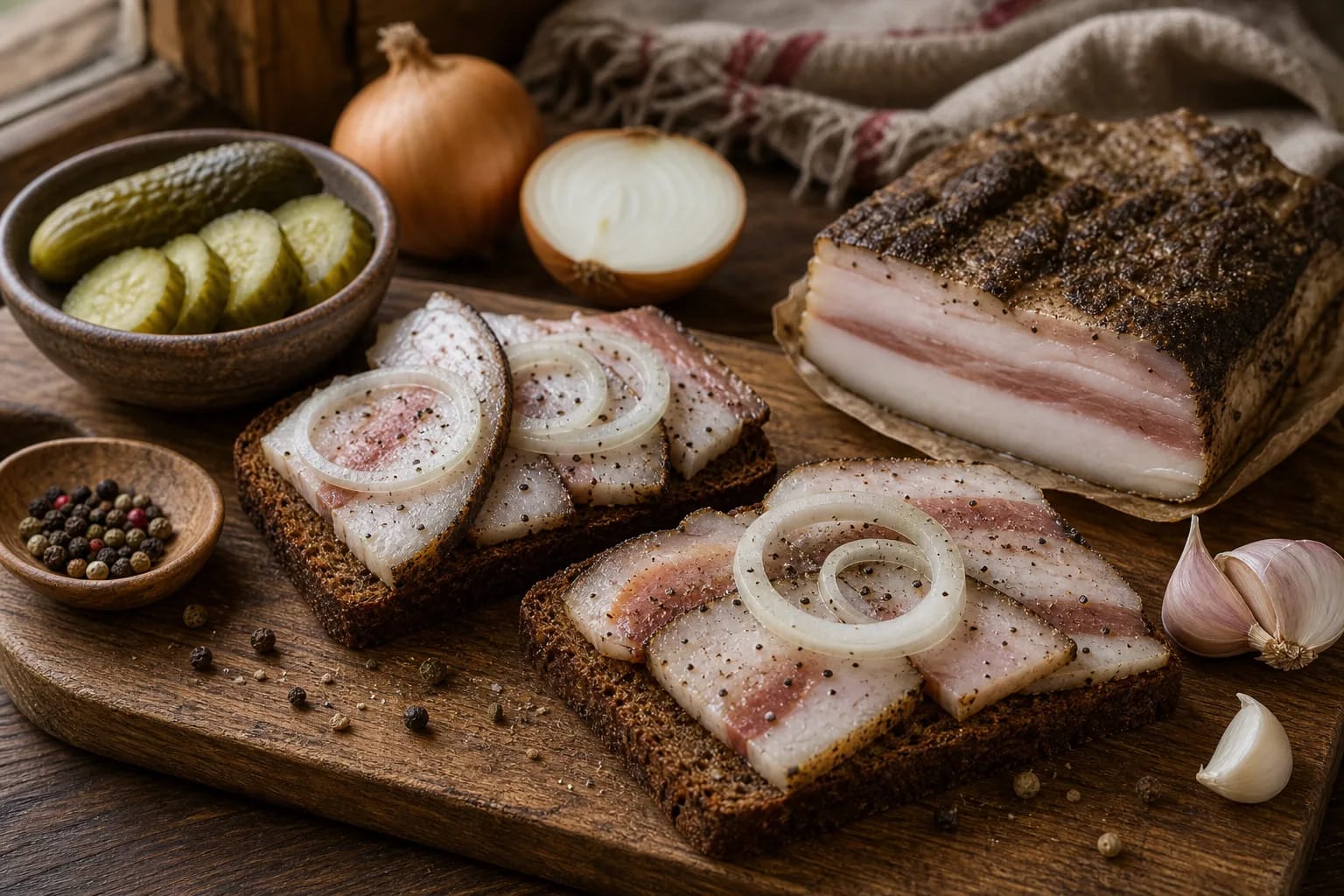
Lašiniai are salted, smoked, or dried pork fat, or fatty bacon, traditionally eaten in thin slices with rye bread, onion, and garlic, or used for cracklings and other dishes.
Food and heritage context
- Category
- Meat products
- Type
- salted or smoked pork fat
- Heritage status
- living tradition
- Context
- Pork, salting, smoking, garlic, pepper, rye bread, rural table
Names and variants
Salted lašiniai, Smoked lašiniai
What are lašiniai?
Lašiniai are pork fat, often with a thin meat layer, preserved by salting, smoking, or drying.
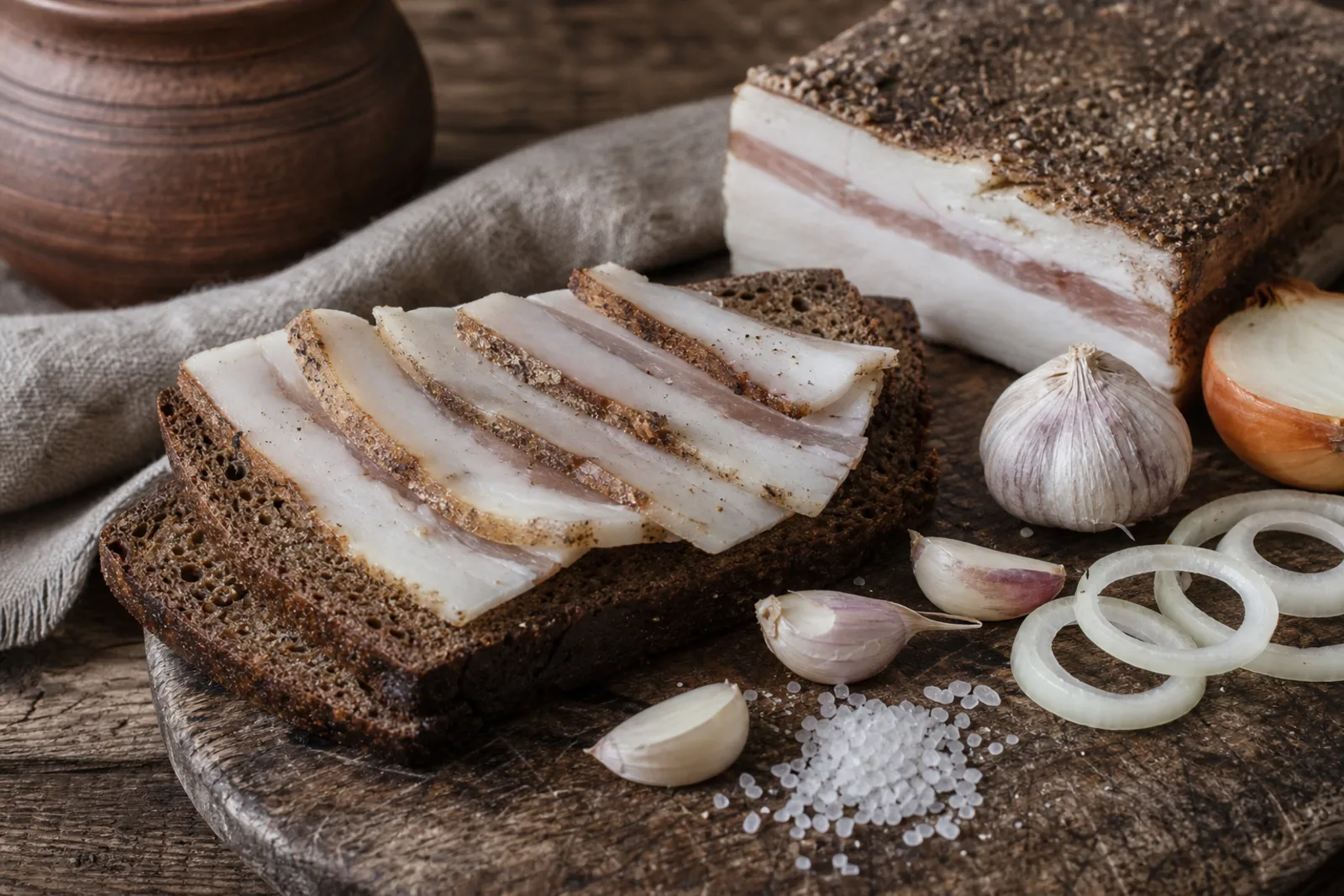
The Universal Lithuanian Encyclopedia distinguishes firmer back, ham, and shoulder lašiniai, semi-firm side or neck lašiniai, and softer belly lašiniai. This explains why some lašiniai are better sliced thin while others suit cracklings or seasoning dishes.
They were a practical energy source and a food that kept for a long time.
History of lašiniai in Lithuania
The Universal Lithuanian Encyclopedia notes that from the sixteenth century, smoked lašiniai are sometimes mentioned in historical sources as part of peasants' dues to a noble or other feudal owner.
Until the mid-twentieth century, peasants salted lašiniai in troughs, tubs, barrels, or vats, and smoked them in home chimneys, bathhouses, and smokehouses. A side of smoked lašiniai was kept in pantries or hung under the ridge of a thatched roof.
Lašiniai were also work-season food: a fatty, salty, long-keeping store that was convenient to eat with bread or use in cooking.
Lašiniai on the table
The classic serving is thin slices with black rye bread, onion, garlic, or fermented vegetables.
Lašiniai are also cut for cracklings and added to kugelis, vėdarai, or soups.
Recipe
How are lašiniai prepared?
Salt-cured pork fat with garlic
Salting lašiniai is a preservation process, so cleanliness, enough salt, and cold storage matter. Smoking requires additional equipment and experience.
Ingredients
Method
- Dry the pork fat and rub it with salt, minced garlic, and pepper.
- Place in a container skin-side down, weight it, and keep cold.
- Turn or check it daily so the salting is even.
- After several days, keep refrigerated, dry, or smoke under proper conditions.
- Slice very thinly.
Notes
The exact salting time depends on the thickness of the piece. Food safety matters more than speed.


Lašiniai: frequently asked questions
How are lašiniai different from bacon?
Lašiniai emphasize the fat layer, while bacon usually has more meat layers.
Are lašiniai eaten uncooked?
Salted or smoked lašiniai are eaten in thin slices, but they must be safely prepared and stored.
How much salt is needed?
Enough for preservation. The amount depends on the thickness of the piece and the method.
Is smoking necessary?
No. Lašiniai can be only salted, but smoking adds another layer of flavor and preservation.
What should lašiniai be eaten with?
Rye bread, onions, garlic, fermented cucumbers, or potatoes.
What can leftovers be used for?
For cracklings, sauces, kugelis, pancakes, or seasoning soups.