
Lithuanian traditional foods
Naminis alus
Naminis alus in Lithuania is especially associated with the brewing tradition of the Biržai and Kupiškis areas. It is not only a recipe, but family and community knowledge about malt, wort, hops, fermentation, and the occasion for hosting.
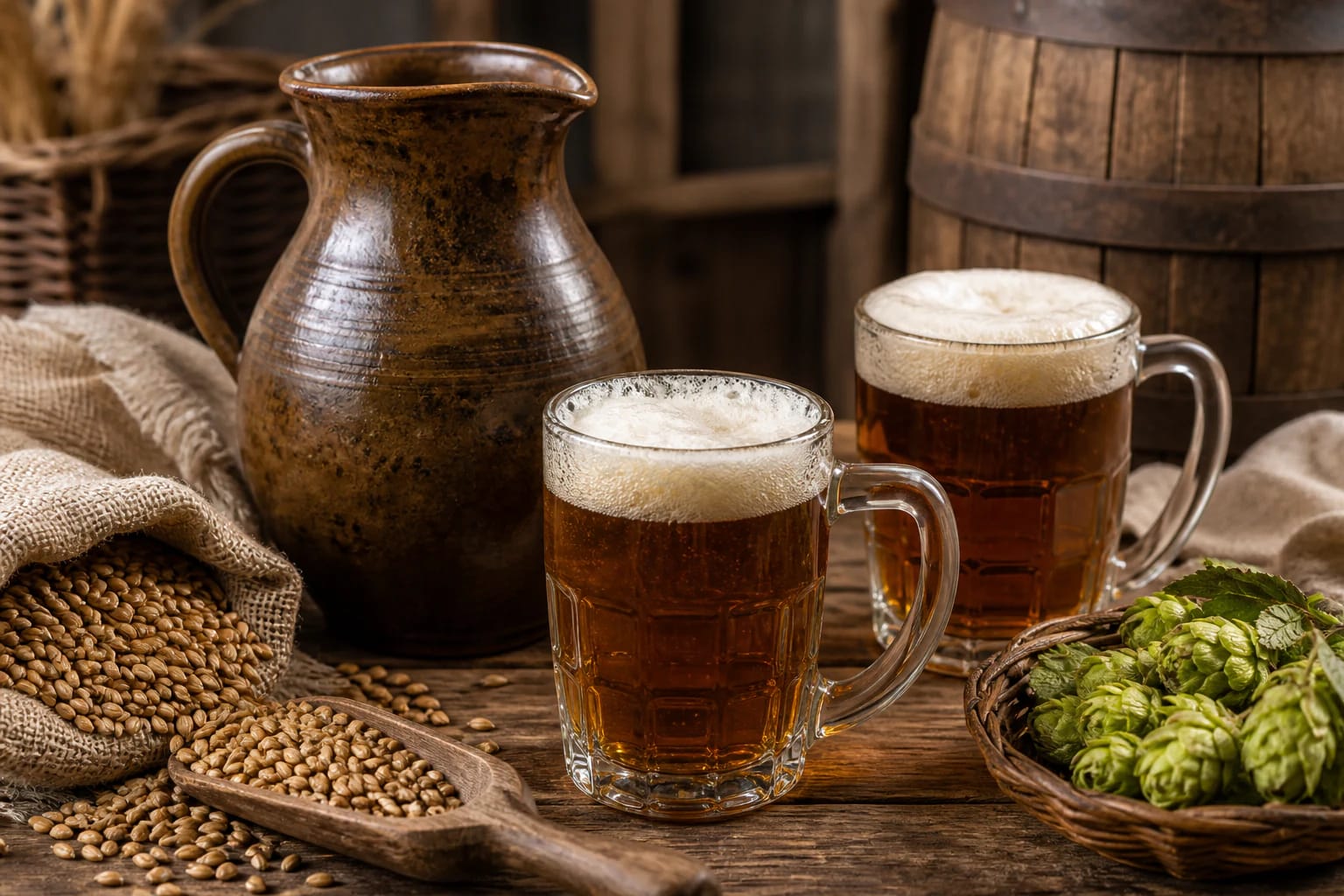
Food and heritage context
- Category
- Drinks
- Type
- fermented drink of home and village brewing
- Heritage status
- living Northern Lithuanian tradition
- Context
- Biržai, Kupiškis, malt, hops, wort, yeast, brewer, holidays, communal work gatherings, responsible drinking
Names and variants
Farmhouse beer, Home brewing
A community drink
Naminis alus was traditionally made not for everyday drinking, but for feasts, communal work gatherings, christenings, weddings, parish festivals, or other occasions.
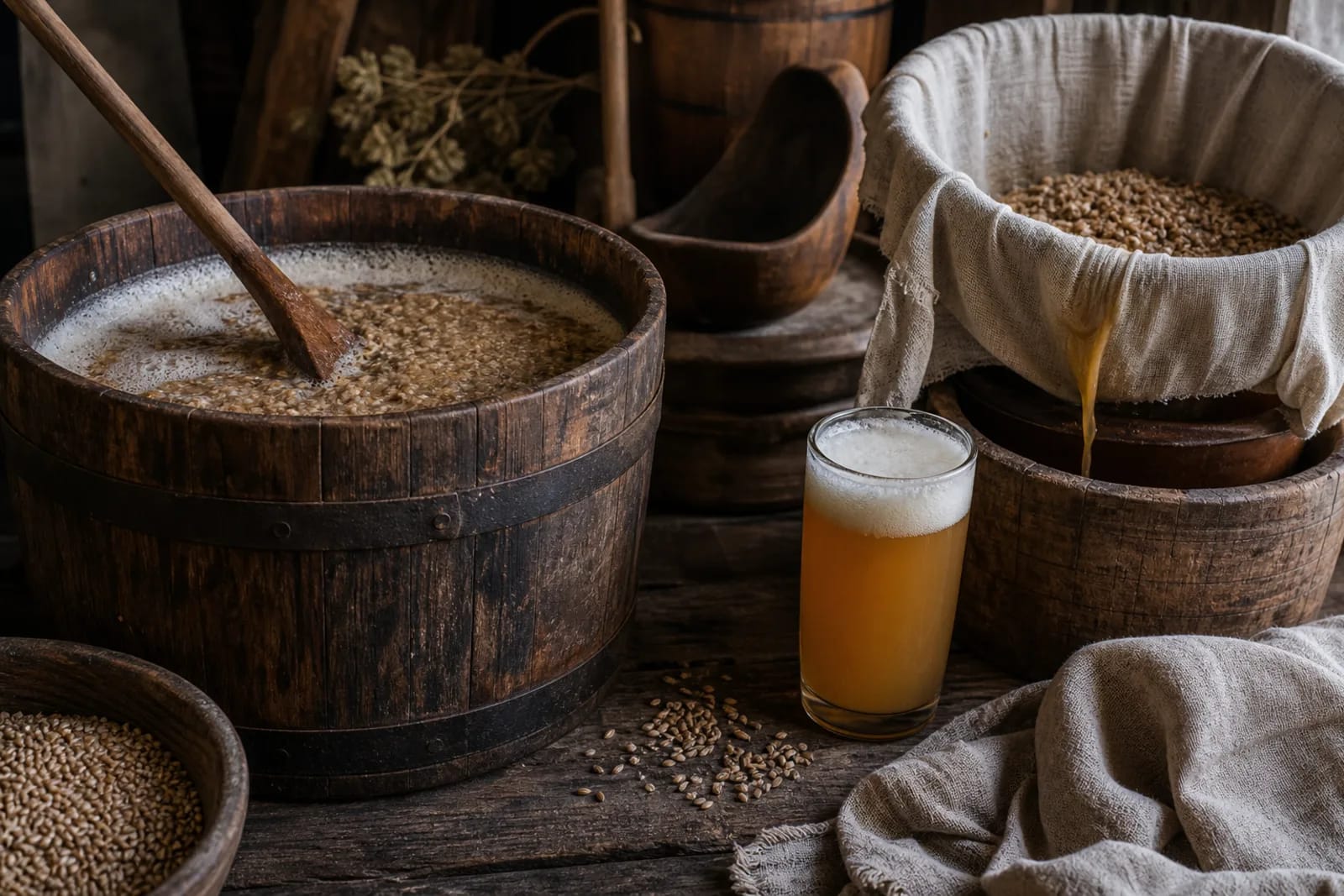
The brewer had to know not only the technology but also the order of the occasion.
Biržai and Kupiškis
The home-brewed beer tradition of the Biržai and Kupiškis region is listed in Lithuania's intangible cultural heritage inventory. According to the Universal Lithuanian Encyclopedia, home beer has been made in Lithuania since the 11th century. In Central and Northern Lithuania, especially around Biržai and Pasvalys, it is most often made from barley malt, hops, and water, and peas are added to make it foam more.
It is a living system of family and community knowledge, not just a recipe card.
Equipment and cleanliness
Traditional vessels could be wooden, but today hygiene is essential. Fermenting liquid spoils easily if equipment is dirty.
Temperature, yeast, and time determine whether the beer tastes good or sours in the wrong way.
Responsible limits
The heritage of naminis alus should not be confused with illegal production or unlimited consumption.
Alcohol requires moderation, compliance with the law, and clear responsibility.
Preparation overview
How is naminis alus made?
The principle of naminis alus is extracting malt sugars, straining the wort, using hops, and fermentation. It is an alcoholic drink, so production and drinking must be legal and responsible.
Ingredients
Method
- Mash the malt in warm water and hold it until a sweet wort forms.
- Strain the wort away from the malt solids.
- Boil with hops, then cool quickly.
- Ferment with yeast in a clean vessel.
- After fermentation ends, condition the beer and drink moderately.
Notes
Dirty equipment is the most common reason home-brewed beer spoils.
This page is for understanding heritage, not for encouraging alcohol consumption.
Naminis alus: frequently asked questions
What equipment is needed to start?
A clean pot, straining tools, a fermentation vessel with an airlock, a thermometer, and sanitizing supplies.
How can fermentation mistakes be avoided?
Keep everything clean, use the right temperature, healthy yeast, and do not leave wort open for long.
How long does beer ferment?
Usually from one week to several weeks, depending on the yeast, temperature, and recipe.
When should it be bottled?
When active fermentation has ended and the gravity is stable. Bottling too early can create too much pressure.
Why does the beer not foam?
It may lack carbonation, have too little protein, or have been stored improperly.
Can bread be used?
Some drinks use bread, but naminis alus traditionally relies on malt. Bread beer is another direction.
Can home-brewed beer be sold?
Only in compliance with current legal, licensing, and safety requirements.