
Lithuanian traditional foods
Lietuviškas alus
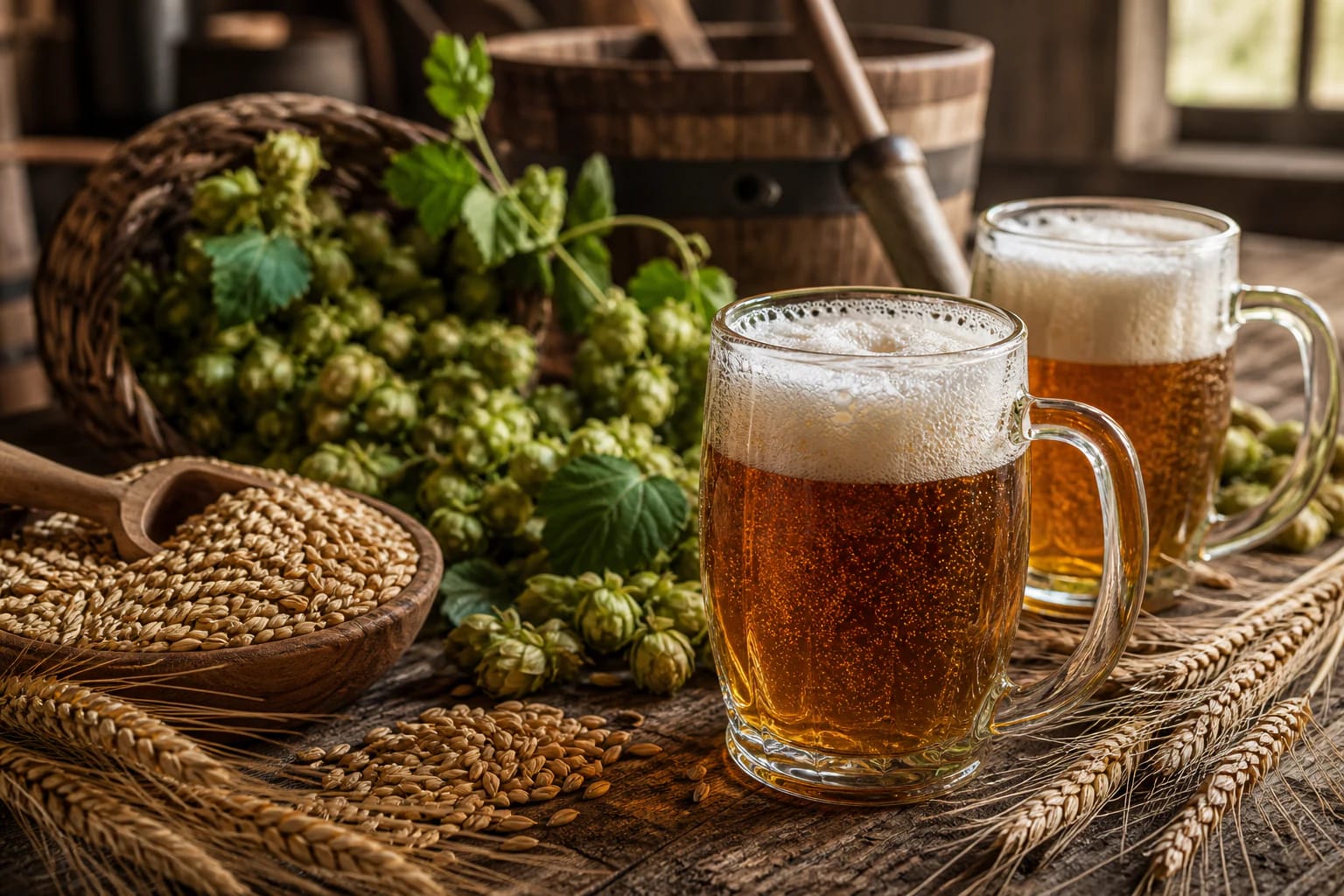
Lietuviškas alus covers home-brewed, farmhouse, and industrial layers of beer, but the traditional core is barley malt, water, hops, yeast, wort, and the brewer's knowledge. Northern Lithuania is especially associated with a living brewing tradition.
Food and heritage context
- Category
- Drinks
- Type
- a drink of barley malt, hops, and fermentation
- Heritage status
- living and historical brewing tradition
- Context
- Barley malt, hops, wort, fermentation, Biržai, Northern Lithuania, brewer, responsible drinking
Names and variants
Farmhouse beer, Living beer
The basis of brewing
Beer is made from malt, water, hops, and yeast. Malt gives sugars and flavor, hops give bitterness and aroma, and yeast drives fermentation.
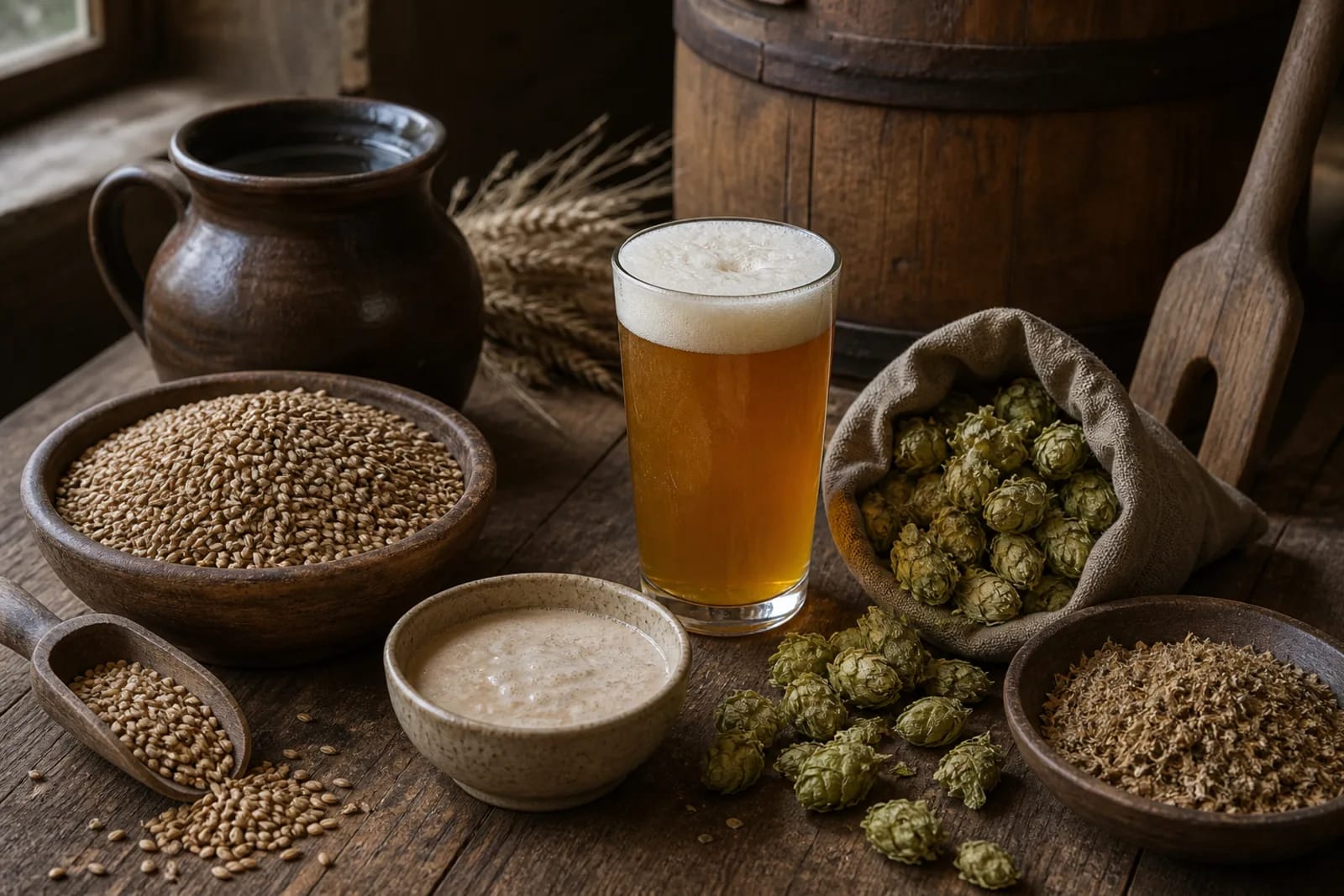
In the traditional Lithuanian context, wort, straining, fermentation, and the brewer's experience are especially important.
Regions and living tradition
Northern Lithuania, especially the Biržai and Kupiškis areas, is often associated with a living home-brewed beer tradition. It is listed in Lithuania's intangible heritage inventory. According to the Universal Lithuanian Encyclopedia, home beer has been made in Lithuania since the 11th century, and Samogitia also made a weak bread beer; beer was traditionally brewed for holidays, communal work gatherings, christenings, and weddings.
Beer was also made in other areas, so Lithuanian beer is broader than one region.
Farmhouse and industrial beer
Farmhouse beer is rooted in smaller scale, local yeasts, family knowledge, and occasion. Industrial beer follows a different technological and commercial logic.
Protected names such as Kaimiškas Jovarų alus help speak more precisely about specific traditions.
Responsible drinking
Beer is an alcoholic drink. A cultural heritage page should explain technology and social context, not encourage consumption.
Historical feasts had occasions and limits; modern drinking also requires responsibility.
Preparation overview
How is the base of Lithuanian beer made?
Beer making is controlled fermentation. This outline is for understanding the heritage; production and distribution must comply with the law.
Ingredients
Method
- Crush the malt and mix it with warm water to form the mash.
- Hold it at the proper temperature so the starch converts into sugars.
- Strain the wort, boil it with hops, and cool it quickly.
- Pour into a clean fermentation vessel, add the yeast, and ferment.
- Rack off the sediment, condition the beer, and drink responsibly.
Notes
Cleanliness is essential: contaminated wort spoils quickly.
Beer is an alcoholic drink, so moderation and compliance with the law are necessary.
Lietuviškas alus: frequently asked questions
What is beer wort?
Wort is the liquid from the malt mash, containing the sugars needed for fermentation.
Why is barley malt important?
It provides sugars, body, color, and the main beer flavor.
What are hops used for?
Hops add bitterness and aroma and help balance the sweetness of the malt.
How is Lithuanian beer different from lager?
Traditional farmhouse beer may be living, small-batch, and tied to local technology, while lager is a specific type of beer often made industrially.
Which regions are famous for beer?
The Biržai and Kupiškis areas are especially known, though brewing traditions exist elsewhere too.
What is gyvas alus?
It usually means unpasteurized beer that keeps a more active flavor, but the term is not always used consistently.
What snacks go with it?
Rye bread, cheese, smoked meat, kastinys, and fermented vegetables are common pairings, but drinking should be moderate.