
Lithuanian traditional foods
Margučiai as an edible Easter symbol
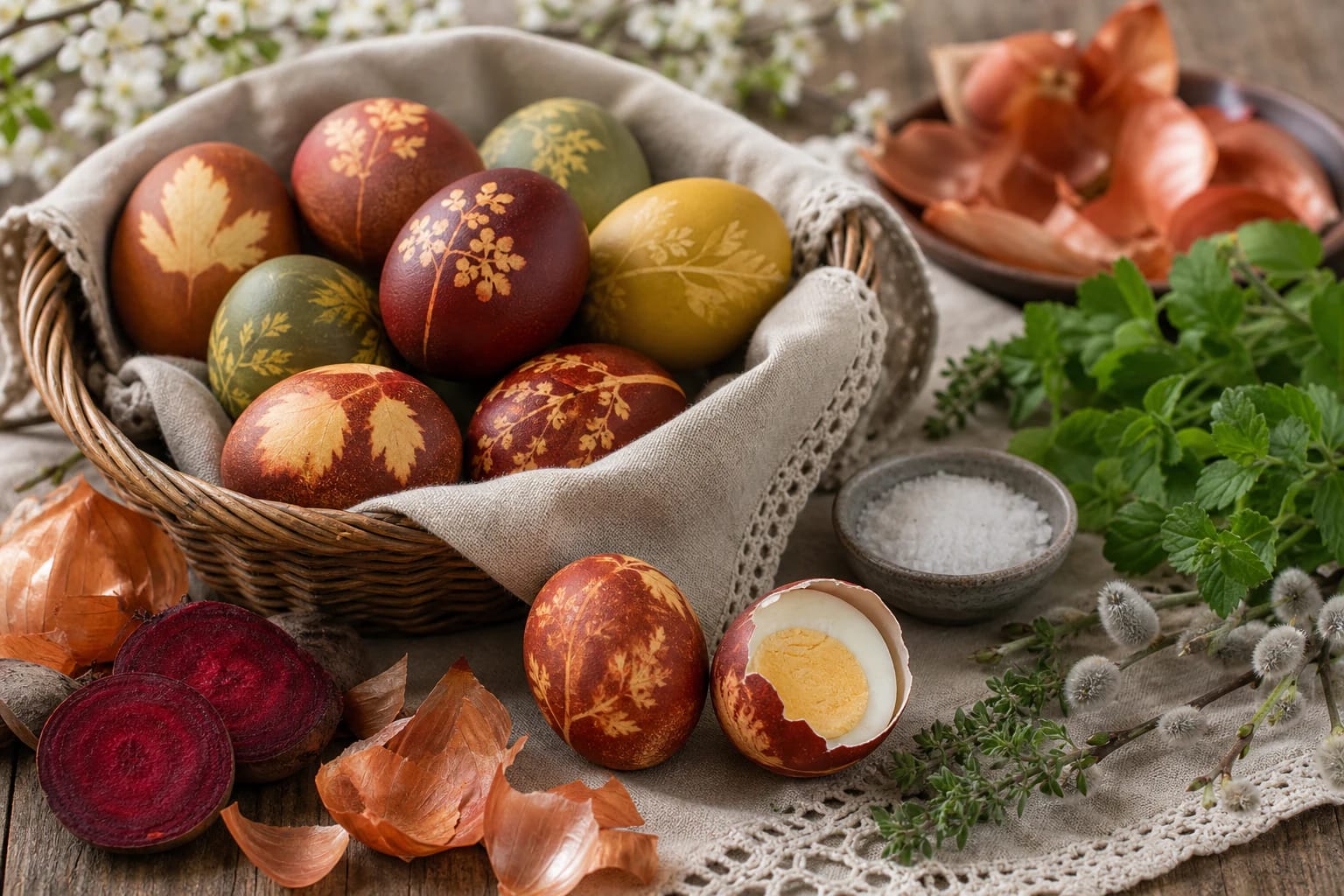
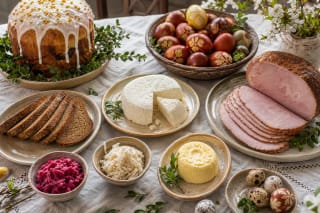
Margučiai are not only folk-art objects but also edible symbols of the Easter table. Boiled eggs are decorated, given as gifts, tapped, rolled, and eaten during the festive breakfast with salt, horseradish, or other Easter dishes.
Food and heritage context
- Category
- Easter dishes
- Type
- dyed boiled eggs and an Easter table symbol
- Heritage status
- living Easter tradition
- Context
- Easter, eggs, margučiai, dyeing, wax, scraping, egg tapping, rolling, horseradish
Names and variants
Easter margučiai, Dyed eggs
An edible symbol
A margutis is an Easter egg, a sign of life, spring, and resurrection. But it is also real food on the festive table.
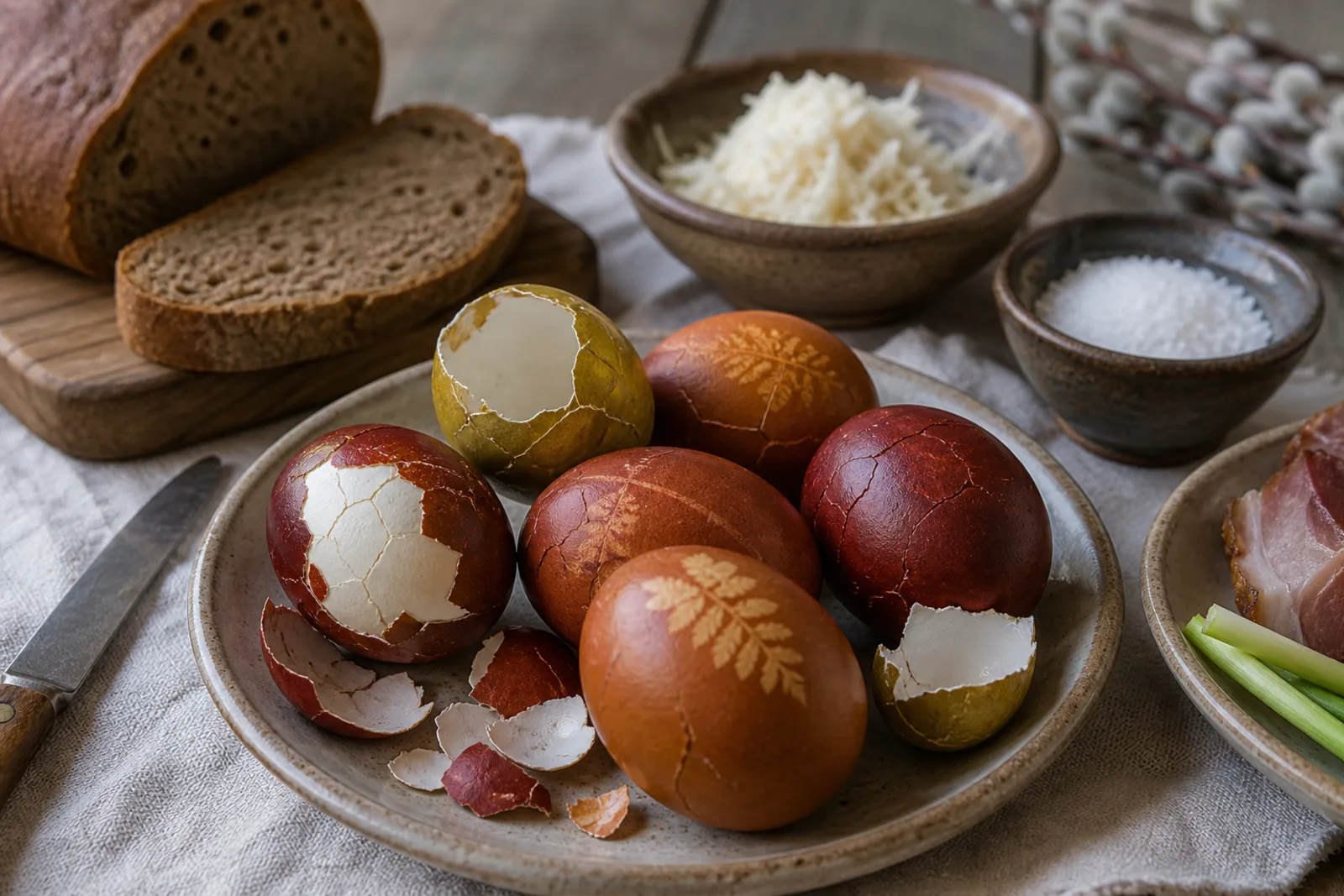
In the Easter context, the Universal Lithuanian Encyclopedia emphasizes eating, tapping, and rolling margučiai, so this page treats the egg not only as ornament. According to the encyclopedia, egg dyeing reaches back to ancient spring festivals; it existed in ancient Egypt and Slavic cultures, is mentioned in Lithuania in a hymn by Martynas Mažvydas in 1549, and at the end of the 19th century farmers offered an egg to Žemyna in the first furrow plowed.
The first bite of the Easter table
At Easter breakfast, margučiai are often eaten first. They are shared, tapped end to end, judged for strength, and only then are other foods tasted.
Horseradish, salt, and butter are simple accompaniments that highlight the egg's flavor.
Dyeing and safety
If the egg will be eaten, the dye must be food-safe. Onion skins, some plant decoctions, and dyes intended for food are safer than decorative chemical products.
The wax pattern itself is not a problem if the wax is removed and the egg was not damaged, but unknown materials should be avoided.
After the holiday
Cracked or leftover boiled eggs can be used for salads, stuffed eggs, snacks with horseradish, or cold appetizers.
Eggs should not stand warm for a long time, especially if they are meant to be eaten the next day.
Recipe
How to prepare edible margučiai
Easter eggs dyed with onion skins
If the margučiai will be eaten, use food-safe dyes or traditional plant decoctions. Boil the eggs gently so they do not crack.
Ingredients
Method
- Let the eggs come to room temperature so they crack less during boiling.
- If decorating with wax, draw the patterns before dyeing.
- Simmer the onion skins in water, add vinegar, and place the eggs in the dye bath.
- Boil for about 8-10 minutes, then cool.
- Remove the wax, rub with a drop of oil for shine, and serve for Easter breakfast.
Notes
Not all decorative dyes are meant for food. For edible margučiai, choose safe materials.
Keep boiled eggs refrigerated if they will not stay on the table for long.
Margučiai as an edible Easter symbol in Lithuanian traditions
Explore the celebrations and customs associated with this food.
Related pages about Margučiai as an edible Easter symbol
Margučiai as an edible Easter symbol: frequently asked questions
Why are margučiai eaten at Easter?
The egg is associated with life, renewal, and resurrection, so at Easter it becomes both a symbol and the first food of the festive table.
How do dyed, wax-written, and scraped margučiai differ?
Dyed eggs are simply colored, wax-written eggs are decorated with wax, and scraped eggs are carved on an already dyed shell.
Which natural dyes are safe?
Onion skins and some berry, bark, or plant decoctions are safe if they are suitable for food. Decorative dyes should be avoided.
How do you boil eggs so they do not crack?
Warm the eggs to room temperature, place them in gently boiling water, and add salt.
What does egg tapping mean?
It is an Easter game and a contest of luck: the winner is the person whose egg remains uncracked.
How long can boiled margučiai be kept?
If they will be eaten later, keep them in the refrigerator and use them within a few days.
What should be done with cracked margučiai?
Use them first: for salads, stuffed eggs, snacks, or with horseradish.