
Lithuanian traditional foods
Krienai
Krienai, horseradish, are a sharp Lithuanian table condiment eaten with meat, eggs, saltiena, and Easter dishes. Horseradish leaves are also used when fermenting cucumbers, and the root's heat weakens quickly after grating.

Food and heritage context
- Category
- Condiments
- Type
- sharp grated horseradish-root condiment
- Heritage status
- living kitchen tradition
- Context
- Horseradish root, sharpness, vinegar, Easter, eggs, meat, pickled cucumbers, sauces
Names and variants
Grated horseradish, Horseradish sauce
A sharp table condiment
The Universal Lithuanian Encyclopedia describes horseradish as a plant whose grated rhizomes are used with meat, eggs, and in sauces. On the Lithuanian table, horseradish is especially visible with Easter foods.
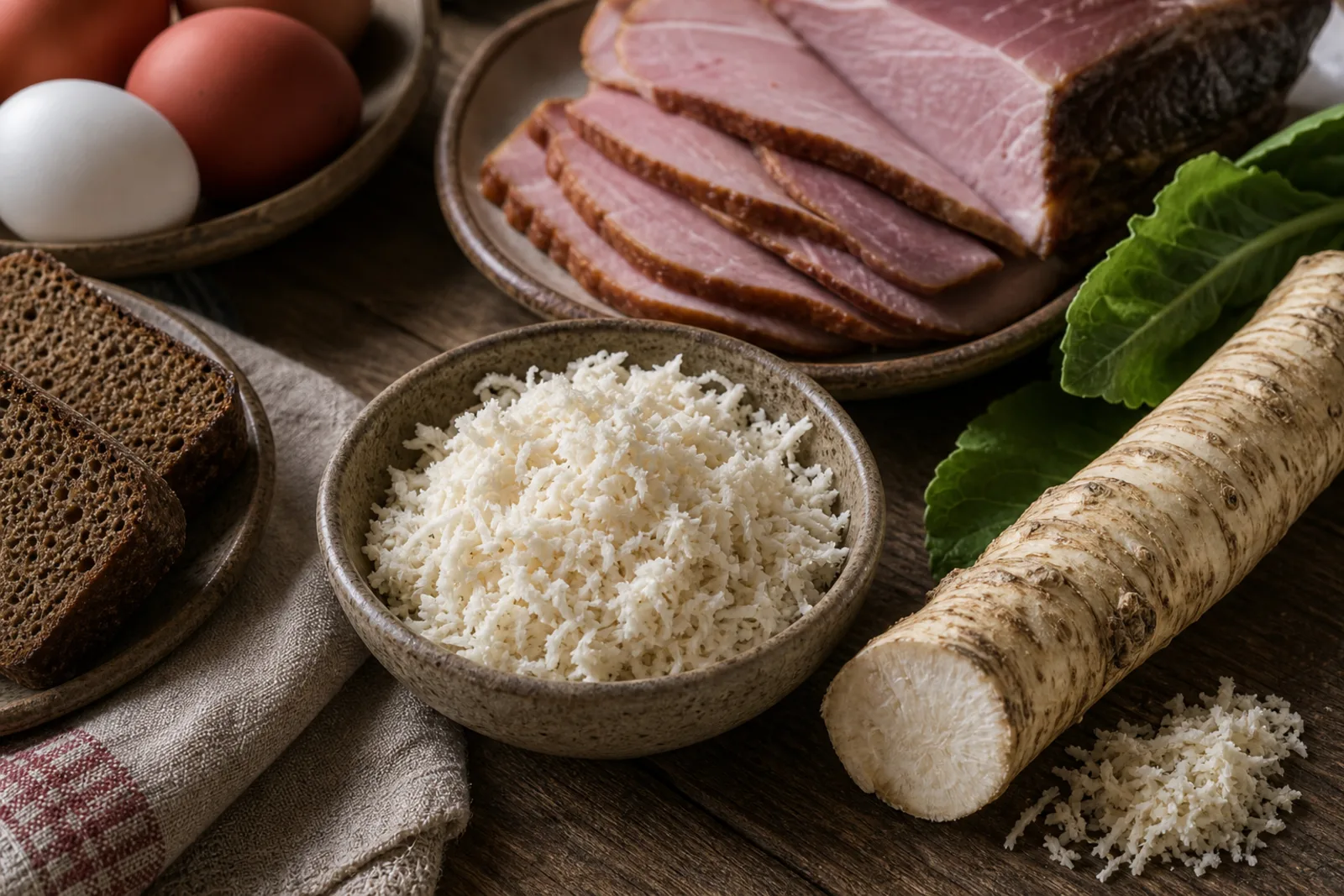
The sharpness appears when the root is crushed, so freshly grated horseradish is strongest.
What it is eaten with
Horseradish goes with boiled eggs, saltiena, ham, sausages, roasted meat, fish, and beets.
Sour cream, apple, or beets can soften its heat and give another color.
Horseradish in fermented foods
Horseradish leaves and roots are often added to fermenting cucumbers. They give aroma and help preserve a firmer vegetable character.
This shows that horseradish is not only a sauce but also an ingredient in preservation cooking.
Use with care
Horseradish is very sharp. Large amounts can irritate, so it should be used as a condiment, not as the main food.
Sensitive eaters may prefer a milder sour cream or apple version.
Recipe
How to prepare grated horseradish
Grated horseradish with vinegar
Horseradish is sharpest when freshly grated. Vinegar or lemon juice helps stabilize the flavor, while sour cream or apple softens it.
Ingredients
Method
- Peel the horseradish root and soak briefly in cold water.
- Grate finely or chop in an electric processor.
- Immediately mix with water, vinegar, salt, and sugar.
- For a milder version, mix in sour cream or grated apple.
- Store tightly covered in the refrigerator.
Notes
Grating horseradish strongly irritates the eyes; work in a well-ventilated place.
Large amounts may irritate a sensitive stomach.


Krienai: frequently asked questions
How can horseradish be grated with less eye irritation?
Work in a ventilated place, use a covered processor, or grate in short stages.
Why does horseradish quickly lose its heat?
Volatile sharp compounds evaporate quickly. Vinegar or lemon helps stabilize the flavor somewhat.
What is horseradish traditionally eaten with?
Eggs, saltiena, ham, sausages, meat, and Easter table dishes.
Are horseradish leaves good for fermenting cucumbers?
Yes, they are often added with dill, garlic, and other seasonings.
How do you make a milder sauce?
Mix in sour cream, apple, beets, or adjust the balance with more sugar and acid.
How long does prepared horseradish keep in the refrigerator?
Tightly covered, for several days or longer, but the sharpness gradually weakens.
Who should use horseradish carefully?
People whose stomach or mouth lining is irritated by sharp foods, and children.